
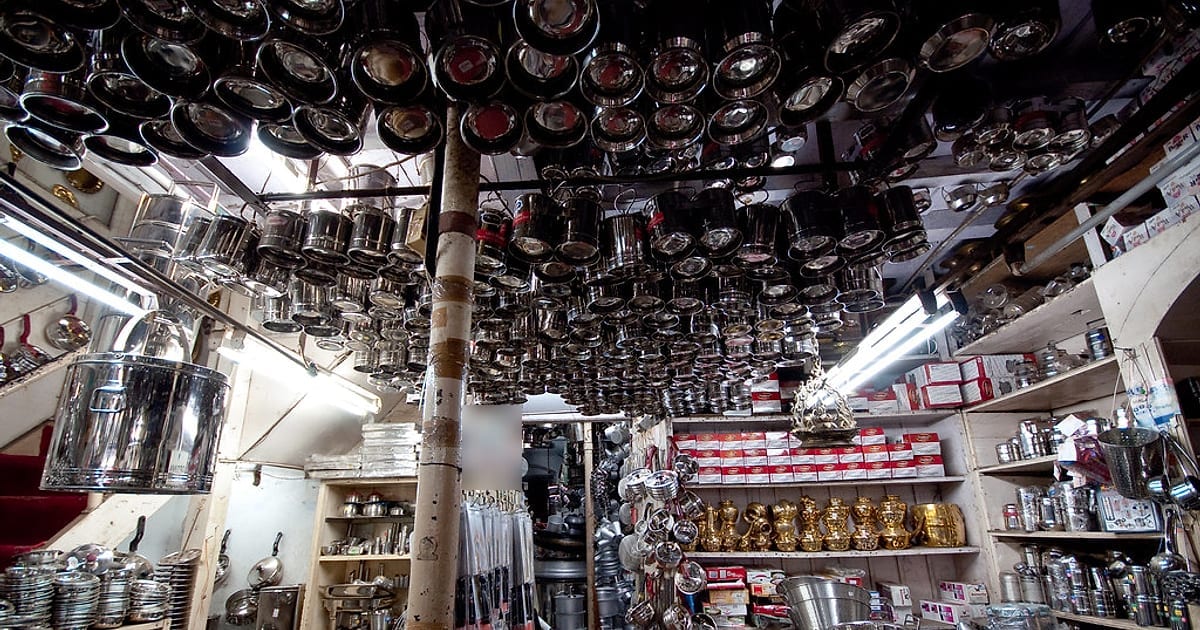
Your steel kadai is fine for dal. Your cast iron tawa is better for roti. That, in one line, is the honest answer to “cast iron vs stainless steel”. The two metals behave very differently on a flame, so the useful question is not “which one wins” but “which one for this dish”. This article goes dish by dish, the way you actually cook.
Think of a steel vessel as a cup and cast iron as a brick
Open any Indian kitchen and you will find stainless steel everywhere: the pressure cooker, the dabba, the milk pan, the thali. It is light, shiny, easy to wash and does not need any special care. Cast iron is the opposite in nature. It is heavy, dark, slow to warm up and needs a little oil care.
Two things explain almost everything that follows.
Heat spreading. Stainless steel on its own is not a good conductor of heat. That is why many steel pans have an extra metal layer in the base. A plain thin steel vessel can be hot right above the flame and cooler at the sides.
Heat holding. Cast iron is thick and heavy, so once it is hot it stays hot. Drop a cold roti dough ball on it, and the pan barely flinches. A thin steel pan loses heat quickly when cold food touches it. A food-chemistry experiment by Martin Lersch on Khymos shows it is not always simple, because a very dark cast iron pot can also lose heat to the air faster than a shiny steel one. But the practical point for a cook stands: a heavy iron surface is steady when you add cold food, and that matters for rotis, dosas and searing.
Cast iron takes longer to heat, so give it a few minutes on a medium flame before cooking. Once hot, it rewards you.
The quick verdict table
| Dish or job | Better choice | Why |
|---|---|---|
| Roti, phulka, paratha | Cast iron | Steady, even hot surface |
| Dosa, uttapam, cheela | Cast iron (seasoned) | Holds high heat when batter goes on |
| Tadka | Either; small cast iron or steel | Quick, so the metal matters little |
| Everyday dal | Either | Depends on how long and how sour |
| Sambar, rasam, kadhi (long, sour) | Stainless steel, or well-seasoned cast iron | Sour and slow is hard on new seasoning |
| Sabzi, bhaji, dry masala | Cast iron | Browning and the deep, even base |
| Deep frying (pakora, puri, namkeen) | Cast iron kadai | Holds oil temperature steady |
| Rice, biryani, pulao | Stainless steel, or a heavy-based pot | Easy to cook and serve |
| Milk, kheer | Stainless steel | Light, easy to watch, easy to clean |
| Eggs, shallow frying, searing | Cast iron | Browning and crust |
Now the reasons, dish by dish.
Roti, paratha and dosa: cast iron
Roti, phulka and paratha
A good roti needs a surface that is hot and stays hot. Each roti takes the same few seconds per side, and the tawa has to be ready for the next one straight away.
Cast iron does this well. Its weight smooths out the flame, so the roti cooks evenly instead of getting one burnt patch and one pale one. Parathas with ghee also brown nicely because the surface does not cool down when the dough lands. If you are choosing for rotis in particular, our guide to the best tawa for roti goes into size and handle length, and the cast iron tawa guide covers the basics.
A plain steel tawa for roti is possible, but it tends to scorch in spots and needs more watching.
Dosa, uttapam and cheela (seasoned cast iron)
Dosa is the dish where people have the strongest feelings, and for good reason. The tawa must be properly hot when you pour the batter, and it must release the dosa when it is crisp.
A seasoned cast iron tawa does both. The heat is steady, and the seasoning, which is cooking oil baked onto the iron, gives a naturally slick surface. A steel tawa has no seasoning, so batter often grips it, and cooks end up adding a lot of oil or giving up. If your dosa keeps sticking, read why dosa sticks to the tawa before you blame the batter. For picks by size and handle, see the best dosa tawa in India.
Dal, tadka and sambar: both work, with a tip
Dal and tadka
Dal itself is mostly water and lentils, simmered. A steel vessel or a pressure cooker is perfect for that. Nothing special is needed.
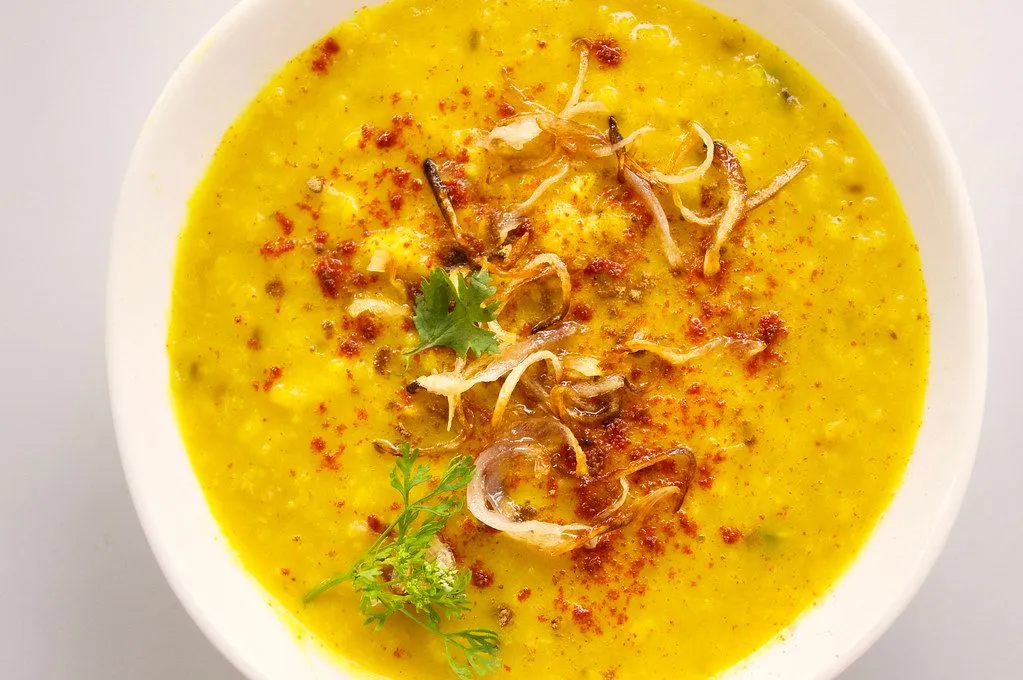 A bowl of dal with a tadka of fried onion and spices on top. Photo: askmir, CC BY-SA 2.0.
The tadka is where the pan matters a little more. A tadka is a quick sizzle of ghee or oil with cumin, garlic, chilli and curry leaves. In a small steel tadka pan it takes a minute. In a small cast iron pan it takes about the same, with one difference: the iron holds its heat for a few seconds after you move it off the flame, so spices can burn if you leave them. Pour the tadka over the dal as soon as the cumin crackles.
A second small point is that dal is slightly acidic when you add tomato or kokum. In a well-seasoned cast iron kadai this is fine. In a brand-new, thinly seasoned pan, keep it short.
Sambar, rasam and kadhi: where steel has the edge
Sambar and rasam have tamarind. Kadhi has curd. All three are sour, and all three often simmer for a long time.
This is where stainless steel is the easier, more relaxed choice. Sour food cooked for a long time can slowly wear down the seasoning on a new cast iron pan and can leave a metallic taste. We explain this in more detail in is cast iron cooking healthy, including what to do with a well-seasoned pan.
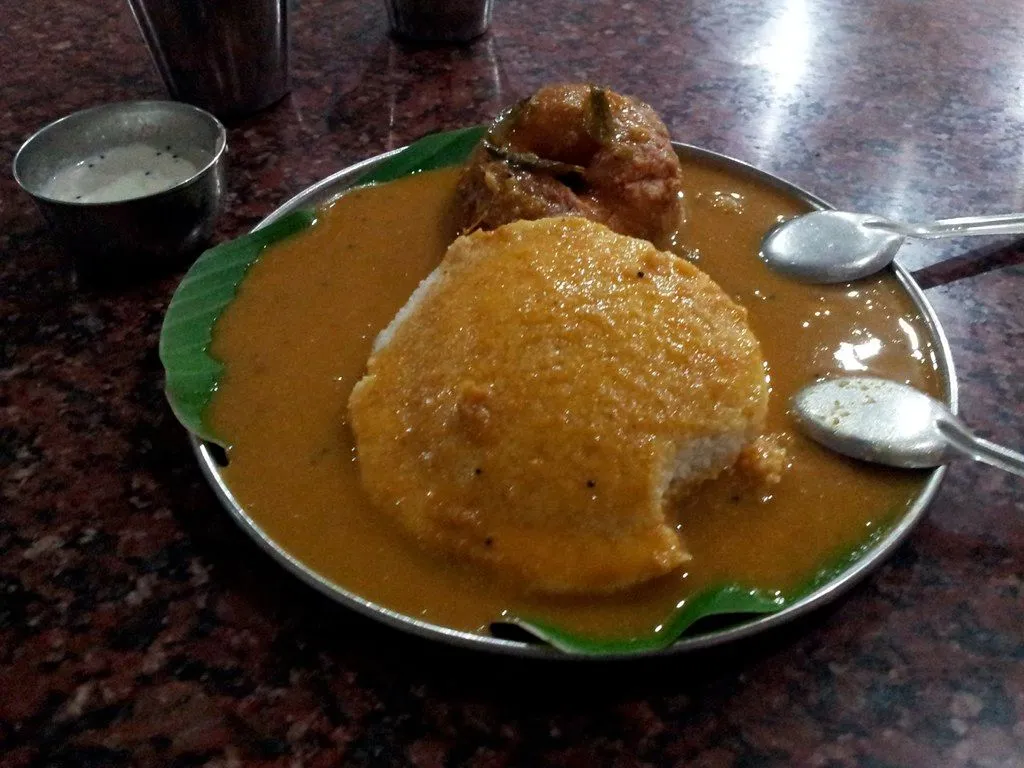 Idli and vada in sambar, a long-simmered sour dish that is easy in a steel vessel. Photo: Aleksandr Zykov, CC BY-SA 2.0.
So for sambar, many cooks do this: cook the sambar in steel, and use cast iron for the tadka or for the vegetables that go in. Once your cast iron is well seasoned after weeks of use, a normal-length sambar is fine in it. Just do not store leftovers in the iron pan. Move them to a steel or glass container.
A fair note on steel and very sour food
Steel is not completely free of questions either. A 2013 study by Kamerud and colleagues at Oregon State University, published in the Journal of Agricultural and Food Chemistry, cooked tomato sauce in stainless steel for hours. They found that nickel and chromium in the sauce rose, by up to 26 times for nickel and up to 7 times for chromium over six hours of cooking, depending on the steel. New cookware released the most, and the amounts fell and levelled off with repeated use. You can read the full paper or the university summary.
What does this mean for you? Not panic. Six hours of tomato sauce is far longer than a normal sabzi or sambar. It is simply a reminder that no metal is “perfect”, and that very long, very sour cooking is hard on any new vessel, steel or iron.
Sabzi and frying: cast iron
Sabzi, bhaji and dry masala
For vegetables, the deep, heavy base of a kadai is a joy. Onions brown evenly, a dry masala roasts without catching in one corner, and bhindi or potatoes get a good colour.
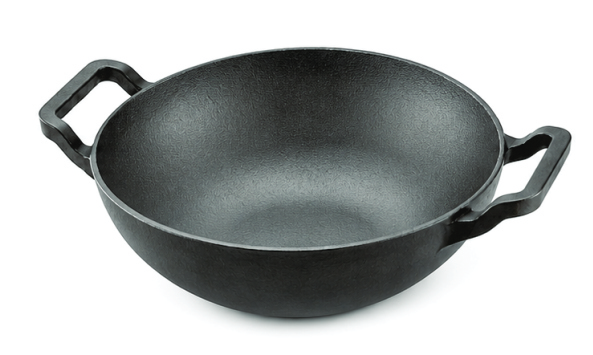
The RIVEDA Cast Iron Kadai 27 CM is the size many families use for this: wide enough to stir a family-sized sabzi, deep enough for a gravy. Its two side handles help you lift it, and it weighs 2.7 kg, so it is a steady pan rather than a light one. If you want the full picture of kadai options, our best cast iron kadai guide compares sizes.
Deep frying and shallow frying
Pakoras, puris, namkeen, chakli: frying depends on oil that stays at the right temperature. When you drop a batch of cold dough into oil, the temperature falls. A heavy cast iron kadai recovers well, so the second batch is as crisp as the first.
A deep, curved kadai also uses less oil than a wide, flat pan. We go through the method in cast iron kadai for deep frying, and if you are planning festival snacks, Diwali snacks in a cast iron kadai has ideas. Always keep the pan no more than about half full of oil, and never leave hot oil alone.
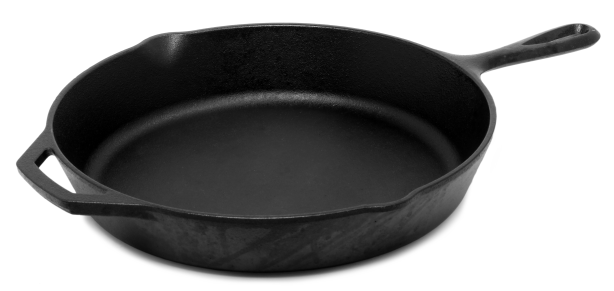
For shallow frying, searing paneer, cooking eggs or browning vegetables in a single layer, a wide fry pan is better than a kadai. The RIVEDA Cast Iron Fry Pan Hanging Handle 25 CM has a 25 cm cooking surface and deep sides, so you can cook in one layer and still stir. It weighs 2.5 kg, and the hanging hole lets you store it dry on a hook.
Rice, biryani, milk and kheer: steel is simply easier
For plain rice, pulao and milk-based sweets, a stainless steel vessel is simple and sensible. It is light to hold, easy to clean, and you can see the colour of the milk or rice clearly as it cooks. Milk can catch at the bottom of any metal pan, so a heavy-based steel pot and a low flame help.
Cast iron can cook rice and biryani too, and a heavy base is useful for the last slow stage. But for everyday rice, nobody needs a 3 kg pot, and that is fine. Use the right tool for the job.
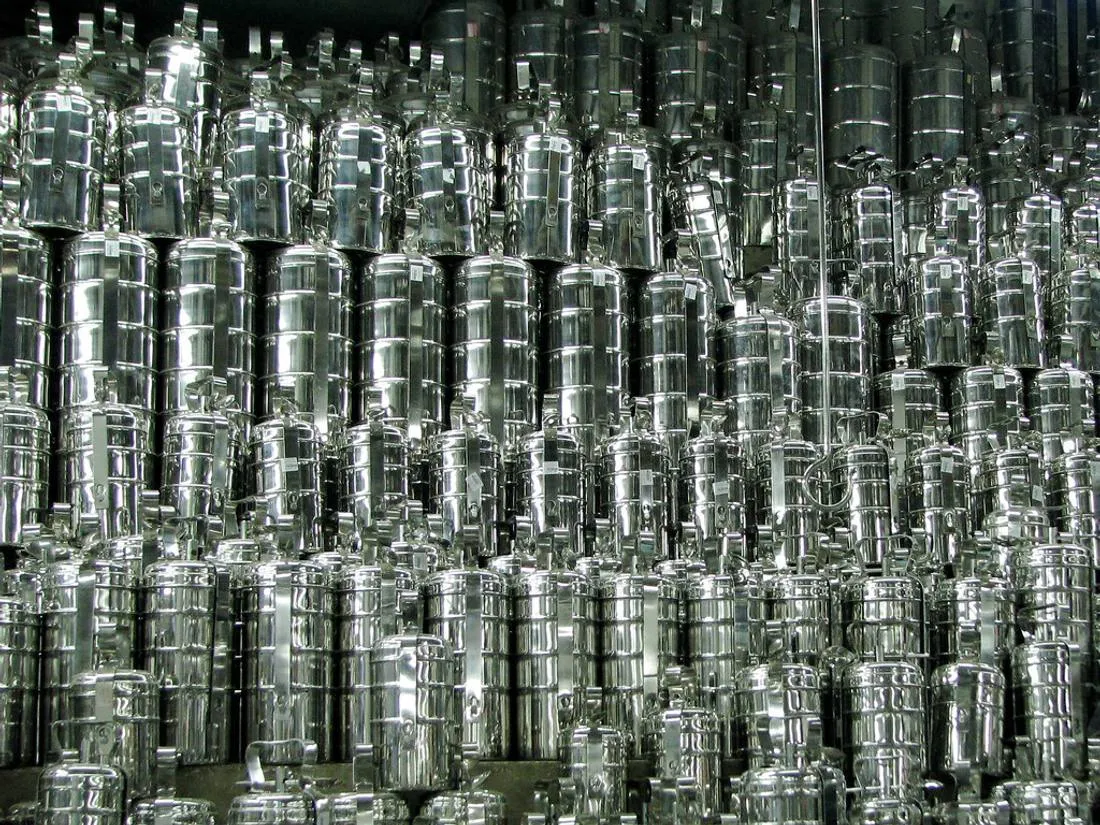 Stainless steel is everywhere in Indian kitchens, from tiffin boxes to pots. Photo: mckaysavage, CC BY 2.0.
Iron in your food: what the research says
People often ask whether cast iron adds iron to food while steel does not. Cast iron can, to a varying degree. In a study of Malawian foods by researchers at the Liverpool School of Tropical Medicine, foods cooked in an iron pot had more iron than the same foods cooked in a glass pot. Continued use of the pot appeared to add more iron, and more acidic food (lower pH) was linked with higher iron in the food. You can read the study summary.
A separate systematic review of iron-pot trials found some evidence that eating food cooked in iron pots can raise haemoglobin in people who are anaemic, but the effect depended on things such as whether people kept using the pot, their age, and other health conditions. The authors said more research is needed. Here is the review summary.
We do not make any health promise. Treat the iron from a pan as a small, unpredictable bonus. Never use a pan in place of advice from your doctor. If you have a condition that affects your iron levels, ask your doctor before cooking in iron every day.
Care and induction: where the work differs
Care
The biggest practical difference is aftercare.
Stainless steel: wash with soap, scrub if needed, dry and put away. If something burns, soak and scrub. There is no seasoning to protect.
Cast iron: wash with hot water and a brush, dry it fully (a minute on a low flame helps), and wipe on a very thin film of oil. Do not soak it, and keep it dry through the monsoon. It is a small habit, not a big job. Our care page walks through it, and if rust ever appears, removing rust from cast iron shows how to fix it. Our seasoning guide explains how the black layer builds.
RIVEDA pieces are cast and finished at our own ZED-certified foundry in Rajkot, Gujarat. They go through grinding, sand cleaning and quality checks, and they are supplied pre-seasoned, so you can cook from the first day while the seasoning keeps improving with use.
Induction
Many city homes now have induction hobs. Cast iron works on induction, and so do many stainless steel pans, though not every steel vessel is induction-ready, so check the base. RIVEDA cast iron works on gas and induction. As always, follow your hob maker’s guidance on base size and weight, because cast iron is heavy. Our guide to cast iron on induction has the details.
A simple way to choose
You do not have to pick a side. Here is a plain way to decide.
- List what you cook every week. If rotis, dosas and frying come up most days, cast iron will be in your hand all the time.
- Keep steel for what steel does well. Milk, rice, long-simmered sambar and anything you store in the fridge.
- Start small. One tawa or one kadai is enough to begin. See the buying guide for first-time buyers if you are unsure where to start.
- Add the second pan when you feel the gap. A fry pan for single-layer cooking is a natural next step.
A kitchen with a few steel vessels and two or three cast iron pans cooks almost everything well. That is why so many Indian homes have kept both for generations.
The short answer
Cast iron suits roti, dosa, sabzi, frying and searing, because it holds heat and rewards a seasoned surface. Stainless steel suits milk, rice, long sour simmering and anything you want to wash and forget. For dal and tadka, either works. If you are choosing your first cast iron piece, the Cast Iron Kadai 27 CM covers sabzi, dal and frying, and the Fry Pan 25 CM covers single-layer cooking. You can browse the kadai range and fry pans, or read the cooking guide and FAQ for more.
Shop this article
Frequently asked questions
Is cast iron better than stainless steel?
Neither wins everywhere. Cast iron is better at holding heat, so it suits roti, dosa, searing and frying. Stainless steel is lighter, never needs seasoning and handles long, sour simmering without fuss. Many Indian kitchens do best with both.
Which is better for everyday Indian cooking?
If you cook rotis, dosas, sabzi and fried snacks every day, cast iron earns its place. For milk, rice, dal boiled in volume and long tamarind simmering, a steel vessel is easier. Use each for what it does best.
Does food stick more in cast iron or stainless steel?
Food can stick to both. A well-seasoned cast iron pan, properly preheated, releases food well. Stainless steel has no seasoning, so it relies on a hot pan and enough oil, and sticking is common when the pan is too cold.
Is stainless steel safe to cook in?
Stainless steel is used in kitchens everywhere. One study did find that nickel and chromium from the steel can rise in acidic food cooked for many hours, mostly in new pans. For normal cooking times this is rarely a worry, but it is a fair reason to avoid very long simmering of sour dishes in a brand-new pan.
Can I use cast iron and stainless steel on induction?
Cast iron works on induction, and many stainless pans do too, but not every steel pan is induction-ready. Always follow your hob maker's guidance on base size and weight.
Do I need to season stainless steel like cast iron?
No. Stainless steel needs no seasoning. Cast iron does, which is why RIVEDA pieces arrive pre-seasoned and keep improving as you cook and oil them.
Sources
- Stainless steel leaches nickel and chromium into foods during cooking (Kamerud, Hobbie and Anderson, Journal of Agricultural and Food Chemistry, 2013) — PubMed Central, US National Library of Medicine
- Stainless steel leaches nickel and chromium into foods during cooking (research summary) — Oregon State University
- Iron contents of Malawian foods when prepared in iron cooking pots (Prinsen Geerligs and others) — Liverpool School of Tropical Medicine
- Food prepared in iron cooking pots as an intervention for reducing iron deficiency anaemia in developing countries: a systematic review — Liverpool School of Tropical Medicine
- Staying warm: cast iron vs. stainless steel — Khymos (Martin Lersch, food chemistry)
More on this topic: all comparisons articles →
Pictures: cast-iron-vs-stainless-steel.jpg (cover) — karmadude, CC BY-SA 2.0; dal-tadka.jpg — askmir, CC BY-SA 2.0; steel-tiffin-shop.jpg — mckaysavage, CC BY 2.0; idli-sambar.jpg — Aleksandr Zykov, CC BY-SA 2.0.
Follow the RIVEDA blog
One short email a week with new articles — cast iron cooking, care and recipes for Indian kitchens. No spam; unsubscribe in one click.