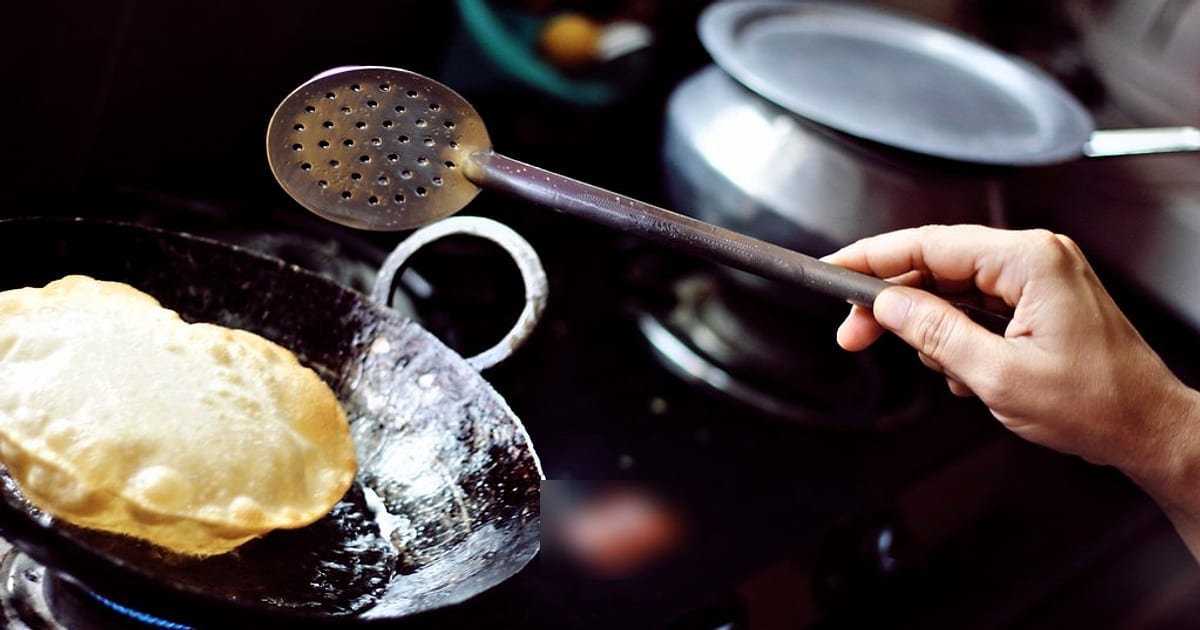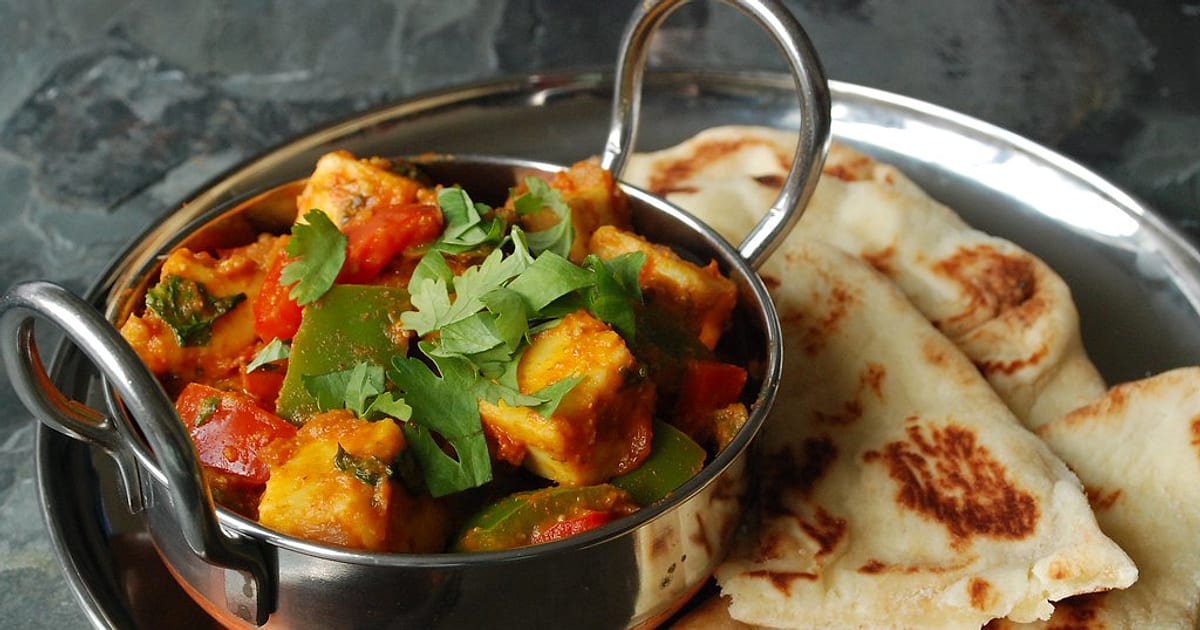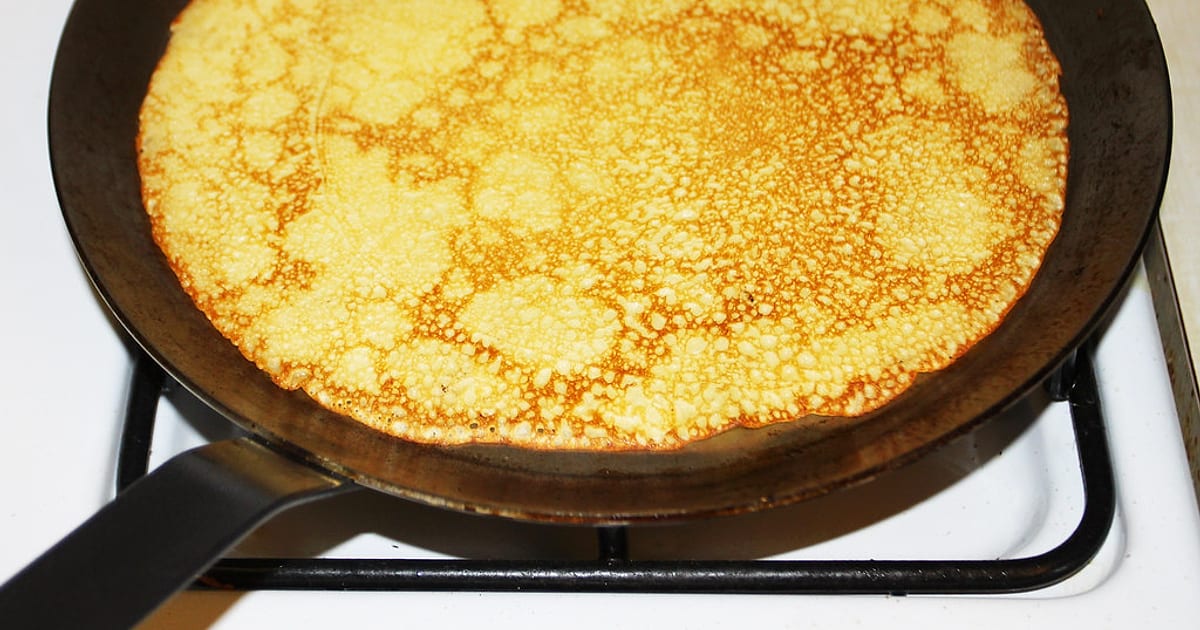

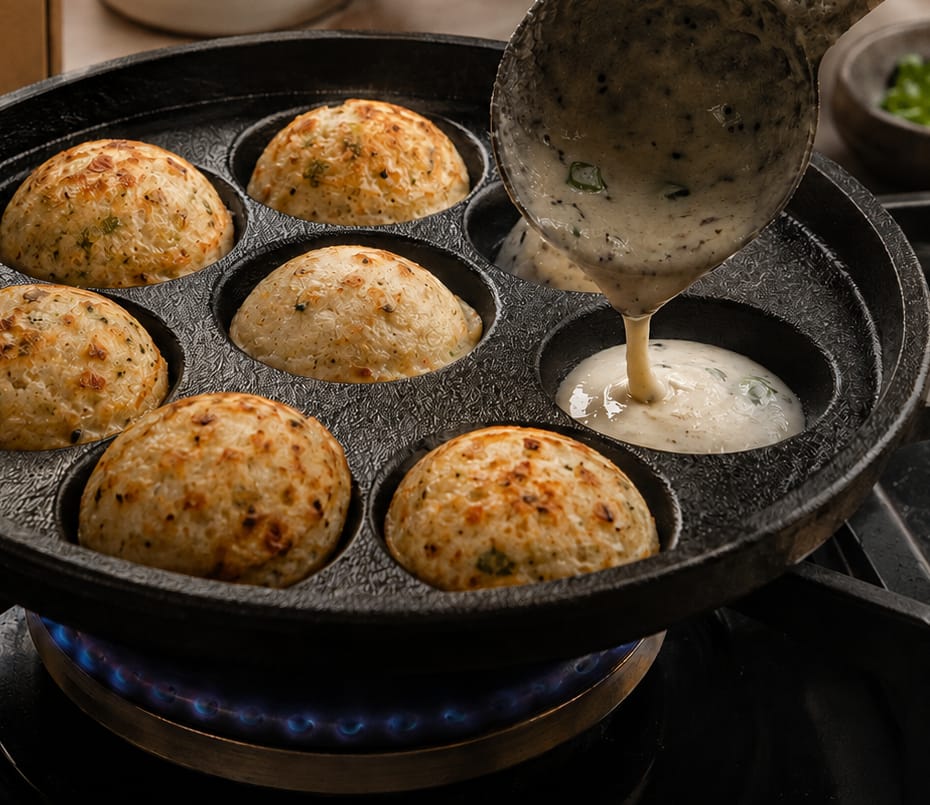
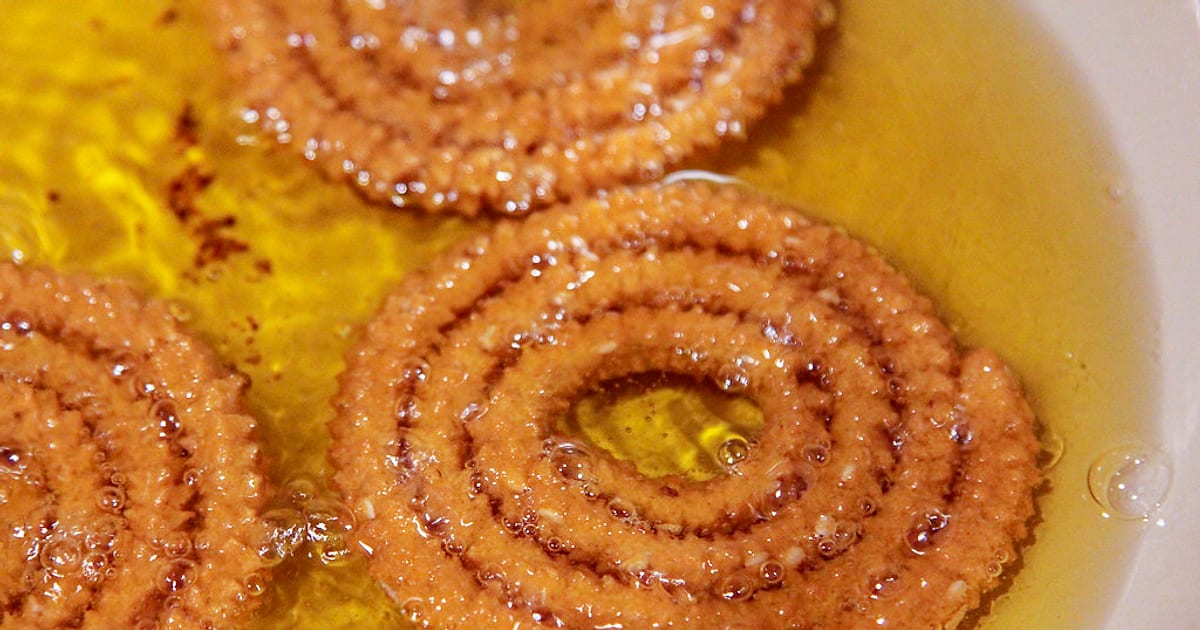
Every Diwali the same thing happens. The kitchen smells wonderful, the first chakli comes out golden, and by the fourth batch the oil is too hot, the snacks are dark outside and soft inside, and you are tired. The fix is mostly not the recipe. It is steady oil temperature, and a heavy cast iron kadai is one of the easiest ways to keep it steady. Here are seven faral you can fry in a 27 cm or 31 cm kadai, with batch sizes, oil tips and the small mistakes that spoil each one.
Why a heavy kadai suits festival frying
When you drop cold dough into hot oil, the oil cools for a moment. In a thin pot the temperature swings up and down as you add and remove snacks. A thick, heavy kadai holds more heat in its body, so it tends to recover more calmly. That helps you fry snack after snack without constantly turning the flame up and down. Our longer guide on deep frying in a cast iron kadai goes into the shape and safety in detail.
One honest note. The US food safety agency USDA FSIS, in its general deep-frying advice, suggests avoiding cast iron because it can break oil down faster than other metals. How much it matters in a home kitchen is not clear. A sensible habit covers it either way: use fresh oil for faral, strain it between rounds, and do not keep re-frying the same oil day after day.
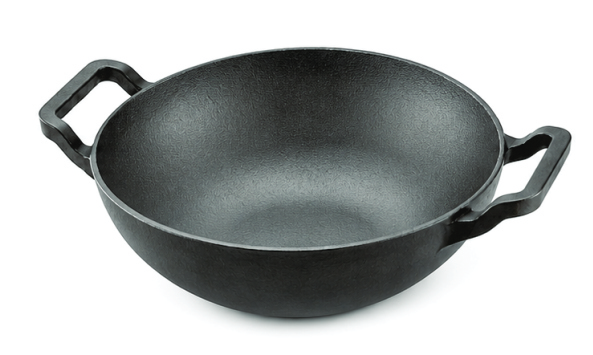
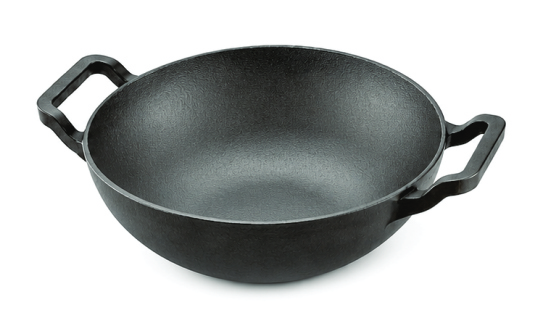
The two sizes we make for this job are the Cast Iron Kadai 27 CM (2.7 kg) and the Cast Iron Kadai 31 CM (3.6 kg). Both are deep, with two side handles, and arrive pre-seasoned. If you are still deciding between sizes, how to choose the best cast iron kadai will help.
Before you start: oil, heat and batch size
A few rules apply to all seven snacks.
- Oil depth. Fill the kadai to about one-third of its depth, and never more than half. Oil foams and rises when food goes in.
- Test the oil. Drop in a small piece of the dough. Recipe writers agree on the signal: it should sink for a second or two, then rise with steady bubbles. If it rises at once, the oil is too hot. If it stays at the bottom, it is too cool. Many sources put the working range at roughly 170 to 190 °C if you do own a thermometer.
- Medium flame. Most of the snacks below fry best on a medium or medium-low flame. High heat browns the outside quickly and leaves the inside raw.
- Do not crowd. Too many pieces at once cool the oil, and the snacks come out greasy. A rule of thumb: the pieces should cover about half of the oil surface, with space to move.
- Cool before storing. Let every snack cool fully on paper or a wire rack before it goes into a box. Hot snacks make steam and turn soft.
- Keep water away. Wet hands, wet spoons or a drop of water in hot oil make it spit. Dry your tools first.
Batch sizes below are practical starting points, not exact rules. Your flame, your oil and your dough decide the rest, so watch the first batch and adjust.
The seven snacks, one by one
1. Chakli (murukku)
Chakli is the spiral snack made from rice flour and besan (gram flour), shaped with a press. It is the one most likely to go wrong, because the dough is soft and the oil temperature matters a great deal.
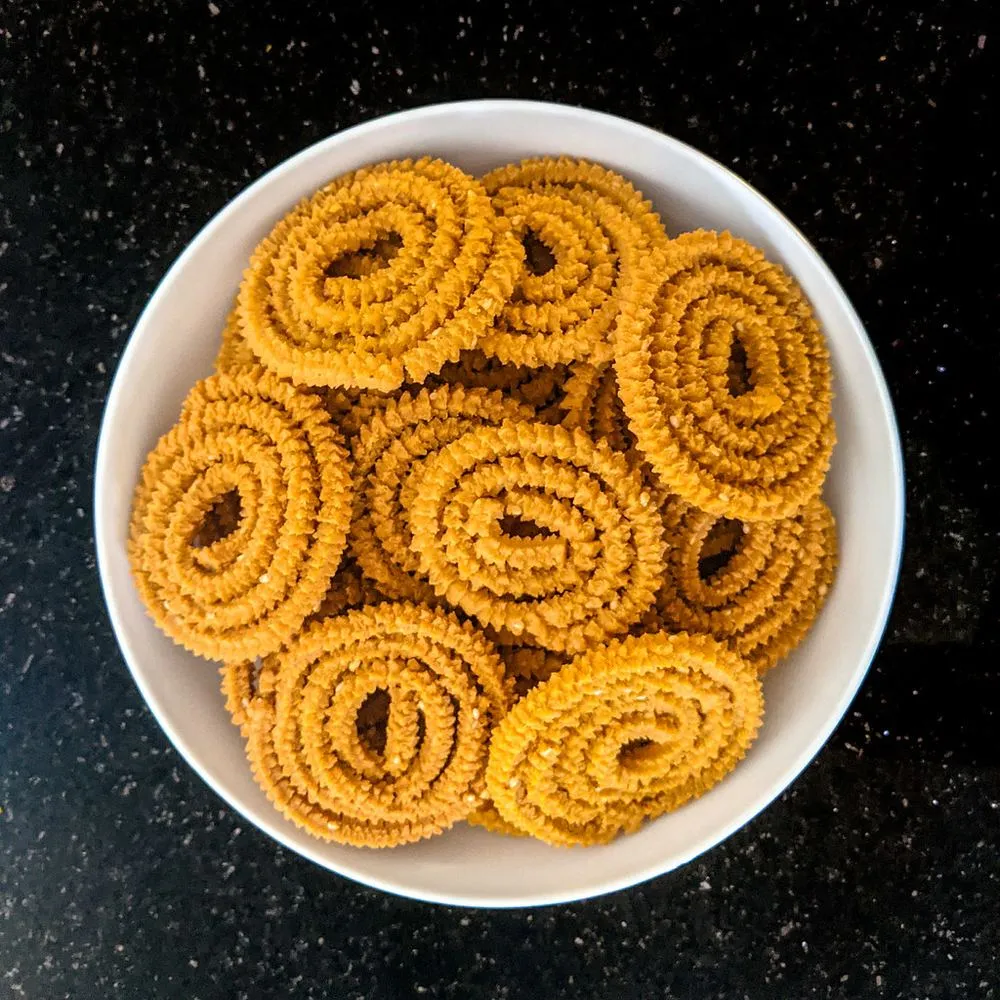 Chakli, the spiral Diwali snack made with a press. Photo: spurekar, CC BY 2.0.
Batch size: 3 to 4 chakli at a time in the 27 cm kadai; 5 to 6 in the 31 cm kadai.
What to do:
- Press the chakli onto a greased steel plate or a piece of butter paper, then slide it into the oil.
- Start on a slightly higher flame so the dough sets, wait about a minute, turn it, then lower the flame to medium-low.
- Fry until the sizzling sound almost stops and the colour is golden. That sound is your best timer, because the bubbles slow down as the water leaves the dough.
Common problems:
- Greasy chakli usually means the oil was too cool, or there was too much butter or oil in the dough.
- Soft chakli can mean the oil was too hot, so the outside browned before the inside cooked. It can also mean it fried on too low a flame for too long.
- Chakli that breaks apart often has dough that is too dry or too wet. Close the end of each spiral firmly by pressing it down.
2. Namak para (salted diamonds)
Namak para is a crisp, salty snack of maida (refined flour), ajwain (carom seeds), salt and ghee. It is simple, which means the details decide everything.
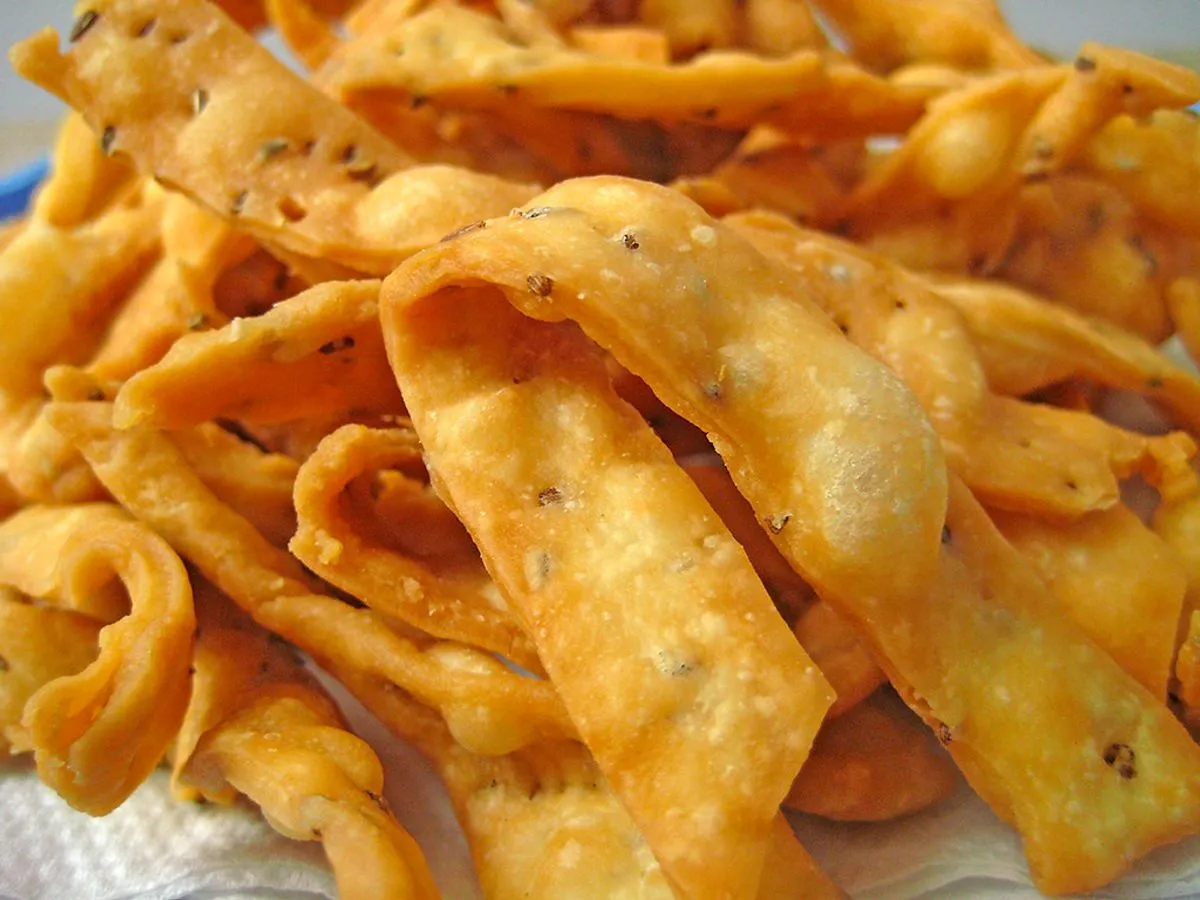 Namak pare fried until golden, with ajwain seeds visible. Photo: Sonia Goyal Jaipur, CC BY-SA 2.0.
Batch size: a good handful, roughly 15 to 20 pieces, in the 27 cm kadai; about 25 to 30 in the 31 cm kadai.
What to do:
- Make a firm dough. If it is too soft, the namak para turns oily and loses its crunch.
- Rest the dough under a damp cloth for 20 to 30 minutes. Recipe writers range between 10 and 30 minutes, so do not skip it.
- Roll evenly, cut into diamonds or strips and prick them with a fork so they do not puff.
- Fry on a medium-low flame. If the flame is too high, the outside colours quickly and the inside stays soft. Expect several minutes per batch, and stir gently.
3. Shakarpara (shankarpali)
The sweet cousin of namak para. Small cubes or diamonds of dough are fried, then coated in sugar syrup that hardens into a crunchy shell.
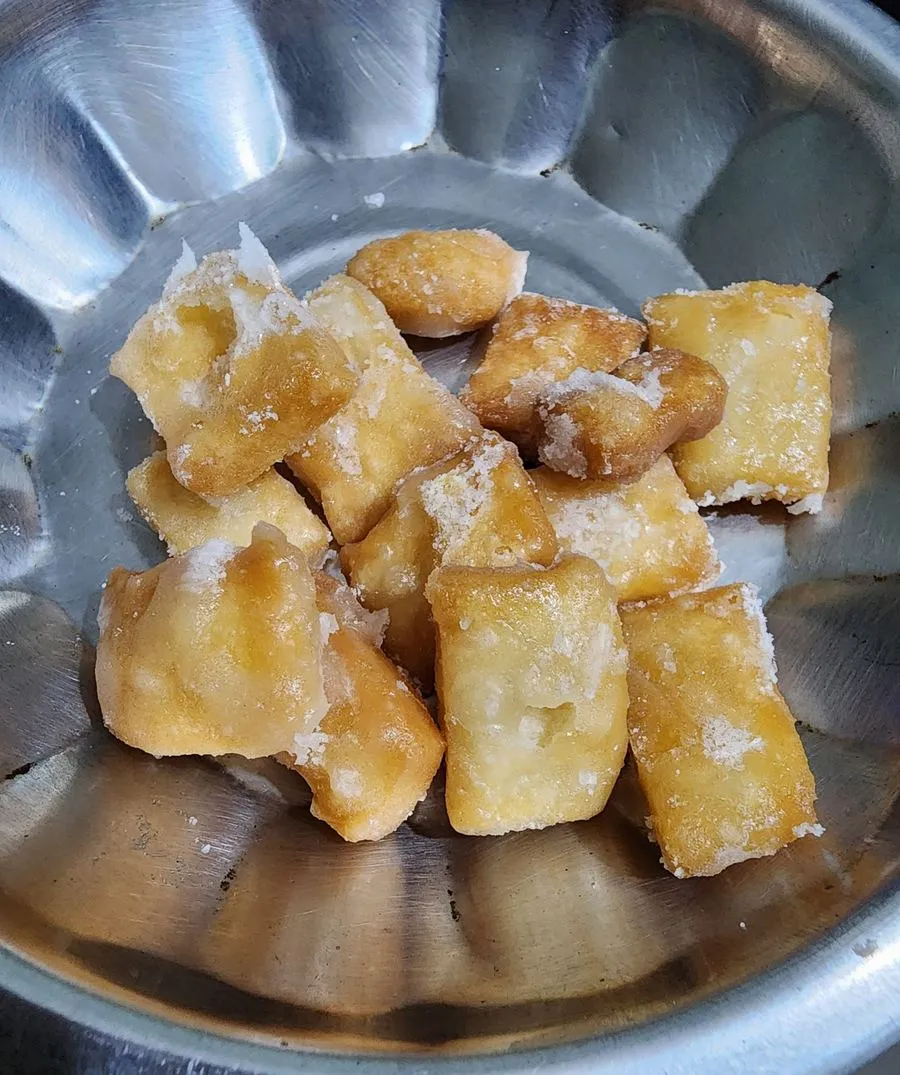 Shakarpara, fried dough pieces coated in sugar. Photo: Amit Kumar Singh, CC0.
Batch size: 20 to 25 small pieces in the 27 cm kadai; 35 to 40 in the 31 cm kadai.
What to do:
- Rub ghee into the flour well before adding water or milk. Knead only until the dough comes together. Over-kneading can make the layers merge.
- Fry on low to medium heat so the pieces cook through and turn lightly golden.
- Make the sugar syrup in a separate pan, not in the kadai. Recipes ask for a one-string or two-string consistency. Let the fried pieces cool to room temperature before you add them, then stir until the syrup dries and coats each one.
4. Mathri
Mathri is the thicker, flakier cousin of namak para. It is made from maida or atta (wheat flour) with ghee, salt, ajwain and sometimes crushed pepper or kasuri methi. We did not find a recipe source to quote for exact quantities, so treat this section as general home practice.
Batch size: 8 to 10 mathri in the 27 cm kadai; 14 to 16 in the 31 cm kadai.
What to do:
- Use a firm dough with enough ghee that it holds together in a clump when squeezed. That ghee is what makes it flaky.
- Roll thick rounds, prick them all over so steam can escape, and fry on low to medium heat.
- Be patient. Mathri is thicker than namak para, so it needs a slow fry to cook through. Take it out when it is evenly golden and makes a dry, light sound when tapped.
If the oil gets too hot, lift the kadai off the flame for a few seconds.
5. Chivda (poha mixture)
Chivda is the one snack where you fry in many tiny steps rather than one big one. Thick poha (flattened rice) puffs up in hot oil in seconds, and the mixture is then tossed with peanuts, cashews, curry leaves, turmeric and salt.
Fry the poha a handful at a time in a strainer or a slotted spoon, for just a few seconds, until it puffs and turns crisp. Lift it out the moment it puffs, because it burns very quickly.
Batch size: about 250 g of poha (a common quantity in recipes, making roughly half a kilo of chivda) is easy to fry in 4 to 5 handfuls in the 27 cm kadai. In the 31 cm kadai you can fry slightly larger handfuls and finish sooner.
What to do:
- Fry the peanuts, cashews and curry leaves separately, in turns, in the same oil. Peanuts take the longest, so they go in first.
- Fry the poha in handfuls, draining each on paper.
- Toss everything together with turmeric, salt and a spoon of powdered sugar while it is still slightly warm, then cool fully.
If the oil is too cool, the poha soaks it up. If it is too hot, it browns before it puffs.
6. Sev (besan sev)
Sev is thin strands of besan dough pressed straight into hot oil through a sev maker. One recipe uses 1 cup of besan with 3 tablespoons of rice flour, plus chilli powder, ajwain, hing and salt, and a little oil in the dough.
Batch size: a small handful of strands at a time. In the 27 cm kadai, press out a circle about the size of your palm; in the 31 cm kadai, you can press a wider circle or two small ones.
What to do:
- Make the dough soft but not sticky. If it is too stiff, the press is hard to work; if too wet, strands stick together.
- Press the dough in a circular motion directly over the oil, moving your hand in a wide loop.
- Fry on a medium flame, turn once, and take it out as soon as the bubbles settle. Sev is thin, so it cooks in a minute or two and then burns fast.
- Break it into pieces when cool.
7. Karanji (gujiya)
Karanji is a half-moon pastry with a sweet filling, usually coconut, semolina, sugar or jaggery, nuts, poppy seeds and cardamom. The shell is made with maida, a little fine semolina and hot ghee, kneaded with milk or water.
Batch size: 3 to 4 karanji at a time in the 27 cm kadai; 5 to 6 in the 31 cm kadai.
What to do:
- Roast the filling dry. Semolina in the filling soaks up moisture, which helps stop the karanji bursting. Coconut and jaggery burn quickly, so keep stirring.
- Do not overfill. A karanji that is too full can break open in the oil.
- Seal the edges firmly with a little water or milk, and keep the shaped ones covered with a damp cloth until you fry.
- Fry on a medium flame until light golden, turning once. A very hot flame browns the shell before the inside layer cooks.
Karanji needs a little more oil depth than flat snacks, so the pieces can float freely. Fill the kadai to about half its depth for this one, and never more than that.
Fry in a smart order
If you are making several snacks in one session, the order matters. A simple plan:
| Order | Snack | Why |
|---|---|---|
| 1 | Mathri, namak para | They fry slowly on low heat and the oil stays clean |
| 2 | Karanji, shakarpara | Cooked on medium heat, no strong spices in the dough |
| 3 | Chakli | Needs clean oil and good control |
| 4 | Sev, chivda | Quick fries; flavour from besan and spices stays in the oil |
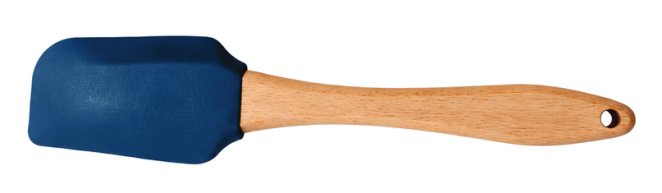
Strain the oil through a fine strainer between rounds, because burnt crumbs make fresh snacks taste bitter. Keep a silicon spatula or a slotted spoon for turning, and use a steel or wooden tool for lifting. Hot oil needs space and a steady hand, so keep children and pets out of the kitchen and never leave the kadai unattended.
What to do with the oil
By the end of the day you will have a lot of used oil. FSSAI advises avoiding repeated reheating of oil. Its general rule is that oil should not be taken to its smoke point, and that oil that is dark, smells sharp, foams or smokes at a low flame should be thrown away. The commercial limits are strict, and the advice for home is more careful still.
A practical plan: strain the oil once it cools, store it in a closed container away from light and use it in the next day or two for a curry or tadka. Do not use it to deep fry again. Our guide on health and cast iron cooking covers why cast iron suits everyday cooking with less oil.
Cleaning the kadai after the festival
Frying oil is good for a cast iron kadai, because it builds seasoning. After the frying is done and the kadai has cooled:
- Wash with hot water and a brush. A little mild soap is fine now and then.
- Dry it fully, then keep it on a low flame for a minute to remove every drop of water.
- Wipe a very thin film of oil, then wipe most of it off.
- Do not soak, and do not leave it wet. After Diwali, the monsoon dampness has usually passed, but still store it in a dry place.
If rust shows up, it is easy to fix. Our guide on removing rust from cast iron walks through it, and the care page covers the basics. For fresh seasoning ideas, see how to season a cast iron tawa; the same idea applies to a kadai.
Which kadai for your Diwali kitchen?
The 27 cm kadai (2.7 kg) suits most families and is easy to lift and wash. The 31 cm kadai (3.6 kg) holds bigger batches, but it is heavy when full of oil, so check that you can handle it safely.
Both work on gas and on induction. Check your hob maker’s guidance on base size and weight; our page on cast iron on induction explains what to look for. Every RIVEDA piece is sand-cast and finished at our own ZED-certified foundry in Rajkot, goes through grinding, sand cleaning, quality checks and seasoning, and is supplied pre-seasoned. You can see both sizes in the kadai range and the cooking guide has more everyday ideas.
The short plan
Pick the sizes of batch above, keep the oil about a third full, test it with a pinch of dough, and fry on a medium or low flame. Watch the first batch closely and adjust. Do that, and Diwali frying becomes a calm afternoon instead of a rush.
Shop this article
Frequently asked questions
Which size kadai is best for Diwali frying, 27 cm or 31 cm?
The 27 cm kadai handles a normal family's faral in a few rounds. The 31 cm kadai has more surface, so each batch holds more pieces and the frying finishes sooner. Choose the larger one only if you regularly cook for a crowd and can lift and store about 3.6 kg.
How much oil should I put in the kadai?
Fill the kadai to about one-third of its depth, and never more than half. Oil rises and foams when food goes in, so the extra space keeps it from spilling. Chakli and karanji need a little more depth than flat snacks like namak para.
How do I know the oil is ready without a thermometer?
Drop in a small piece of dough. If it sinks and stays down, the oil is too cool. If it browns at once, it is too hot. If it sinks briefly and rises in a second or two with steady bubbles, start frying.
Can I reuse the frying oil after making so many snacks?
Strain it, store it away from light and use it soon for curries or tadka. FSSAI advises avoiding repeated reheating of oil, so do not keep re-frying in it. Throw it away if it smells sharp, foams, smokes at low heat or has turned very dark.
Will the sugar from shakarpara or karanji spoil my kadai?
No, because the sugar syrup is made in a separate pan and the snacks are fried plain. Fry the sweets first and the salty snacks after, or the other way round, and filter the oil in between so burnt bits do not stay in it.
Do I need to season the kadai again after the Diwali frying?
Usually not. Frying is good for seasoning. Let the kadai cool, wash it with hot water and a brush, dry it on a low flame and wipe a very thin film of oil. If it looks dull or rusty, see our rust guide.
Sources
- Chakli Recipe (Chakralu Recipe) — Swasthi's Recipes
- Namak Pare Recipe (Namak Para) — Hebbar's Kitchen
- Shakarpara Recipe — Veg Recipes of India
- Karasev Recipe (besan sev) — Swasthi's Recipes
- Poha Chivda Recipe — Veg Recipes of India
- Karanji Recipe (Maharashtrian) — Veg Recipes of India
- Reusing cooking oil — FSSAI (Food Safety and Standards Authority of India)
- Deep Fat Frying and Food Safety — USDA Food Safety and Inspection Service
Pictures: diwali-snacks-in-cast-iron-kadai.jpg (cover) — spurekar, CC BY 2.0; chakli.jpg — spurekar, CC BY 2.0; namak-para.jpg — Sonia Goyal Jaipur, CC BY-SA 2.0; shakarpara.jpg — Amit Kumar Singh, CC0 1.0.
Follow the RIVEDA blog
One short email a week with new articles — cast iron cooking, care and recipes for Indian kitchens. No spam; unsubscribe in one click.