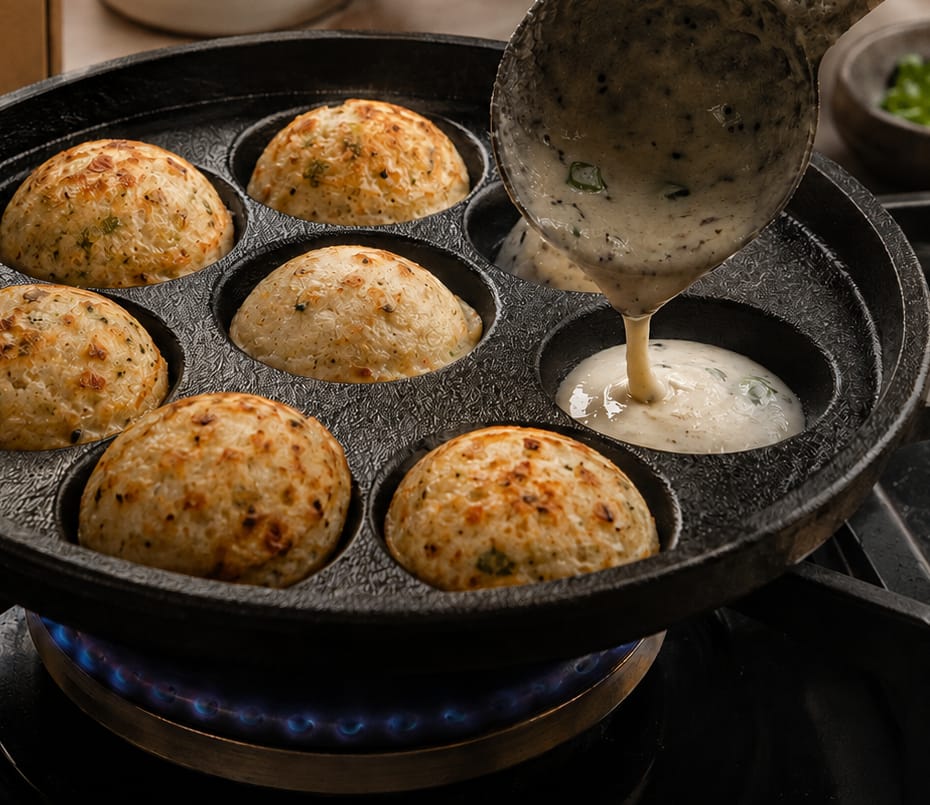
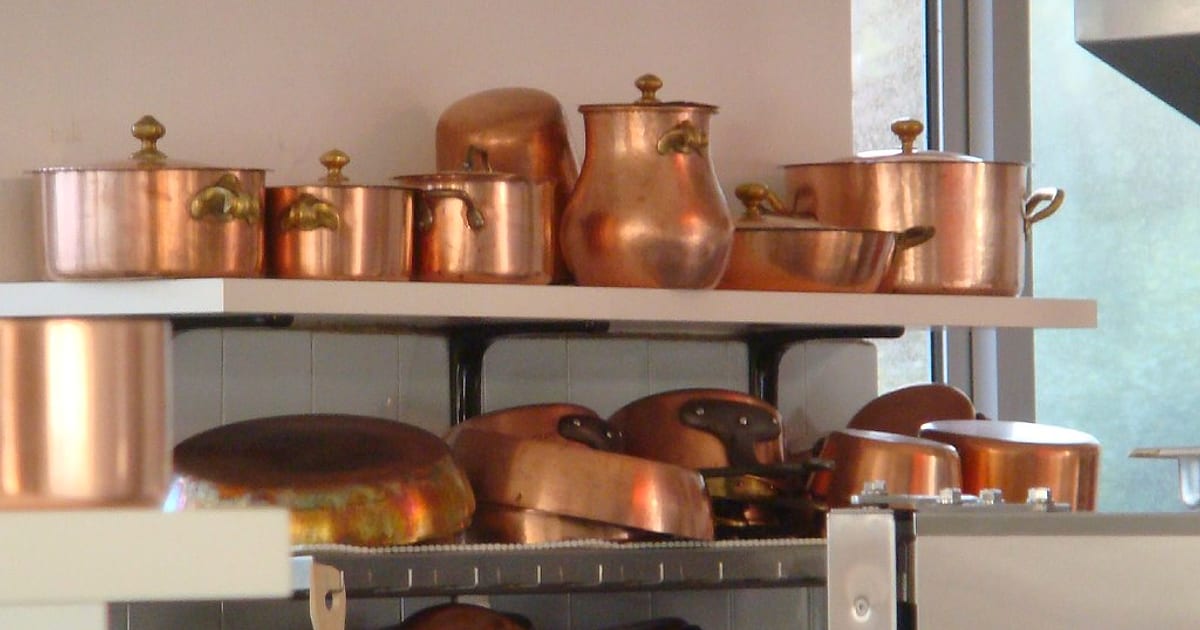
You open the kitchen shop and see a wall of shiny pots. Steel, “triply”, hard anodised, granite, ceramic. Every box says it is the best. So what are the main types of cookware, and which one should you actually buy? Here is the short answer: there are about ten common materials, each is good at something and poor at something else, and most cooks end up happiest with two or three types, not one.
This guide goes through all ten in plain words, with one table to compare them. We make cast iron ourselves, so we will say so, and we will be fair to the others too.
First, what to look for in any cookware
Before the list, four simple questions help you judge any pan.
- How does it handle heat? Some metals heat fast and cool fast. Some heat slowly but stay hot for a long time. For roti and dosa, staying hot matters. For boiling milk, fast response matters.
- Does it react with food? Some metals and coatings are affected by sour food like tomato, tamarind and lemon.
- Does it have a coating? A coating can make cooking easy, but a coating can also wear out.
- Will it work on your stove? Gas takes almost anything. Induction needs a magnetic base.
Keep these four in mind. Every material below is just a different answer to them.
1. Stainless steel
Steel is the most common vessel in Indian homes, and for good reasons. It is strong, does not rust in normal use, looks smart for years and does not mind sour food.
Its weakness is heat. Steel alone spreads heat poorly, so a thin steel pan can burn food in the middle while the edges stay cool. That is why many steel pans have a thicker base.
One more point from research. A study by Kamerud and colleagues, published in the Journal of Agricultural and Food Chemistry, found that stainless steel can release small amounts of nickel and chromium into acidic food, most of all when the steel is new and the food is cooked for a long time. For most people the amounts are small. If you have a known nickel allergy, ask your doctor.
Good for: boiling, dal, rice, milk, storing, everyday sabzi. Less good for: dosa and roti, where food sticks without plenty of oil.
2. Triply (tri-ply or three-layer) cookware
Triply fixes the heat problem of steel. It is a sandwich: steel on the outside, a layer of aluminium in the middle, steel on the inside. The aluminium spreads heat sideways, so the pan heats more evenly. Your food only touches steel, not aluminium.
The outer steel is usually a magnetic grade, so many triply pans work on induction. Check the box or ask the seller.
The price you pay is cost and some weight. Triply is also still a steel surface, so food can stick if the pan is too cold when you start. Heat the pan first, then add oil.
Good for: curries, tadka, deep frying, everyday all-round cooking. Less good for: thin crisp dosa without practice.
3. Aluminium (plain)
This is the light, cheap pot of our childhood: the pressure cooker, the idli steamer, the milk pan. Aluminium heats up quickly and is easy to lift.
It is also soft. It dents, scratches and loses its shine. And bare aluminium reacts with acidic food. A research study on aluminium dishes found that very acidic food, such as lemon marinade, released far more aluminium than plain water or oil did. That study used worst-case conditions, so it does not mean everyday cooking is dangerous.
What do the food safety bodies say? The European Food Safety Authority (EFSA) set a tolerable weekly intake of 1 mg of aluminium per kg of body weight. It also says food is the main source for most people, and that food-contact items like cookware are a minor source. A sensible habit is to use bare aluminium for water, rice, steaming and quick jobs, and avoid long simmering of tomato, tamarind or kokum dishes in it.
Good for: pressure cooking, steaming, boiling water and milk. Less good for: sour, slow-cooked dishes. Plain aluminium and induction usually do not go together.
4. Hard anodised aluminium
Hard anodised pans are aluminium that has been treated in an acid bath with an electric current. The treatment grows a thick, hard layer of aluminium oxide from the metal itself. The result is dark grey, harder than plain aluminium and more resistant to scratches and sour food.
Two cautions. First, “hard anodised” describes the body of the pan. Many hard anodised pans also have a non-stick coating on the inside, so you need to read the label to know what your food will actually touch. Second, the layer protects the metal, but it is not a magic shield, so metal spoons and harsh scouring still wear it.
Good for: light, quick-heating pans for everyday sabzi and stir-fry. Less good for: induction (unless it has a magnetic base) and very high-heat searing.
5. Non-stick (PTFE-coated)
Non-stick pans have a slippery plastic-like coating, usually PTFE, bonded to a metal body, often aluminium. The reason people love them is simple: you can make an omelette or crepe with a drop of oil, and cleaning takes seconds.
The reason people worry is also simple: it is a coating, and coatings have limits. News reports on the 2024 dietary guidelines of ICMR-NIN say the guidelines advise against heating non-stick pans above about 170 °C and say damaged ones should be discarded. The Week reports that the guidelines do not ban non-stick but ask people to take care.
Here is the practical rule. Use medium heat, soft spoons, and replace the pan when the coating is flaking or deeply scratched.
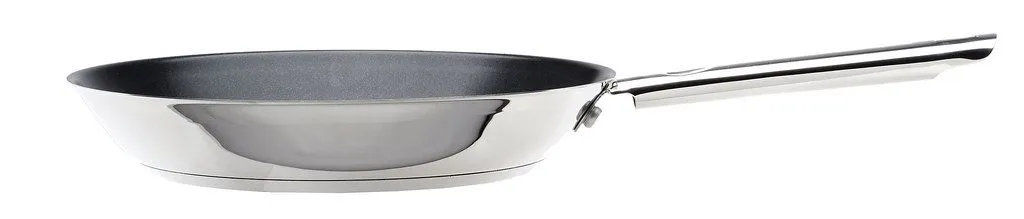 A frying pan with a dark, coated inside surface. Photo: Cooks & Kitchens, CC BY 2.0.
Good for: eggs, crepes, low-oil cooking at gentle heat. Less good for: a hot dosa tawa, searing, or a pan you want to keep for twenty years. We compare it with iron in detail in cast iron vs non-stick.
6. Ceramic-coated
Ceramic-coated pans are usually a metal pan, often aluminium, with a glassy “ceramic” non-stick layer. They are sold as PTFE-free and look bright and modern.
Here is what is worth knowing. The American Ceramic Society points out that the exact makeup of these coatings is often not shared, and that “nontoxic” on a box is a marketing word, not a test result. A research paper that tested five sol-gel ceramic coatings against PTFE found that PTFE kept its non-stick behaviour through 90 cooking cycles, while performance of the ceramic coatings varied from brand to brand. Many cooks also find that the slippery feel fades sooner than they expected.
None of this makes ceramic-coated pans bad. It means treat them like any other coated pan: moderate heat, no metal tools, and replace when worn.
Do not confuse these with solid ceramic or stoneware pots, which are pottery. Those are a different thing, and we cover glazed pottery under clay below.
Good for: eggs and light cooking on moderate heat. Less good for: high heat and long life.
7. Granite or enamel-coated
“Granite” cookware is usually steel (sometimes iron) coated with a speckled, glass-like enamel. Real enamelware has been around for more than a century, and it is easy to clean and does not mind sour food, because the glassy layer separates the food from the metal.
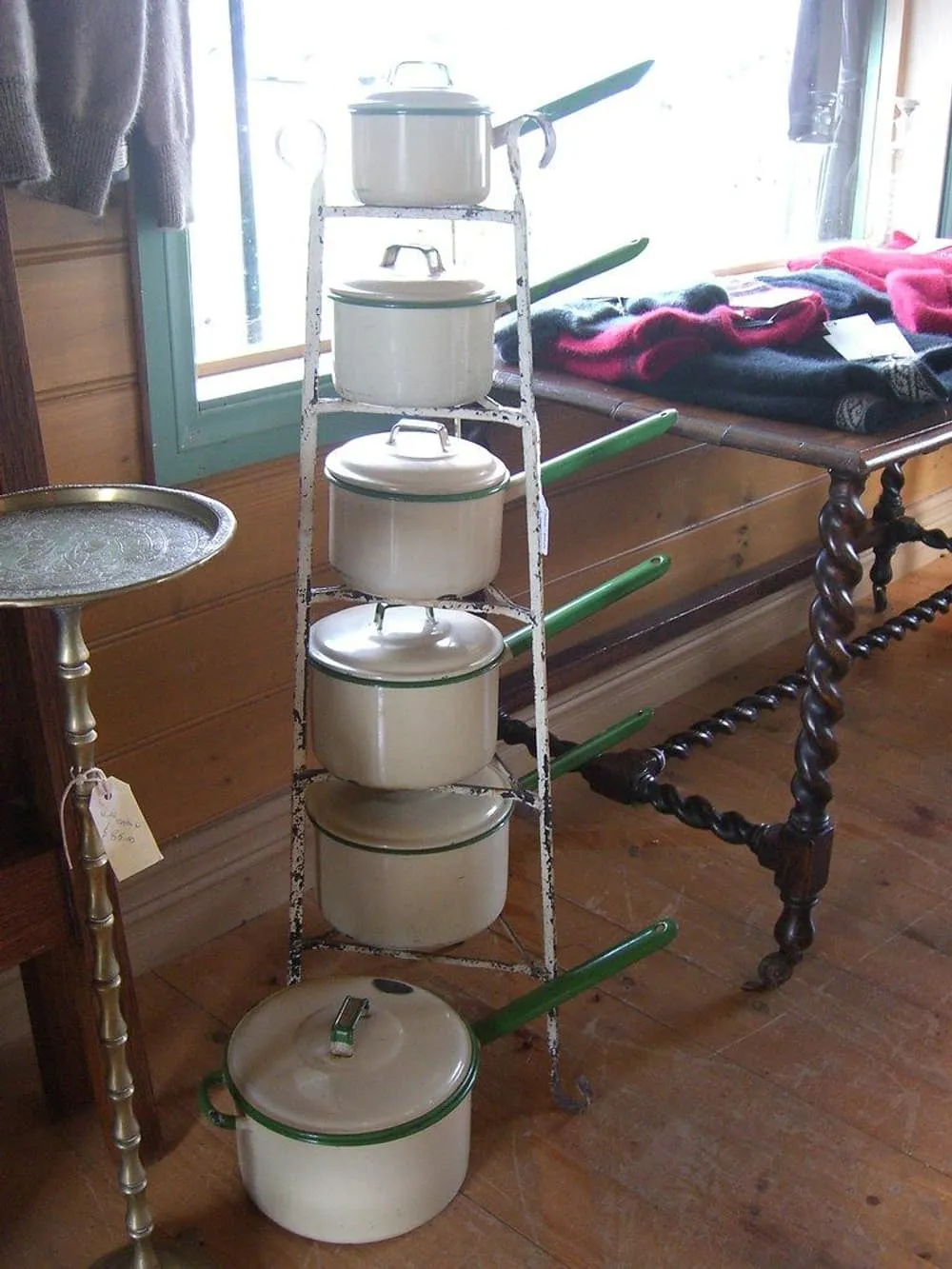 Enamel-coated pots, the older cousin of “granite” cookware. Photo: avlxyz, CC BY-SA 2.0.
The weak point is the coating itself. If you chip it, the bare metal below is exposed. Rough use, dropping and sudden temperature shocks cause chips. Also be aware that some modern pans sold as “granite” carry a non-stick coating instead of true enamel, so read what the maker says the inside is made of.
Good for: light stews, boiling, serving. Less good for: rough daily tadka and high-heat searing.
8. Iron (plain iron or wrought iron)
An iron tawa or kadai made from rolled or forged iron is the traditional vessel in many Indian homes. It is thinner and lighter than cast iron, heats faster, and builds a seasoned surface with use.
It is easy to mix up with cast iron, but they are made in different ways and behave differently. Plain iron can warp on a strong flame, and it needs the same oil-and-dry care to avoid rust. Our article on cast iron vs iron tawa explains how to tell them apart.
Good for: quick-heating tawas, budget kadai, people who like a lighter pan. Less good for: holding heat steadily.
9. Cast iron
Cast iron is iron melted and poured into a mould, then cleaned and finished. It is heavy, thick and made in one piece. That weight is the point. Cast iron takes a little time to heat, but once hot it stays hot, which is what a good roti, a crisp dosa, a browned paratha or a deep-fried pakora needs.
Our own cookware is sand-cast at our ZED-certified foundry in Rajkot, Gujarat, and each piece goes through grinding, sand cleaning, quality checks and seasoning before dispatch. RIVEDA cast iron is supplied pre-seasoned (see what pre-seasoned means), so you can start cooking soon after unpacking. It works on gas and induction; always follow your hob maker’s guidance on base size and weight.
There is no coating to flake. If the seasoning wears, you oil and heat the pan again and it builds back. Cast iron can also add a small amount of iron to food, as shown in studies such as the 1986 work of Brittin and Nossaman, but the amount varies and it should not be counted on. The sources at the end of this page cover the details.
The costs are real too. It is heavy, it needs a little care, and long simmering of very sour food is best left to other pots. Start with our care guide and seasoning guide.
If you are curious where to begin, a Cast Iron Double Handle Dosa Tawa 30 CM suits dosa and roti, a Cast Iron Kadai 27 CM suits curries and frying, and the Cast Iron Dutch Oven 24 CM suits slow cooking. The full story for Indian cooks is in our cast iron cookware India guide.
Good for: roti, dosa, parathas, frying, searing, slow cooking. Less good for: speed, light weight, sour dishes simmered for hours.
10. Clay (earthenware)
Clay pots are the oldest cookware of all: the handi for biryani, the matka for dahi and the pots for slow dal. They cook gently and many people love the earthy taste.
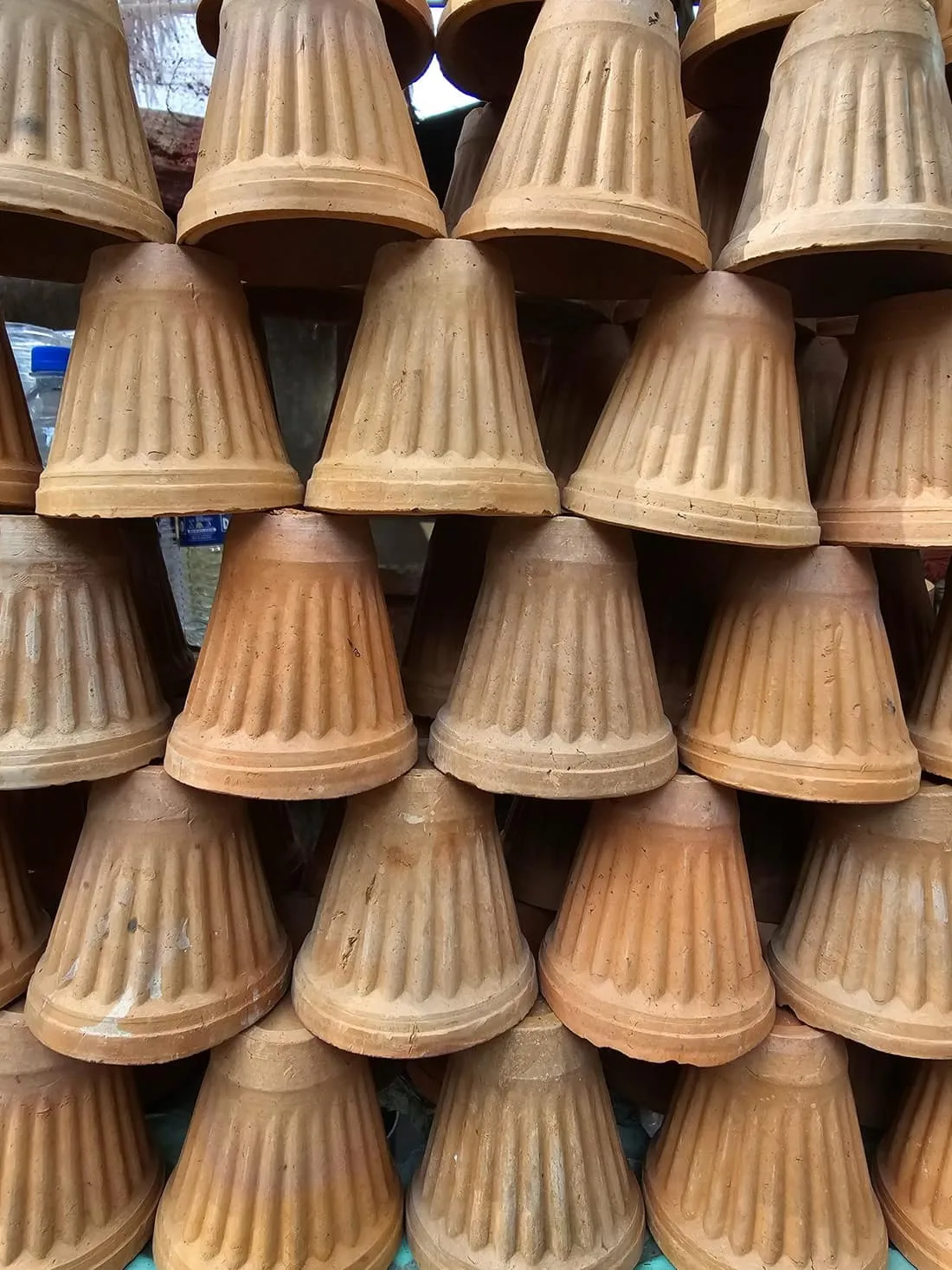 Unglazed clay pots (matka) from Kolkata. Photo: Bigul Malayi, CC0.
Clay has two safety points to remember. First, glaze. Studies and public-health reports have documented lead moving from lead-glazed ceramic pots into food, and acidic food pulls out the most. A CDC report described a family poisoned by lead from traditional glazed ceramic ware, and a study of glazed pottery found much more lead extracted by acidic food than by non-acidic food. So choose unglazed clay or a pot clearly sold for cooking, and never cook in decorative glazed pots.
Second, care. Clay cracks with sudden heat and does not like soapy soaking. It needs a gentle flame and a break-in.
Good for: slow dal, biryani, curd setting, gentle simmering. Less good for: fast cooking, induction and anything you might drop.
The one honest table
| Material | Heats | Holds heat | Sour food | Coating to wear out? | Induction |
|---|---|---|---|---|---|
| Stainless steel | Slowly, unevenly if thin | Medium | Fine | No | Usually yes (magnetic grades) |
| Triply | Evenly | Good | Fine | No | Usually yes |
| Plain aluminium | Fast | Low | Avoid long cooking | No | No (plain) |
| Hard anodised | Fast, even | Low to medium | Better than plain aluminium | Often a non-stick layer | Only with a magnetic base |
| Non-stick (PTFE) | Fast (aluminium body) | Low | Fine | Yes | Only with a magnetic base |
| Ceramic-coated | Fast | Low | Fine | Yes | Only with a magnetic base |
| Granite / enamel | Medium | Medium | Fine | Yes (enamel can chip) | Steel body, yes |
| Plain iron | Fast | Medium | Avoid long cooking | No | Yes |
| Cast iron | Slowly | Very good | Short cooking when seasoned | No | Yes |
| Clay | Slowly, gently | Good | Fine if unglazed | Glaze (if any) | No |
“Induction” answers are general. Always check your hob maker’s guidance on base size and weight.
Which type for which job?
Instead of choosing one winner, match the pot to the job.
- Dosa, roti, paratha, chilla: cast iron, or plain iron if you like it light. See our tawa range.
- Dal, rice, boiling, milk: steel, triply or aluminium.
- Deep frying, curries and sabzi: triply, steel or a cast iron kadai. See our kadai range.
- Eggs and delicate crepes: a non-stick or ceramic-coated pan at gentle heat.
- Slow dal and biryani: clay or a heavy Dutch oven.
- Pressure cooking and steaming: aluminium or steel cookers.
For a full kitchen plan, our article on the best cookware for the Indian kitchen builds a simple starter set. If safety is your first concern, read non-toxic cookware in India.
A simple way to decide
Ask yourself three things.
- What do I cook most? Roti and dosa point to a heavy, hot pan. Dal and rice point to steel or aluminium.
- How much care will I give it? If you will not dry and oil a pan, pick steel or triply.
- What is my stove? Gas is easy. Induction means checking for a magnetic base.
Then buy one good piece for your most-used dish, not a big set you will not use. Browse the cast iron range or see the cooking guide if you want to see what suits your menu. Questions are welcome on WhatsApp at +91 90999 29629.
Frequently asked questions
Which type of cookware is the best for everyday Indian cooking?
No single material does everything. Many kitchens do well with a mix: steel or triply for boiling and dal, a heavy pan such as cast iron for roti, dosa and shallow frying, and one lightly used coated pan if you like eggs or crepes.
Is aluminium cookware safe?
Food safety bodies such as EFSA have set a tolerable weekly intake for aluminium and note that food is the main source for most people, with cookware a minor one. Acidic, long-simmered food takes up the most aluminium from bare aluminium, so many people keep bare aluminium for water, rice and quick cooking.
What is the difference between triply and hard anodised cookware?
Triply is a sandwich of steel, aluminium and steel, so the food touches steel. Hard anodised cookware is aluminium whose surface has been thickened into a hard oxide layer, and many such pans also carry a non-stick coating on top.
Can all cookware be used on induction?
No. Induction needs a base that a magnet sticks to. Cast iron and most triply steel work, while plain aluminium and clay do not unless they have a magnetic plate. Follow your hob maker's guidance on base size and weight.
Is clay cookware safe?
Unglazed clay is the usual choice for cooking. Studies of lead-glazed ceramic pots have found lead moving into food, especially acidic food, so check that any glazed pot is sold as safe for cooking, and never use decorative glazed pots for food.
Which cookware lasts the longest?
Cast iron and good steel are usually the longest lasting because they are solid metal with no coating to wear out. Coated pans, whether non-stick or ceramic, are meant to be replaced when the coating is worn.
Sources
- Scientific Opinion of the Panel on Food Additives... on safety of aluminium from dietary intake (EFSA Journal 2008, 754) — European Food Safety Authority (EFSA)
- Aluminium in food (Q&A): sources, safety and regulations — EUFIC (European Food Information Council)
- Migration of aluminum from food contact materials to food, Part III: aluminum camping dishes and utensils — Environmental Sciences Europe (Springer)
- Stainless steel leaches nickel and chromium into foods during cooking (Kamerud et al., 2013) — Journal of Agricultural and Food Chemistry
- Towards a greener kitchen: can sol-gel ceramic non-stick coatings replace polytetrafluoroethylene? — Guerrero Vacas et al., SSRN
- Ceramic-coated cookware: investigating the accuracy of this 'nontoxic' cookware trend — The American Ceramic Society
- ICMR's guidelines on non-stick cookware sparks off an industry fight — The Week
- Are non-stick vessels safe? ICMR's warning and safer alternatives — Medindia
- Notes from the field: lead poisoning in a family of five resulting from use of traditional glazed ceramic ware, New York City, 2017-2022 — CDC, Morbidity and Mortality Weekly Report
- Enhanced leaching of soluble lead by cooking acidic food in glazed pottery sold at the Mexico-US border — PubMed
- Iron content of food cooked in iron utensils (Brittin & Nossaman, Journal of the American Dietetic Association, 1986) — FAO AGRIS
More on this topic: all cookware guides articles →
Pictures: types-of-cookware.jpg (cover) — dlisbona, CC BY 2.0; clay-matka-pots.jpg — Bigul Malayi, CC0 1.0; enamel-pots.jpg — avlxyz, CC BY-SA 2.0; coated-frying-pan.jpg — Cooks & Kitchens, CC BY 2.0.
Follow the RIVEDA blog
One short email a week with new articles — cast iron cooking, care and recipes for Indian kitchens. No spam; unsubscribe in one click.