
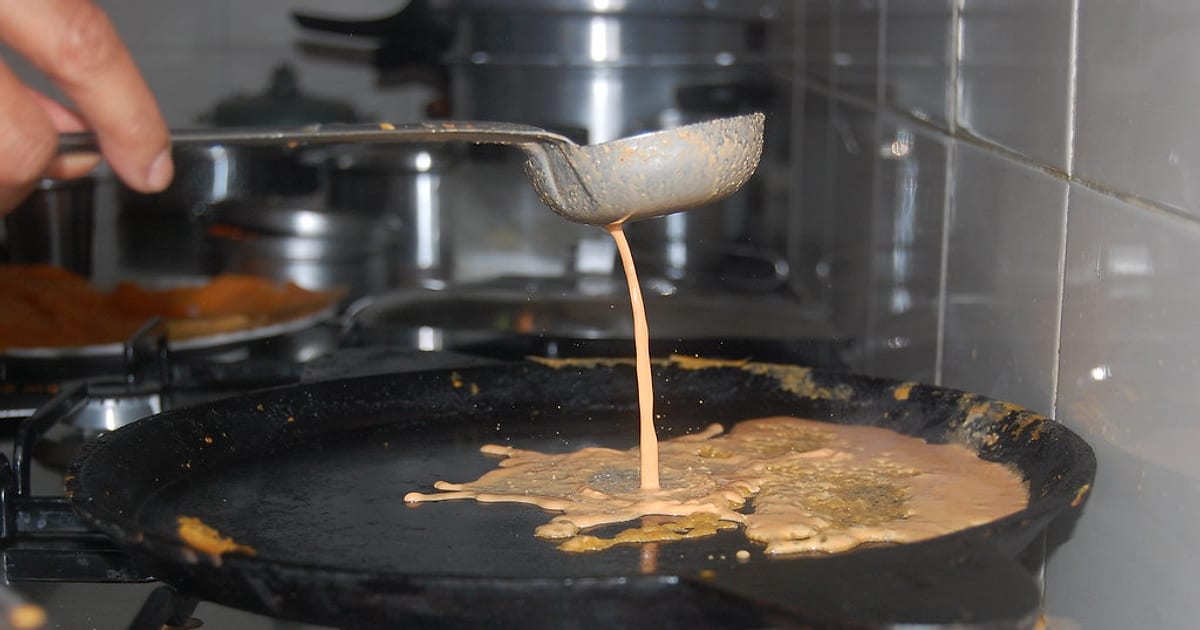
The first dosa tore. The second one welded itself to the tawa. By the third, you were scraping with a spatula and wondering what went wrong. Almost every Indian home has been here. The good news is that a dosa sticks to a tawa for a small number of reasons, and each has one clear fix. Look at the table below, find your symptom, and you will likely solve it in one morning.
Find your problem in one minute
| What you see | Most likely cause | The one fix |
|---|---|---|
| Batter does not sizzle, dosa clings and tears | Tawa too cold | Heat longer, test with water drops |
| Batter sets before you can spread it, burnt bits stick | Tawa too hot | Switch off for a moment, wipe, sprinkle water |
| Sticks in patches, not everywhere | Uneven heat | Preheat fully, lift and turn the tawa on the flame |
| Dosa is thick, wet on top, will not lift | Batter too thick | Add water, stir to a pouring consistency |
| Dosa is lacy but breaks into pieces | Batter too thin or poorly fermented | Add a spoon of rice flour or rava; ferment well |
| Dry, rough look, grabs the batter | Too little oil | Wipe a thin film of oil before every dosa |
| Tawa feels tacky or gummy to the touch | Old oil layer, too thick | Scrub gently, heat dry, re-season thinly |
| New tawa, dosas stick for weeks | Seasoning still thin | Cook oily foods first, season again |
| Dosa lifts at the edge but not in the middle | You are lifting too early | Wait for the edge to curl and turn golden |
Now let us go through them one by one, in plain language.
Why food sticks at all
When food touches hot metal, tiny chemical bonds can form between the two. Foods with a lot of protein are especially likely to do this. Dosa batter has protein from the urad dal, so it is a clinger by nature. Sources on the chemistry of cooking say that food sticks to pans because of bonds that form between the food and the surface of the pan (Wikipedia: Surface chemistry of cooking).
A well-made seasoning layer helps. Seasoning is cooking oil heated on the iron until it turns into a hard, thin, slightly glossy coat. It smooths the surface and repels water, so the batter has less to grip. If you want the full method, see our guide on how to season a cast iron tawa.
But even a perfect seasoning cannot save a dosa from a badly judged flame. That is where most of the nine causes come from.
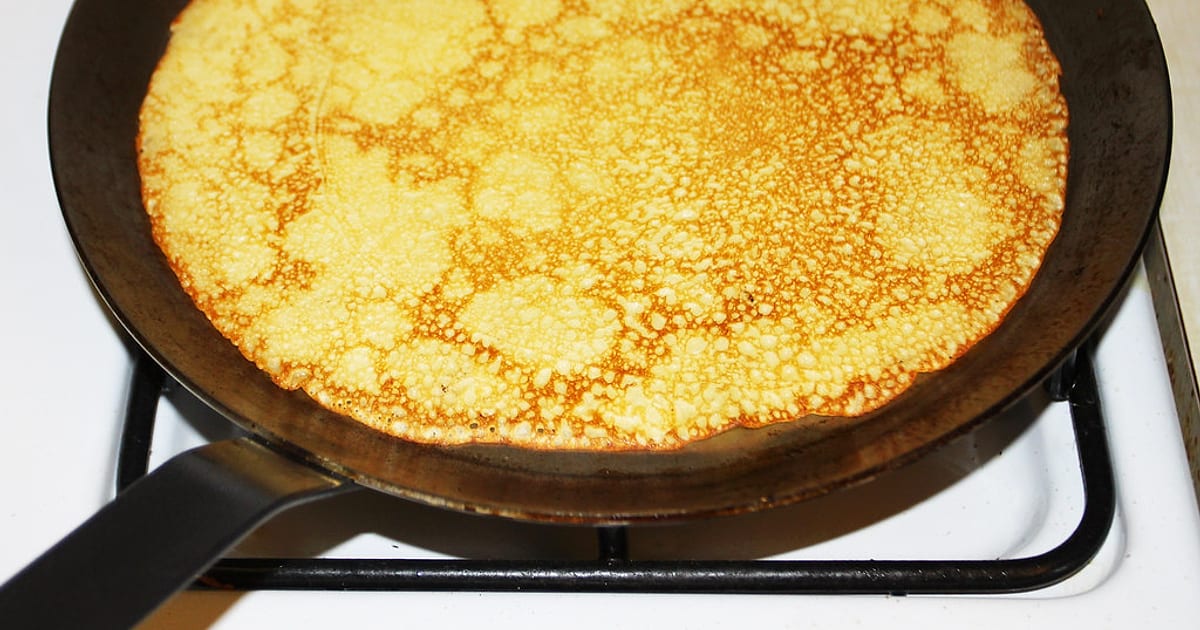
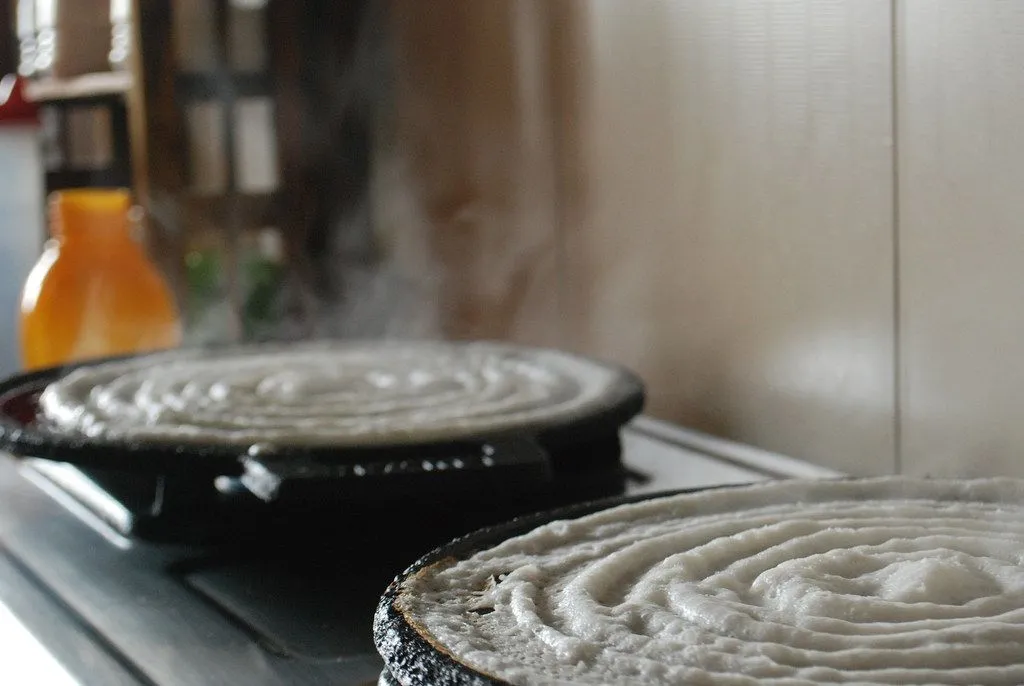 Batter spread in rings on dark tawas, cooking over a flame. Photo: Alosh Bennett, CC BY 2.0.
Heat problems: too cold, too hot, uneven
Cause 1: The tawa is too cold
This is the number one reason. Batter poured on a tawa that has not reached its working heat does not set. It sits, warms slowly and bonds with the metal before it can form a crust. The dosa then clings and tears as you try to lift it.
Cast iron makes this more likely because it takes a while to heat up. It also holds that heat well once it is there, which is why we love it for dosas. But it needs patience at the start.
The fix: Put the tawa on the flame and wait. On a gas stove, a medium flame for several minutes is usual for a 30 cm tawa. Then do the water test. Sprinkle a few drops of water on the surface. They should sizzle straight away and skip off in a second or two. If they just sit and steam slowly, give it another minute. This simple test is recommended by many home cooks, including the cooks behind Padhuskitchen, and it needs no thermometer.
Cause 2: The tawa is too hot
The opposite problem is just as common. On a tawa that is smoking hot, the batter sets the instant it touches the metal. You cannot spread it, so it forms a thick, uneven patch. The bottom may burn while the top stays wet. Burnt bits then glue themselves to the surface.
The fix: Switch the flame off for a few seconds, or lower it. Sprinkle a little water and wipe it across with a cloth or half an onion. The metal cools quickly and evenly. Then pour the batter and spread it in gentle circles, from the centre outwards. After the first dosa, keep the flame at medium and adjust as you go. Many cooks also lower the flame slightly before spreading the batter and raise it again to crisp the dosa.
Cause 3: The heat is uneven
If dosas stick only in one corner or in a ring, the tawa may be hotter in some places than others. A flame under the middle of a wide tawa heats the middle first. Cast iron spreads heat well, but it is not instant.
The fix: Preheat for longer than you think you need to. Move the tawa a little on the burner now and then so the whole base gets its turn. If your hob has a small burner, a smaller tawa such as the 28 cm size may suit better. On induction, the heat comes from a coil of a fixed size, so follow your hob maker’s guidance on base size and weight. Our article on cast iron on induction explains what to watch for.
Batter problems: too thick, too thin
Cause 4: The batter is too thick
Thick batter cannot be spread thin. You push it around with the ladle, it tears the surface, and the dosa ends up thick and wet in the middle. A dosa like that cooks slowly, and the underside has more time to bond with the tawa.
The fix: The batter should pour, not plop. Many recipe writers describe it as something like thin pancake batter or single cream. Add water a few spoons at a time and stir. Stir from the bottom, since the batter settles in the vessel. If you refrigerate batter, take it out early and let it come close to room temperature, because very cold batter cools the tawa on contact.
Cause 5: The batter is too thin, or not well fermented
A very thin batter makes a lacy dosa with weak structure. It cannot hold together when you lift it, so it breaks, and the broken pieces stick. Poorly fermented batter, one that has not risen or turned slightly sour, also tends to give clingy, flat dosas. The fermentation traps tiny bubbles that make the dosa lighter and easier to turn.
The fix: If it is too thin, add a spoon of rice flour or fine rava (semolina) and stir. For fermentation, a warm place and enough time make the difference. Rice-to-urad ratios vary by region and family, from about 2:1 to 4:1, and no single ratio is “right”. Swasthi’s Recipes describes how more urad makes a softer, heavier batter, and more rice gives a crisper dosa. Change one thing at a time so you can tell what helped.
Oil and seasoning problems
Cause 6: Too little oil
A seasoned tawa is not oil-free. It still needs a thin film before every dosa, especially at the start. A dry, matt-looking surface gives the batter a lot to cling to. You may even see dull, rough patches.
The fix: Before each dosa, wipe a few drops of oil over the whole surface with a cloth or a folded piece of paper. Use a thin film, not a puddle. A little oil dribbled round the edge after spreading helps the dosa to crisp and release. The aim is a surface that looks lightly glossy, not wet.
Cause 7: The seasoning is sticky or too thick
This one surprises people. If you applied a lot of oil while seasoning, the top layer can harden while oil underneath stays soft. The result is a tacky, slightly gummy surface that grabs batter. Southern Cast Iron explains it this way: a thick oil layer cures on top but traps uncured oil underneath, leaving a sticky finish.
The fix: Scrub the tacky spots lightly with a brush and a little salt, rinse, and dry the tawa fully on the flame. Heat it empty for a few minutes to finish drying any leftover oil. Then wipe on a very thin coat of oil, wipe most of it back off, and heat again. A thin coat done twice beats one thick coat. If the tawa feels sticky even after this, repeat the process once more. Our seasoning guide shows what a good layer should look like.
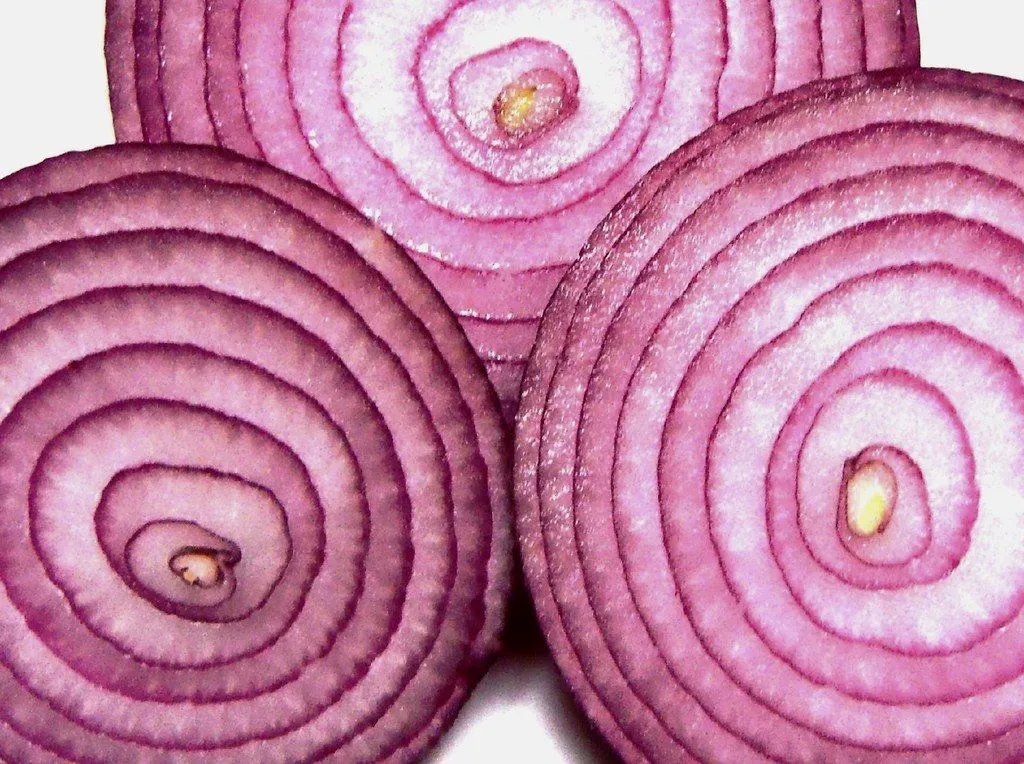 Cut red onions. Rubbing half an onion on a hot tawa is a well-known Indian kitchen habit. Photo: Darwin Bell, CC BY 2.0.
Cause 8: A new tawa with thin seasoning
A brand-new tawa is a work in progress. RIVEDA tawas are supplied pre-seasoned, so you can start cooking at once, but the surface thickens with use. Over the first weeks, dosas may stick more than they will later. Many cooks find that the first few weeks need a bit more care.
The fix: Build the layer while you cook. Make thicker, oilier things first: uttapam, parathas, cheela, even a few rotis brushed with oil. Wash gently, dry on the flame and wipe a thin film of oil each time. Then move to thin dosas. We explain this stage in our cast iron tawa guide. If rust ever appears during the monsoon, it is easy to fix, see how to remove rust from cast iron.
Lifting too early, and a simple morning routine
Cause 9: You are lifting too early
Sometimes everything is right and the dosa still tears, because it is not ready. A dosa releases when the underside has formed a crust. Lifting before that is like trying to peel a wet sticker.
The fix: Watch the edges. When they turn golden and start curling away from the tawa, and the top no longer looks wet, slide the spatula under. A thin, flat-edged spatula works best. Move it in gently from the edge instead of digging into the middle. If it resists, wait twenty seconds more. Do not scrape hard, as it can tear the seasoning along with the dosa.
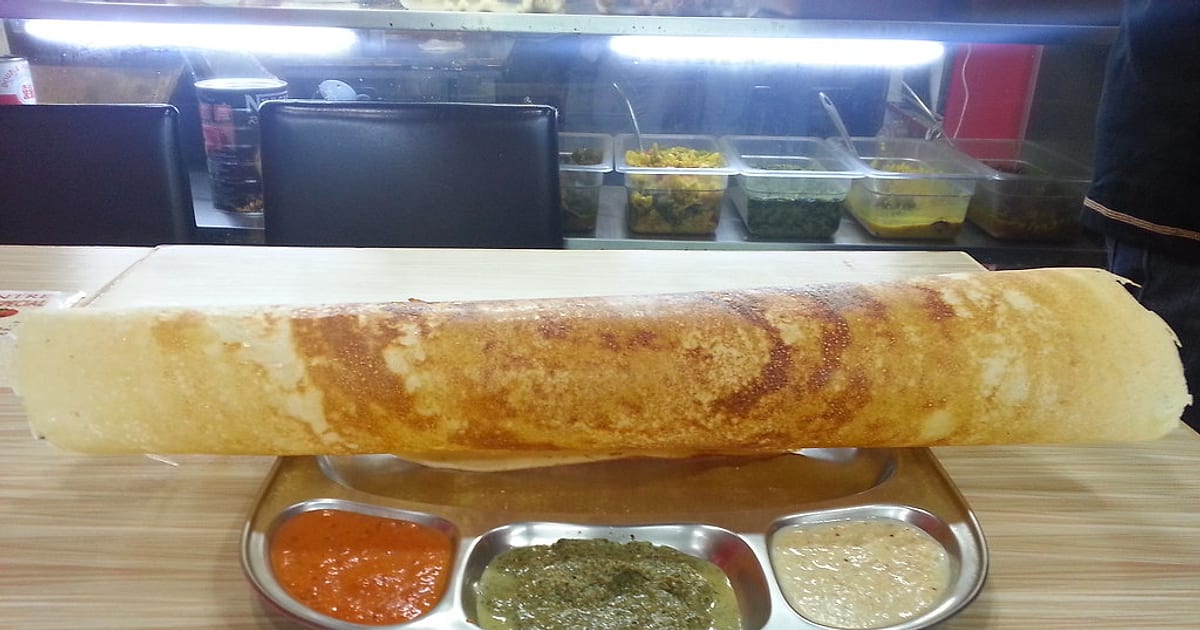
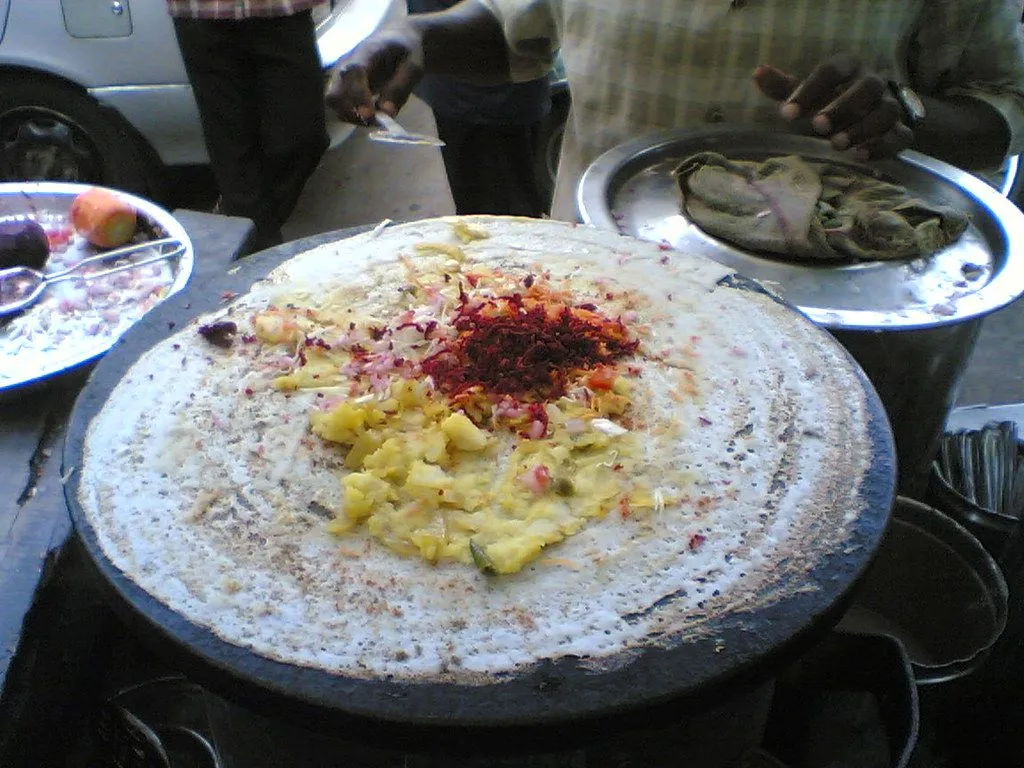 A masala dosa on a large flat griddle, filled and ready to fold. Photo: cell105, CC BY 2.0.
The onion trick: what it does and when to use it
The onion trick is old and popular. You cut an onion in half, stick a fork into the round back, dip the cut face in a little oil and rub it over the hot tawa. Several home-cooking sites describe it as a way to create a natural non-stick film. For example, Asianet Newsable and others recommend it, and so does Sharmis Passions.
What does it really do? We could not find a scientific test of it, so here is our honest reading. The onion releases a little moisture, which cools the surface a touch and helps with the “too hot” problem. The oil on the cut face leaves a thin, even film. Both effects are real and useful. Neither replaces seasoning.
When to use it:
- On the first dosa of the morning, to settle the temperature and oil film.
- When the tawa is a little too hot, to calm it down.
- Between dosas, if the surface starts to look dry.
When not to rely on it: If your tawa is sticky, rusty or has burnt bits, rub the onion all you like. You will need to clean or re-season the surface first.
A routine for every dosa morning
Here is a short routine that covers almost all of the causes above:
- Heat the tawa on a medium flame until a few drops of water sizzle and skip off at once.
- Adjust the flame. If it smokes, switch off for a few seconds and wipe with water and onion.
- Wipe a thin film of oil across the surface.
- Stir the batter and check it pours easily. Add a spoon of water if not.
- Pour in the centre and spread outwards in quick, light circles.
- Drizzle a little oil at the edge, and wait for the edge to turn golden.
- Lift gently with a flat spatula from the edge.
- Between dosas, wipe the surface again, and sprinkle water if it is too hot.
After cooking, wash the tawa with hot water and a brush while it is still warm, dry it fully on the flame, and rub on a very thin layer of oil. Store it dry. Our care guide has the full routine.
Choosing a tawa that suits your dosa
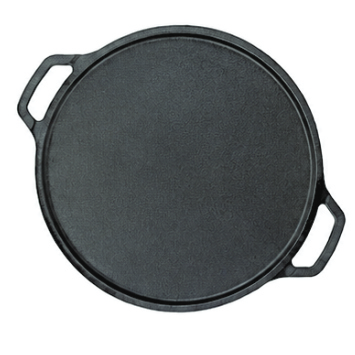
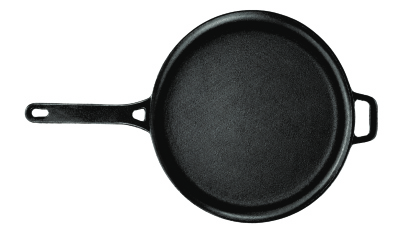
Handle and size change how comfortable the spreading feels. The Cast Iron Long Handle Dosa Tawa 30 CM weighs 2.2 kg and has one long handle with a helper grip opposite. That leaves one hand free for the ladle. The Cast Iron Double Handle Dosa Tawa 30 CM weighs 2.8 kg, is a heavier build, and its two short handles make it easy to lift with both hands.
Both are cast and finished at our own ZED-certified foundry in Rajkot, and both work on gas and induction (follow your hob maker’s guidance on base size and weight). For a full comparison across sizes and surfaces, read our best dosa tawa guide, or browse all tawas.
Still stuck? Do these three things
If you have tried the fixes and a dosa still sticks, go back to basics:
- Test the heat with water, every time.
- Check the batter by pouring a ladleful back from a height. It should flow in a smooth ribbon.
- Feel the surface with a clean dry hand once cool. Rough or tacky means it needs cleaning and a thin re-seasoning.
Most sticking problems clear up within a week of small corrections. Ask us on WhatsApp at +91 90999 29629 if you want a second opinion, and have a look at our FAQ for other tawa questions.
Shop this article
Frequently asked questions
Why does my dosa stick on a new cast iron tawa?
A new tawa has only a thin seasoning layer, so batter has more bare metal to grab. Heat it fully, use a little oil before each dosa and make thicker dosas such as uttapam for the first few weeks. The surface improves with every meal you cook.
Does the onion trick really work?
Many home cooks swear by it. Rubbing a cut onion with a few drops of oil on the hot tawa leaves a thin, slick film and also cools the surface slightly. We found no scientific test of it, so treat it as a handy kitchen habit that works best on top of a properly seasoned tawa.
How do I know the tawa is hot enough for dosa?
Sprinkle a few drops of water. They should sizzle at once and dance away in a second or two. If they sit and steam slowly, the tawa is too cold. If they vanish with a sharp crack and the pan smokes, it is too hot.
Should I wash my tawa with soap if dosas keep sticking?
A little mild soap now and then is fine, but sticking is rarely a cleanliness problem. Look at heat, oil and batter first. Dry the tawa fully on the flame after washing so no damp patch remains.
Can I use a steel spatula on a cast iron dosa tawa?
Yes. A thin, flat-edged spatula is the usual tool. Slide it gently under the edge instead of digging. Scraping hard at a dosa that has not yet released can tear both the dosa and the seasoning.
Why does the first dosa always stick and the rest come out fine?
The first dosa shows the tawa that is still settling its temperature and oil film. Many cooks make a small test dosa, or wipe with the onion, to bring the pan to the right state. By the second or third dosa the surface is steady.
Sources
- Seasoning (cookware) — Wikipedia
- Periodic Graphics: The chemistry of cast-iron cookware — Chemical & Engineering News (American Chemical Society)
- Surface chemistry of cooking — Wikipedia
- How to Season Dosa Tawa / Cast Iron Tawa: 10 Tips to Avoid Dosa Sticking to the Tava — Padhuskitchen
- How to season new iron dosa tawa, tips to maintain iron tawa — Sharmis Passions
- Why does my dosa stick to the pan? — Chef In You
- Authentic Dosa Recipe, How to make Dosa Batter — Swasthi's Recipes
- Dosa sticking to tawa? Try these simple tricks for crispy, hotel-style dosa — Asianet Newsable
- How to Fix Sticky Cast-Iron — Southern Cast Iron
More on this topic: all care & rust articles →
Pictures: dosa-sticking-to-tawa.jpg (cover) — DNisha, CC BY-SA 2.0; dosa-batter-cooking.jpg — Alosh Bennett, CC BY 2.0; masala-dosa-griddle.jpg — cell105, CC BY 2.0; cut-red-onions.jpg — Darwin Bell, CC BY 2.0.
Follow the RIVEDA blog
One short email a week with new articles — cast iron cooking, care and recipes for Indian kitchens. No spam; unsubscribe in one click.