
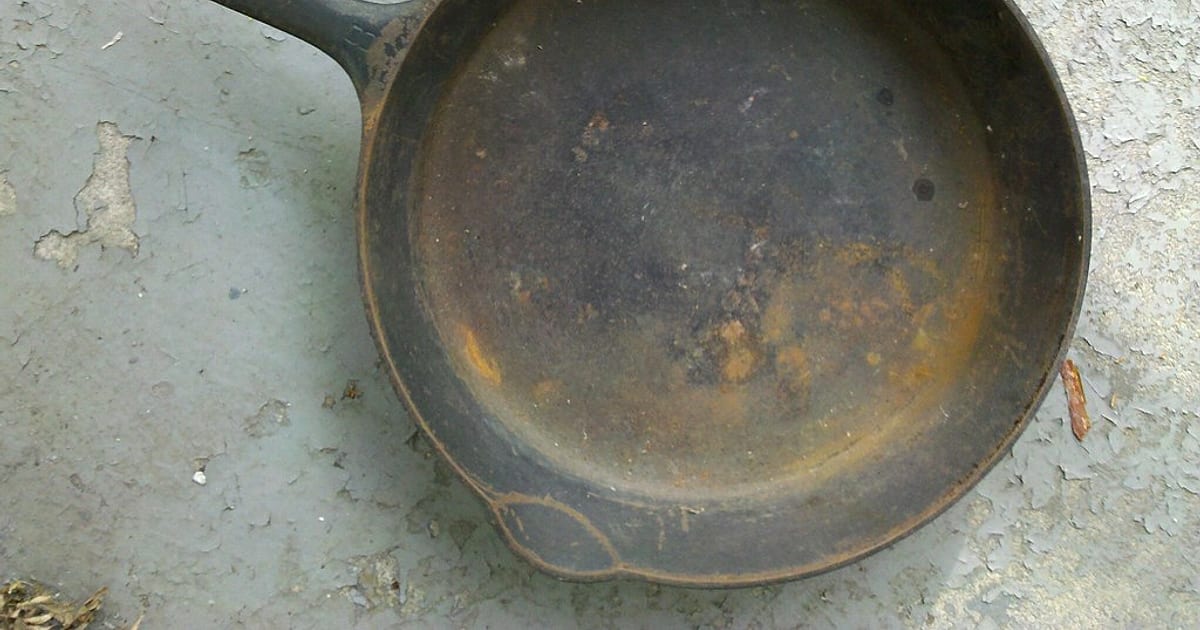
To remove rust from cast iron, scrub the rusty area down to bare metal, wash and dry the pan completely on a flame, wipe on a very thin layer of oil and heat it until it sets. Light rust takes ten minutes; heavy rust may need a short vinegar soak and a few rounds of re-seasoning. Either way, a rusted pan is nearly always fixable.
Why cast iron rusts
Cast iron is iron, and bare iron rusts when it meets water and air. Seasoning, the thin hardened oil layer on the surface, is what protects it. Rust appears wherever that layer is thin, scraped or missing and moisture has been allowed to sit.
In Indian kitchens the usual causes are:
- Monsoon humidity. Damp air settles on the pan even when it is not in use. A tawa stored in a closed cupboard from June to September is the classic case.
- Air-drying. Leaving a washed pan on a rack or in the sink to drip dry gives water time to work. Even a few hours is enough to leave orange spots.
- Soaking. Leaving the kadai in water overnight to loosen stuck masala strips seasoning and starts rust.
- The dishwasher. Long hot washing with detergent removes seasoning and leaves the pan wet for a long time.
- Storing food in the pan. Sour curries and dal kept overnight wear the seasoning away underneath.
- Steam from a nearby pressure cooker, or a pan stacked on another with moisture trapped between them.
None of these mean you are doing something terrible. They just mean the iron was left wet. Fix the rust, then fix the habit.
Light rust or heavy rust: check first
Before you start, look closely at the pan in good light. The method depends on how bad it is.
| What you see | What it is | What to do |
|---|---|---|
| A few orange spots or a dusty orange film | Light surface rust | Scrub, wash, dry, oil, heat |
| Orange patches across much of the surface, rough to touch | Moderate rust | Scrub hard, then full re-seasoning |
| Thick, flaky rust, or rust that does not shift with scrubbing | Heavy rust | Short diluted vinegar soak, scrub, full re-seasoning |
| A crack, or holes right through | Damage | Stop using the pan |
Small dark or uneven patches that are not orange are usually just seasoning that has built up unevenly. That is normal, not rust, and evens out with cooking.
What you need
You probably have all of this already:
- A steel scrubber (the kind used for kadais) or coarse steel wool
- A stiff brush
- A little mild dish soap
- A clean cotton cloth or paper towels
- A neutral cooking oil you normally use, such as groundnut, sunflower or mustard oil
- Your gas stove or induction hob
- For heavy rust only: white vinegar and a basin or sink large enough for the pan
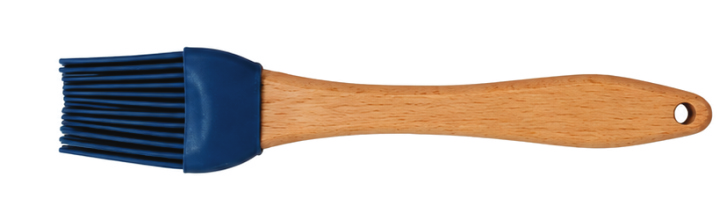
A Silicon Brush is handy for the oiling step because it spreads a truly thin film.
Step by step: removing light rust
This works for the spotty rust most people find after a humid week.
- Scrub the rust off. Use the steel scrubber with a little water and a drop of soap. Work only on the rusty spots and a little around them, until you see grey metal and no orange remains.
- Wash the whole pan. Rinse off all rust dust with warm water. Rust left behind will come back.
- Dry with a cloth, then put the pan on a low flame for two or three minutes until every bit of moisture has gone, including the handles and underside.
- Oil very thinly. While the pan is warm, wipe a few drops of oil over the scrubbed area (or the whole surface), then wipe it back off with a clean cloth. It should look almost dry, with a soft sheen.
- Heat until it sets. Keep the pan on medium heat until the oil smokes lightly and the bare patch darkens. Turn off the heat and let it cool on the stove.
- Repeat once or twice if the patch still looks grey or dull.
- Cook something oily. A tadka, a few parathas or shallow-fried snacks help the patch blend in.
That is all. Most tawas and kadais are back in service the same day.
Step by step: removing heavy rust
For a pan that has sat in a damp store room or been forgotten for a season, give it more time.
Scrub first, soak only if needed
Start with a hard scrub as above. Often the rust looks worse than it is and comes away with effort. Only if thick rust remains should you use vinegar.
The vinegar soak: short and diluted
Vinegar dissolves rust, but it also eats into bare iron. Used carelessly, it can leave the surface pitted. Follow these limits:
- Mix equal parts white vinegar and water.
- Submerge only the rusty pan, or wipe the mixture on with a cloth for smaller patches.
- Check every 15 to 30 minutes. As soon as the rust scrubs away easily, take the pan out.
- Do not leave it overnight. An hour is a sensible upper limit for most pans.
- Rinse thoroughly in plain water, then scrub off any remaining rust.
Dry, oil and re-season straight away
The bare iron after a vinegar soak will start to rust again within minutes if left wet. Dry it on a flame immediately, then go straight into full re-seasoning.
Re-seasoning after rust
Removing rust leaves bare iron, so the protective layer needs rebuilding. The stovetop method works well for tawas, griddles and kadais:
- Warm the dry pan on low heat.
- Wipe a very thin film of oil over every surface, including the underside and handles, then wipe it back.
- Raise the heat to medium and wait until the film smokes lightly and the surface turns darker.
- Turn off the heat and let the pan cool on its own. Do not cool it with water.
- Repeat 2–3 times, until the surface looks evenly dark and feels smooth rather than sticky.
Some home cooks prefer the oven: they commonly use a hot oven (around 200–230 °C) for about an hour with the pan upside down. Either way, thin is the secret. A thick coat of oil turns sticky and later flakes. Our seasoning guide and the article on how to season a cast iron tawa go into more detail.
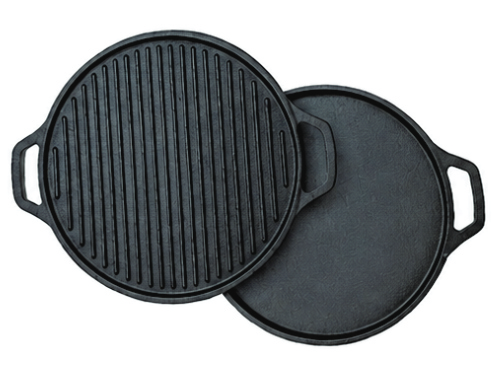
For a Cast Iron 2 in 1 Griddle / Tawa 30 CM, give the grill ridges extra attention when scrubbing and oiling. Rust likes to hide in the grooves, and oil pools there just as easily, so wipe it back firmly with the cloth.
How to stop rust coming back
Prevention is a two-minute habit after each wash:
- Wash while warm, never soak. Hot water and a brush handle most cleaning.
- Always dry on a flame, not just with a cloth. This one step prevents most rust.
- Wipe on a very thin layer of oil while the pan is warm.
- Store dry, with air around it. A hook or open shelf is better than a closed cabinet. In the monsoon, avoid cupboards next to the sink or the cooker.
- Put a cloth or paper between stacked pans so moisture cannot sit between them.
- Move leftovers out into a steel or glass container.
- Cook often. A pan that is used regularly stays oiled and warm and rarely rusts. A pan that sits idle needs a quick oil-and-heat every couple of weeks in humid months.
The care page has the full everyday routine on one screen if you want to keep it handy.
When to ask for help
Rust is rarely the end of a cast iron pan. Still, there are times to stop and ask:
- The pan has a crack of any size, or a hole.
- After scrubbing, the surface is deeply pitted and food keeps catching in the pits.
- The pan rocks on a flat surface or no longer sits properly on your induction hob.
- Rust returns within a day even after drying and oiling.
Every RIVEDA piece is cast and finished at our own foundry in Rajkot and arrives pre-seasoned. If your RIVEDA pan has rusted and you are not sure what to do, send a clear photo on WhatsApp to +91 90999 29629 and we will tell you what we would do. If a piece arrived damaged or defective, our returns window is 7 days from delivery. More common questions are answered in the FAQ.
Back to cooking
A little rust is part of owning iron, especially through an Indian monsoon. Scrub it off, dry the pan on the flame, oil it thinly, heat it through and start cooking again. Within a few meals you will not be able to tell where the rust was.
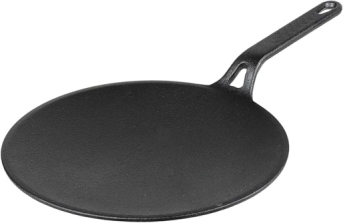
If you are adding a new RIVEDA piece, the Cast Iron 2 in 1 Griddle / Tawa 30 CM gives you grill ridges on one face and a flat tawa on the other, and the Cast Iron Roti Tawa 26 CM has room for parathas. Browse more tawas or read our cast iron tawa guide to choose.
Shop this article
Frequently asked questions
Is a rusted cast iron pan ruined?
Almost never. Surface rust can be scrubbed off and the pan re-seasoned in an afternoon. Only a pan that is cracked, or so deeply pitted that it no longer sits flat or holds oil, is past saving.
Is it safe to cook in cast iron with a little rust?
It is better to remove it first. Scrub the rusty spot, wash, dry, oil and heat the pan before cooking, so food does not pick up a rusty taste and the bare iron gets protected again.
Can I use vinegar to remove rust from cast iron?
Yes, for stubborn rust, but keep it short and diluted: equal parts white vinegar and water, checked every 15–30 minutes, and never left overnight. Vinegar attacks bare iron as well as rust, so rinse, dry and re-season straight after.
Why does my tawa rust during the monsoon?
Monsoon humidity settles on any bare or thinly oiled iron. A pan that was put away slightly damp, or stored in a closed cupboard, rusts fastest. Dry it on a flame, oil it thinly and keep it where air can reach it.
Can I wash cast iron in a dishwasher?
No. The long hot wash and detergent strip the seasoning, and the pan sits wet for a long time. It usually comes out with rust. Wash cast iron by hand and dry it at once.
More on this topic: all care & rust articles →
Pictures: remove-rust-from-cast-iron.jpg (cover) — Stockton350, CC BY 2.0.
Follow the RIVEDA blog
One short email a week with new articles — cast iron cooking, care and recipes for Indian kitchens. No spam; unsubscribe in one click.