
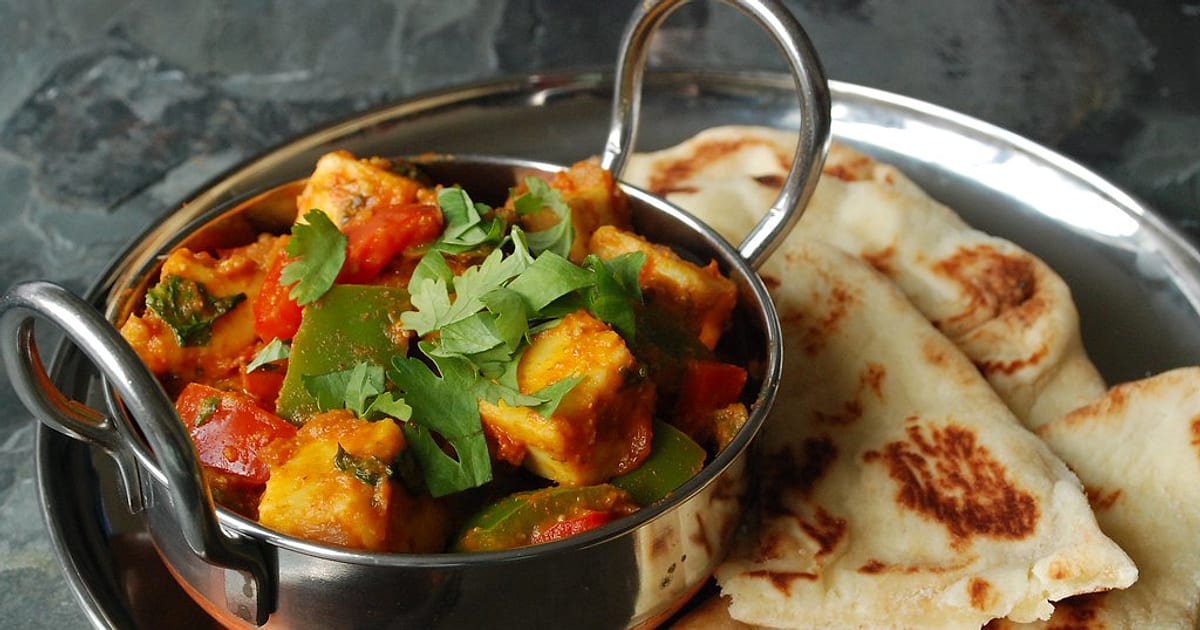
The best cast iron kadai is one that is deep enough to fry and stir without spilling, thick enough to hold heat evenly, and sized for the number of people you actually cook for. For most Indian families that means a 27 cm kadai, with a 23 cm piece for small batches and a 31 cm one for big gatherings. The rest of this guide explains what to look at, and how to cook and care for it once it is home.
What makes a good cast iron kadai
A kadai does more varied work than almost any other vessel in an Indian kitchen. In one day it might fry puris, build a masala for chole and hold a tadka for dal, all without hot spots or burnt corners.
Four things decide whether a kadai is pleasant to use for years or ends up at the back of the cupboard:
- Depth for frying and stirring
- Wall and base thickness for steady heat
- Handles you can grip safely when the kadai is full
- Weight you can actually lift, wash and store
Depth and shape
A kadai should be properly deep, with sloping sides that meet a rounded or gently flattened base. Depth keeps oil from splashing and lets you stir a full sabzi without spilling. The slope lets oil collect at the centre, so a tadka needs less of it.
Wall thickness and even heat
Thin kadais heat fast but unevenly. Onions catch at the centre while the edges stay pale, and the moment you add vegetables the temperature drops. Cast iron’s thick walls take longer to warm up, then hold that heat and spread it across the whole surface. That is why cast iron cooks differently: you can use a lower flame than you would on a thin vessel and still get good browning.
When you look at a kadai, check that the casting is even all round, with no thin patches, cracks or rough lumps on the cooking surface.
Handles
A full kadai of curry is heavy, and you will lift it hot. Look for handles that are solid, part of the casting rather than fixed on, and large enough to grip with a cloth or a sleeve. Cast iron handles get as hot as the kadai itself, so a pair of slip-on grips such as the Silicon Sleeve Set makes lifting much more comfortable.
Weight
Weight is the honest trade-off with cast iron. The same mass that holds heat also makes the kadai heavier than an aluminium one of the same size. A kadai the main cook can lift easily from stove to sink will get used; one that feels like a workout will not.
Choosing your size: 23, 27 or 31 cm
Size is measured across the top rim. Here is a simple way to match it to your household:
| Size | Weight | Best for |
|---|---|---|
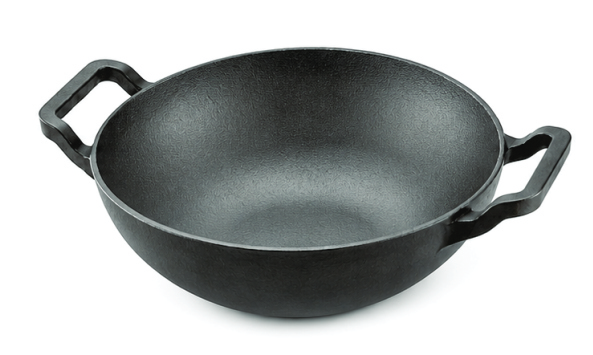
| Cast Iron Kadai 23 cm | 2.0 kg | One or two people, small-batch curries, tadka, a side sabzi |
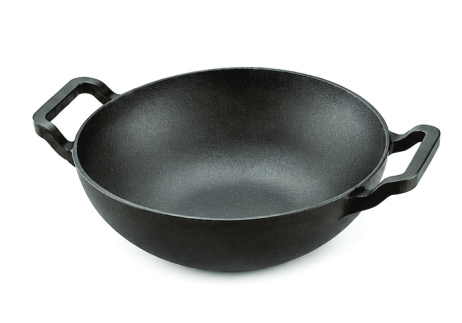
| Cast Iron Kadai 27 cm | 2.7 kg | Families of three to five, everyday sabzi, dal and frying |
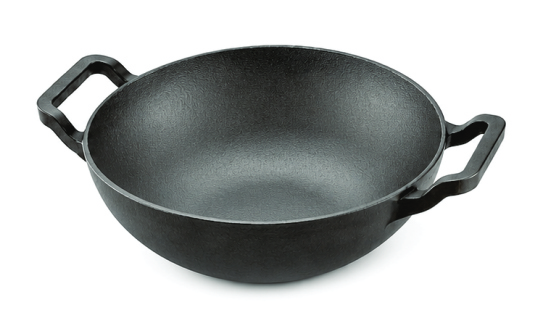
| Cast Iron Kadai 31 cm | 3.6 kg | Large families, guests, festival frying, cooking in volume |
If you are buying only one, the 27 cm is the everyday family size. It is deep enough for puris and pakoras and wide enough to cook a sabzi for four without crowding. The 23 cm suits a small household or makes a good second piece. The 31 cm earns its place when you regularly cook for a crowd or fry snacks before Diwali.
Also think about your burner. A large kadai on a very small burner heats mostly at the centre, while a small kadai on a big ring wastes gas up the sides. On induction, the base should sit flat and steady on the glass, and you should follow the hob maker’s guidance on base size and weight.
Deep frying in a cast iron kadai
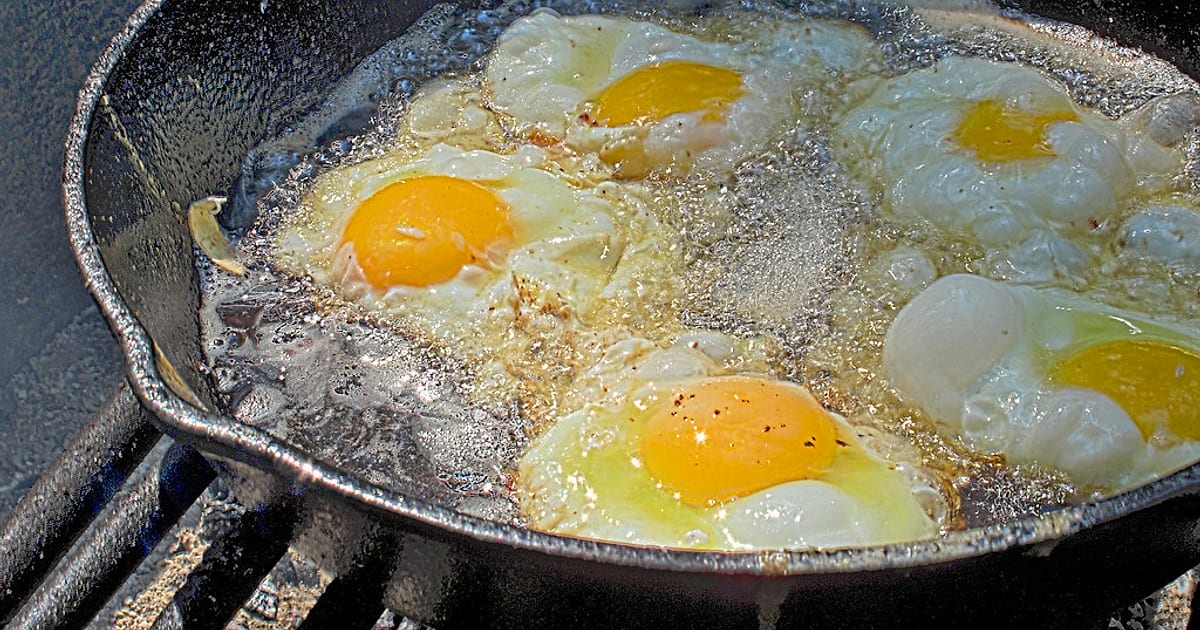
Deep frying is where cast iron really shows its value. When you drop cold puris or a batch of pakoras into a thin vessel, the oil temperature falls sharply and the food sits in oil that is not hot enough, so it absorbs more. A thick iron kadai holds its heat, so the oil recovers quickly and the food crisps on the outside.
A few habits make frying safer and better:
- Heat the kadai gently on medium for a few minutes before adding oil.
- Fill oil no more than about a third of the kadai’s depth, so there is room for bubbling.
- Test with a small piece of dough or batter. It should rise steadily, not sink or burn.
- Fry in small batches rather than crowding the kadai.
- Keep food as dry as possible before it goes in, and never leave hot oil unattended.
Once the oil cools completely, strain it into a jar rather than storing it in the kadai.
Sabzi, tadka and everyday cooking
Cast iron rewards a slightly different rhythm. Preheat the kadai on medium for longer than you are used to, then turn the flame down a notch before the oil and spices go in. Jeera, mustard seeds and curry leaves will splutter on less flame than you expect, because the iron is holding so much heat.
For dry sabzis such as aloo, bhindi or cabbage, the even heat gives you a gentle browning without constant stirring. Let the vegetables sit for a minute between stirs and they will develop colour instead of steaming. As the seasoning builds, you will find you need a little less oil for the same result.
Our cooking guide has short notes on preheating and how much oil to use, which apply to every cast iron piece.
Curries with tomato, tamarind and other sour ingredients
This is the question most people ask before they buy. Tomato, tamarind, kokum, lemon and curd are acidic, and acid can wear at seasoning that is still thin.
The practical answer:
- Once your kadai is well seasoned, a normal tomato-onion masala, a rajma or a kadhi cooked for the usual time is fine.
- In the first few weeks, favour frying, dry sabzis and dals with a tadka. These build seasoning quickly.
- Avoid long simmers of very sour dishes in a new kadai, such as a tamarind gravy left bubbling for an hour.
- Do not store food in the kadai. Move leftovers into another container once cooking is done.
A slightly metallic taste or a patch of dull grey after a sour dish simply means the seasoning there has thinned. Wash, dry, oil lightly, and keep cooking. Iron pans can also add a little iron to food, especially acidic dishes; if you have a medical condition such as haemochromatosis, talk to your doctor about cooking in iron.
Caring for your cast iron kadai
Care is simple once it becomes a habit. The full routine is on our care page, but the short version is:
- Wash while the kadai is still slightly warm, with warm water and a brush. A little mild soap is fine.
- Dry immediately, first with a cloth and then on a low flame for a minute or two until no moisture remains.
- Oil lightly. Spread a few drops over the surface and wipe most of it back off. A Silicon Brush helps you keep the film thin.
- Store dry, somewhere with air, not shut in a damp cupboard. During the monsoon, this step matters most.
Avoid soaking the kadai, leaving it to air-dry on a rack, or using a harsh steel scrubber every day. A steel scrubber is useful for removing rust or burnt-on food, but daily use wears the seasoning down. If rust ever appears, it can be scrubbed off and the surface rebuilt; our seasoning guide shows how.
RIVEDA kadais come pre-seasoned, so you can start cooking after a wash and dry. The seasoning keeps building every time you cook with a little oil and care for it properly.
Why cast iron over an aluminium or steel kadai
Aluminium kadais are light and cheap, but they are thin, they develop hot spots, and they dent and warp over time. Stainless steel is durable and easy to clean, but food sticks more readily and thinner steel kadais heat unevenly. Non-stick kadais release food easily at first, but their coating wears and they are not meant for high-heat frying.
| Cast iron | Aluminium | Stainless steel | |
|---|---|---|---|
| Heat holding | High | Low | Moderate |
| Even heating | Very even once hot | Hot spots | Depends on thickness |
| Surface | Seasoning that improves with use | Bare metal | Bare metal |
| Lifespan | Generations, with care | A few years | Long |
| Weight | Heavy | Light | Moderate |
A cast iron kadai has no coating to scratch or peel. If the surface ever looks tired, you can restore it at home. If you are weighing it against coated cookware more broadly, read our comparison of cast iron vs non-stick.
Buying your kadai
Start with the size that matches how many people you cook for, check the weight against who will lift it, and look for an even, clean casting with solid handles. Every RIVEDA kadai is cast and finished at our own foundry in Rajkot and supplied pre-seasoned, ready for its first tadka.
For most homes, the Cast Iron Kadai 27 cm is the place to begin. Browse all sizes in the kadai collection, and if this is your first cast iron purchase, our first-time buying guide will help you pick the pieces to start with.
Shop this article
Frequently asked questions
Which size cast iron kadai is best for a family of four?
A kadai around 27 cm suits most families of three to five for everyday sabzi, dal tadka and curries. Go smaller for one or two people, and larger if you cook for guests or deep fry in big batches.
Can I cook tomato or tamarind curries in a cast iron kadai?
Yes, once the kadai is well seasoned a normal cooking time is fine. Avoid simmering sour dishes for hours in a brand-new kadai, and move leftovers to another container instead of storing them in the iron overnight.
Is a cast iron kadai good for deep frying?
It is one of the best vessels for it. The thick iron holds oil temperature steadily, so puris, pakoras and bhajiyas fry crisp instead of soaking up oil. Fill oil no more than about a third of the depth and never leave hot oil unattended.
Does a cast iron kadai work on induction?
Cast iron is magnetic, so it works on induction as well as gas. Check that the base sits steadily on the glass and follow your hob maker's guidance on base size and weight.
Why is my cast iron kadai turning black?
A deepening black colour is the seasoning building up, which is exactly what you want. Sticky or flaky patches are different: they usually mean too much oil was left on, and a scrub plus thin re-oiling fixes it.
More on this topic: all kadai articles →
Pictures: best-cast-iron-kadai.jpg (cover) — yummyoyummy, CC BY 2.0.
Follow the RIVEDA blog
One short email a week with new articles — cast iron cooking, care and recipes for Indian kitchens. No spam; unsubscribe in one click.