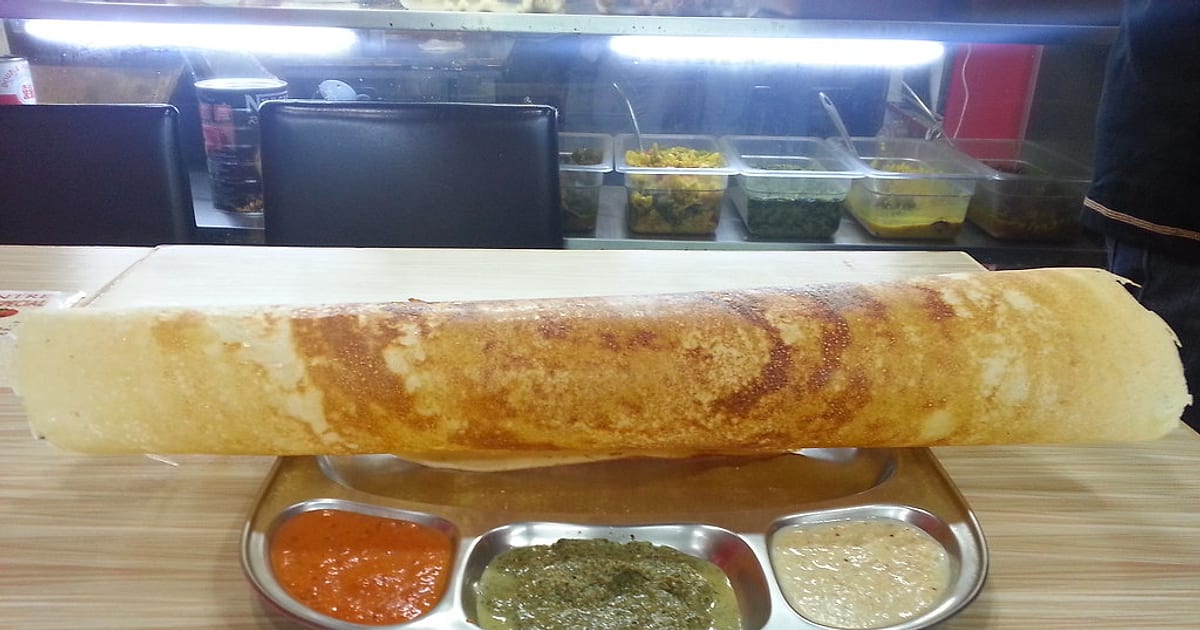
You pour the batter, sweep the ladle round and hear a soft sizzle. Then the edges curl, the dosa turns golden and it lifts off in one piece. Or it does not. It tears, sticks or stays pale and soft. The tawa has a lot to do with which one you get.
So what is the best dosa tawa in India? For a crisp dosa, it is a heavy iron tawa, about 28 to 30 cm wide, seasoned and heated properly, with a handle you can control. Surface finish matters less than most advertisements suggest. Weight, size, handle and your own heating habits matter more. Here is how each one works, in plain words.
Why the tawa matters more than the batter’s fame
Dosa batter is simple: rice and lentils, soaked, ground and left to ferment. A good batter helps, but the tawa decides the crispness. A crisp dosa needs two things to happen quickly. The batter must set the moment it touches the metal, and the water in it must leave as steam so the base turns dry and golden.
That needs a surface that is already very hot and stays hot when cool, wet batter lands on it. A thin tawa has little heat stored inside it. The moment you pour, its temperature drops and the dosa steams instead of frying. That gives you a soft, pale dosa that wants to stick.
A heavy iron tawa behaves differently. Cast iron is known for holding heat well. As one general reference on cast-iron cookware puts it, thick, heavy pieces are valued for heat retention and for keeping high temperatures for a long time (Wikipedia). For dosa, that stored heat is exactly what you want.
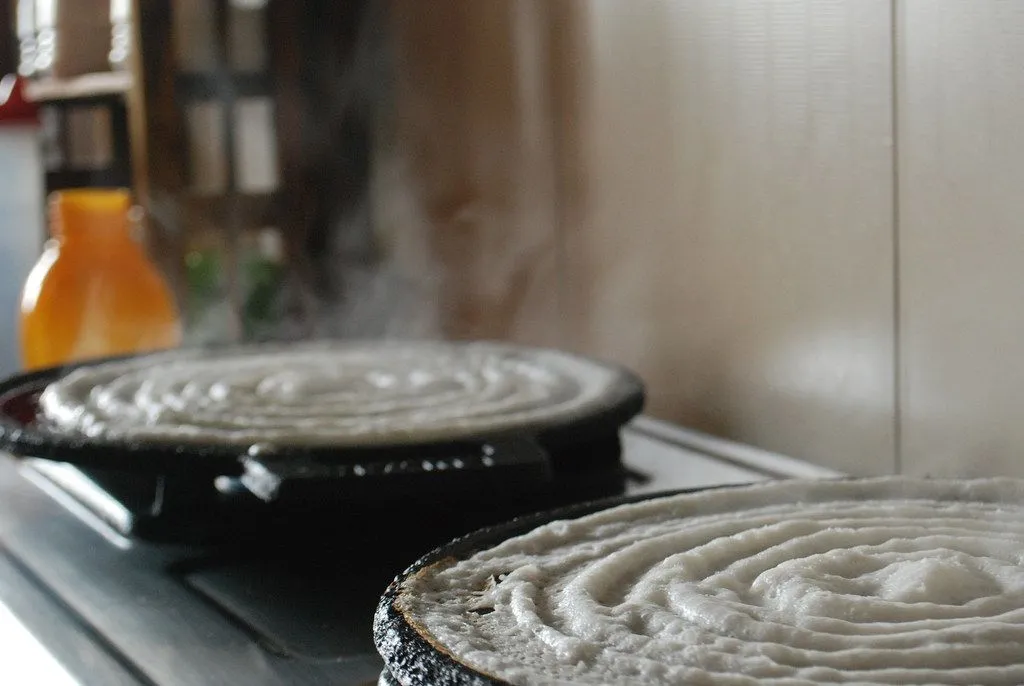 Dosas spread in rings on iron tawas at home. Photo: Alosh Bennett, CC BY 2.0.
Weight: the quiet secret of a crisp dosa
When you lift a tawa in a shop, the first thing you notice is weight. Many people think a heavy tawa is just harder work. For dosa, weight is a feature.
Think of the tawa as a battery of heat. The more iron there is, the more heat it holds. When the batter touches it, the tawa gives that heat to the dosa quickly and loses only a little of its own temperature. The next dosa then goes on a tawa that is still hot.
Here is the trade-off:
- A heavier tawa heats up more slowly, but holds heat steadily. It is good for making many dosas one after another.
- A lighter tawa is easy to lift and heats faster, but cools faster too. You need to watch the flame more closely.
Our three 30 cm dosa tawas show the range. The Cast Iron Double Handle Dosa Tawa weighs 2.8 kg. The Cast Iron Long Handle Dosa Tawa and the Cast Iron Double Handle Smooth Dosa Tawa weigh 2.2 kg each. If you make dosas for a big family or like to cook several in a row, the extra weight of the 2.8 kg tawa helps. If you want something lighter to handle every morning, 2.2 kg is the easier choice.
A practical tip: do not judge only by the number. Imagine yourself lifting it with batter on it, moving it to the sink while it is warm, and storing it on a shelf. Pick the weight you will still be happy to lift in a year.
Size: why about 30 cm works for most homes
A classic dosa is wide and thin. If the tawa is too small, you cannot spread the batter without it running over the edge. If it is too large for your burner, the outer part never gets hot enough and the dosa stays pale at the rim.
- 30 cm is a comfortable size for a full dosa, an uttapam, or a stuffed paratha. All three of our dosa tawas above are 30 cm.
- 28 cm (our Cast Iron Single Handle Smooth Dosa Tawa) suits a compact burner, a smaller kitchen or cooking for one or two people.
Match the tawa to your burner. Look at the flame: it should reach most of the base without licking up the sides. On induction, follow your hob maker’s guidance on base size and weight, and place the tawa flat and centred.
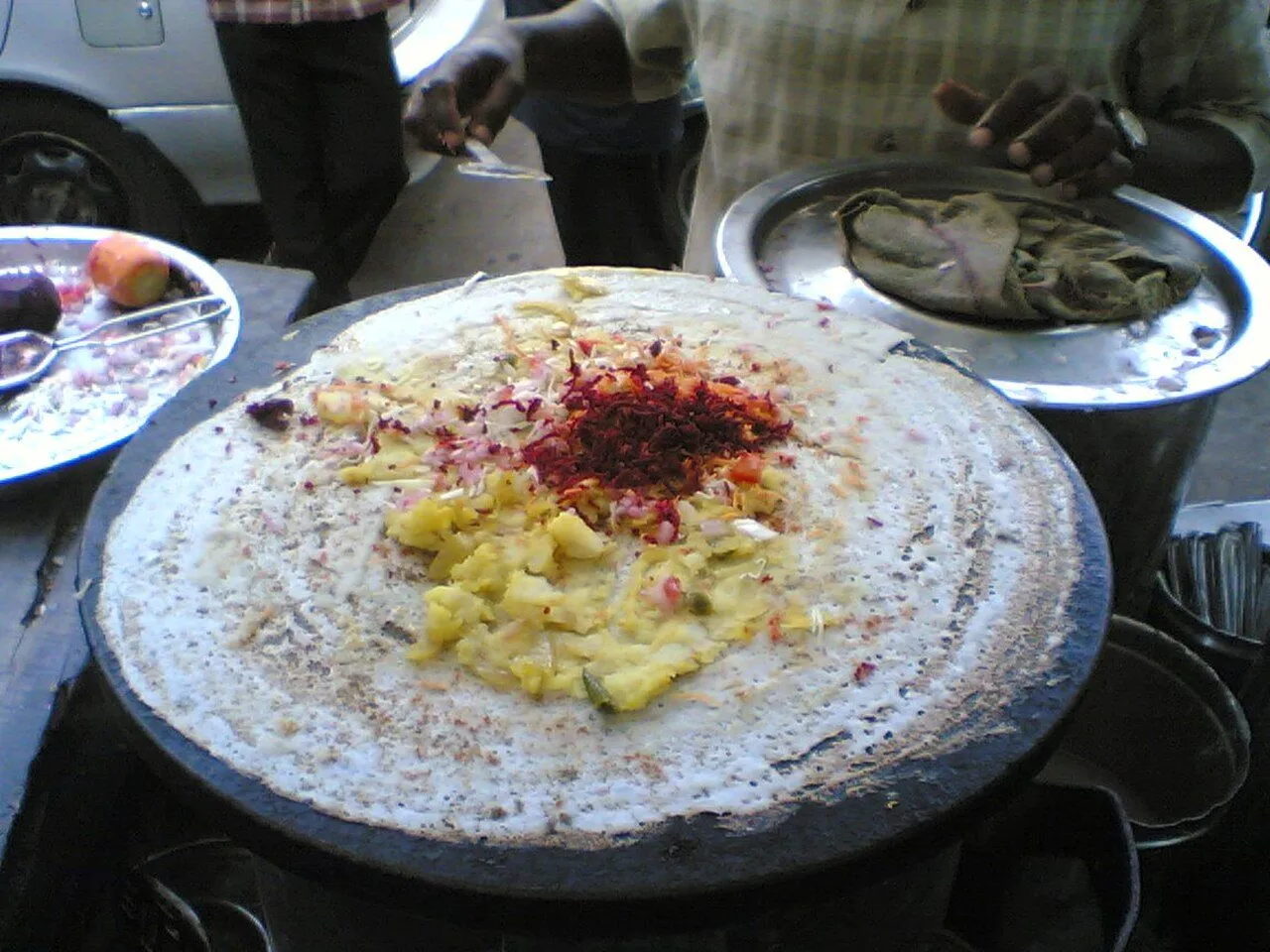 A big flat griddle loaded with a masala dosa. Wide and thick surfaces are what long dosas are made on. Photo: cell105, CC BY 2.0.
Handle: choose how you cook
The handle is the part nobody looks at in a photo and everybody notices in daily use. A dosa is a two-hand job: one hand spreads the batter and the other holds the tawa steady.
One long handle
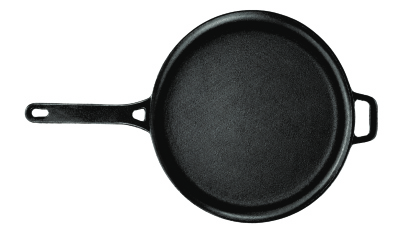
The Long Handle Dosa Tawa has a single long handle and a small helper grip on the opposite side. A long handle keeps your hand away from the flame and leaves your other hand free for the ladle. Many people like it because they can tilt and turn the tawa while spreading the batter. Cast iron handles also get hot, so keep a thick cloth or a handle sleeve nearby.
Two short side handles
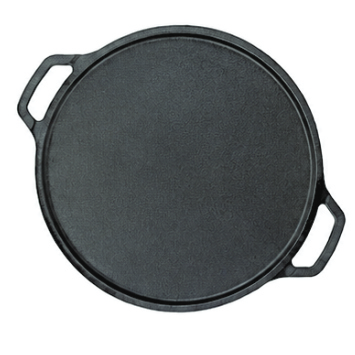
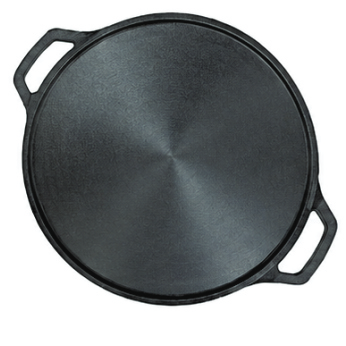
The Double Handle Dosa Tawa and the Double Handle Smooth Dosa Tawa have a short handle on each side. They keep the tawa compact on the stove and make it easy to lift with both hands. This is useful for a heavier tawa, because you share the weight between two hands when you carry it to the sink or the shelf.
How to choose:
| If you… | Consider |
|---|---|
| Like to tilt and swirl the tawa while spreading batter | A long handle |
| Have a small kitchen and limited shelf space | Two short handles |
| Are choosing the heavier tawa | Two handles, so you can lift it safely |
| Cook for one or two people | The 28 cm tawa |
Surface: smooth or plain? Do not overthink it
Some tawas are sold with a smooth cooking surface. Two of ours are: the Double Handle Smooth Dosa Tawa and the Single Handle Smooth Dosa Tawa. Our other dosa tawas are sold without the word smooth in their names.
Here is what matters: any iron tawa works well only once it is seasoned. Seasoning is a thin, dark, slightly slick layer made of cooking oil heated onto the iron. It is what makes the tawa release food. Your grandmother’s old dosa tawa was almost black and slippery for the same reason. Our tawas arrive pre-seasoned, and the layer keeps building as you cook.
Some cooks find a smooth surface easier when learning to spread thin batter. Others like a plain cast surface just as much once their technique and seasoning are right. Neither is magic. Try to choose by touch and comfort, not by promises. Our guide to the cast iron tawa compares more types if you want to go deeper.
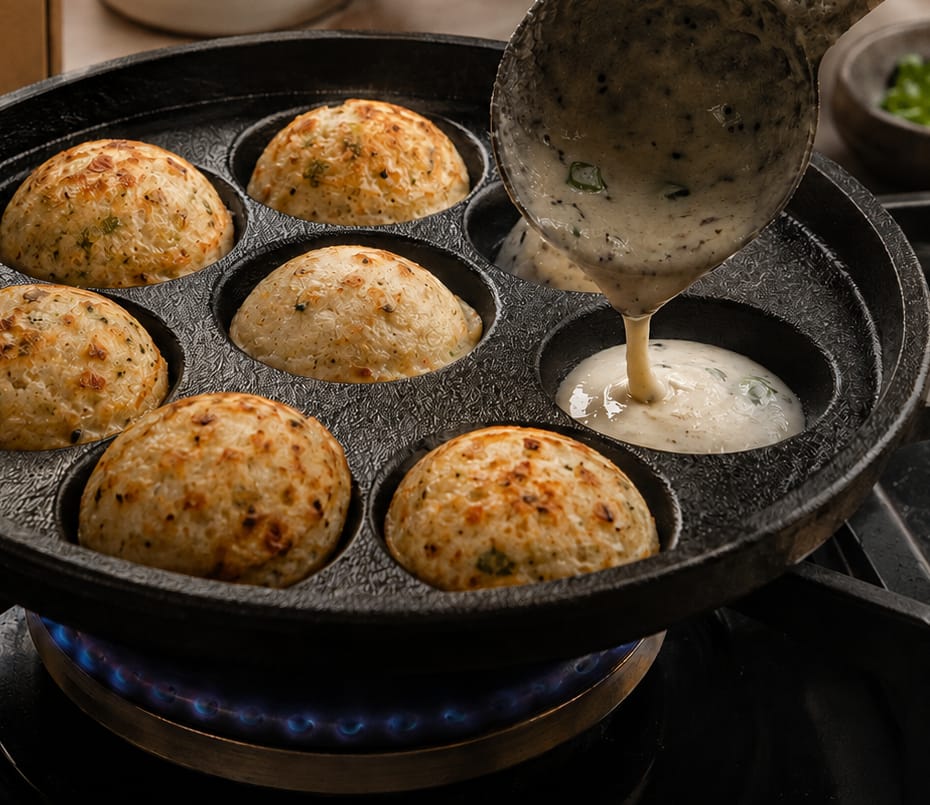
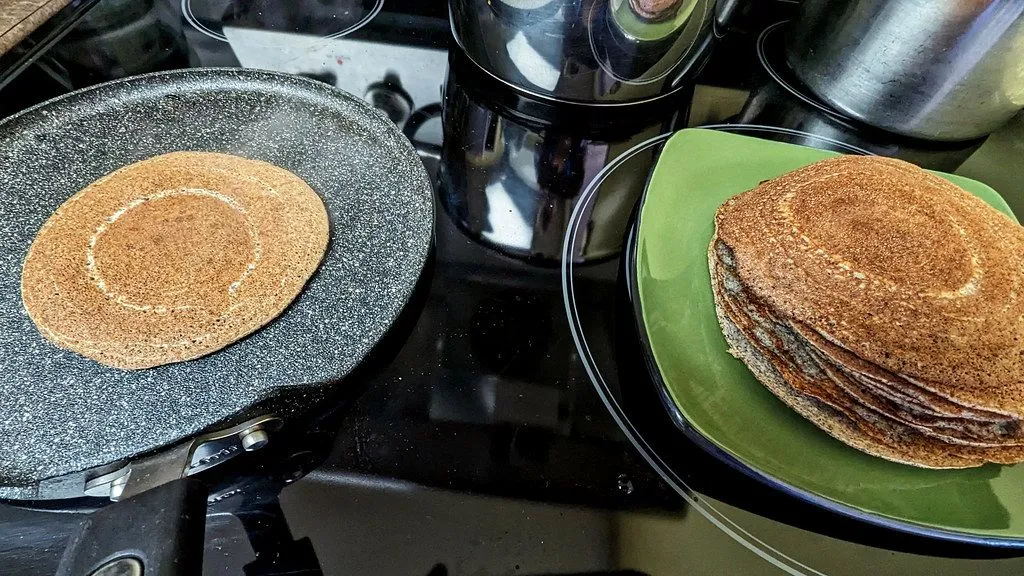 Six dosas on one big flat iron griddle. Heat that stays steady across the surface is what lets so many cook at once. Photo: Dennis S. Hurd, CC BY 2.0.
The heat test: how to know the tawa is ready
You can buy the best tawa and still get a poor dosa if the heat is wrong. The water test is the simple trick that works on any iron tawa.
- Heat the tawa on a medium flame for a few minutes. Do not blast an empty iron tawa on the highest flame straight away.
- Sprinkle a few drops of water on the surface.
- Watch the drops. If they sizzle gently and vanish in a few seconds, the tawa is ready. If they just sit there, it needs more heat. If they roll about like tiny beads and skate across the surface, it is too hot.
There is a bit of science behind the dancing beads. Above roughly 193 °C, a drop of water floats on a thin cushion of its own steam and skitters around instead of boiling away. This is called the Leidenfrost effect (Wikipedia). It tells you the pan is very hot. Take the tawa off the flame for about half a minute, then test again.
Home cooks also advise the water-drop test as a quick check before the first dosa (Sharmis Passions).
Next, a few habits that help:
- Wipe a little oil across the hot tawa with a cloth, or rub half an onion dipped in oil. Do not pour oil in a pool.
- Pour the batter in the centre and spread outwards in light circles. Do not press hard.
- Drizzle a few drops of oil around the edge, not on top of the wet batter. It helps the edges crisp.
- Wait. A dosa that is ready lifts at the edge on its own. If you must force it, give it another half-minute.
- Between dosas, the first one is often the practice one. The tawa is still settling in. Do not be disappointed.
Why does my dosa stick? Five common causes
Almost everyone who cooks on iron has had a dosa weld itself to the tawa. It nearly always comes down to one of five things:
- Patchy or flaked seasoning. Often the whole tawa is fine and only one spot has lost its layer, commonly near the edges where the spatula scrapes. Re-season it (see below).
- A tawa that is too cold. The batter soaks into the metal instead of setting on top. Heat longer and use the water test.
- A tawa that is too hot. The batter burns on contact and you cannot spread it. Take the tawa off the flame for a moment.
- Too little oil. Unlike a coated pan, iron needs some oil so the dosa lets go. A light film is enough once the seasoning is good.
- The batter. Home cooks say that too much raw rice or poha can make dosas stick, and that parboiled or idli rice works better (Everything Better, Show Me The Curry).
If sticking keeps happening, the surest cure is a fresh round of seasoning. Our guide to seasoning a cast iron tawa and the seasoning page take you through it step by step.
Care that keeps the tawa crisp for years
An iron dosa tawa is not fussy, but it dislikes a few things. Keep to this short routine:
- Let it cool a little before washing. Pouring cold water on a very hot iron tawa can stress the metal, and in rare cases crack it. This is a known cause of cracked cast iron (Wide Open Country).
- Wash with hot water and a brush, with little or no soap.
- Dry fully. Put it back on a low flame for a minute until no moisture is left.
- Wipe on a very thin layer of oil, then wipe most of it off.
- Store it somewhere dry, especially in the monsoon.
If you ever see orange spots, do not panic. Rust on iron can be fixed, and our guide to removing rust from cast iron shows how. The care page has the daily basics in one place.
Cast iron or non-stick for dosa?
A coated non-stick tawa is lighter and needs less oil to start with, but it has a coating that wears and should be used at moderate heat. Iron has no coating to peel, handles a hot tawa comfortably and keeps improving as the seasoning builds. The honest answer is that it depends on how you cook and how much care you want to give. If you want the full comparison, read cast iron vs non-stick.
How RIVEDA tawas are made, in short
RIVEDA is a brand of Metalix Ferrocast. Our cast iron cookware is sand-cast and finished at our own foundry in Rajkot, Gujarat, which is ZED certified. ZED stands for Zero Defect Zero Effect, a voluntary government scheme for small and medium manufacturers that looks at quality and at the effect of manufacturing on the environment, with Bronze, Silver and Gold levels (Government of Goa MSME, TÜV NORD India).
Each piece goes through grinding, sand cleaning and quality checks, and then seasoning before it is dispatched. It is supplied pre-seasoned, so you can start cooking on day one. It works on gas and on induction; follow your hob maker’s guidance on base size and weight.
So which tawa should you pick?
Here is a quick way to decide:
- Want steady heat for many dosas, and happy to lift weight? Look at the Double Handle Dosa Tawa, 30 cm, 2.8 kg.
- Want a lighter tawa and one hand free for the ladle? Look at the Long Handle Dosa Tawa, 30 cm, 2.2 kg.
- Like a smooth cooking surface and two handles? Look at the Double Handle Smooth Dosa Tawa, 30 cm, 2.2 kg.
- Small burner or small family? Look at the Single Handle Smooth Dosa Tawa, 28 cm.
New to iron altogether? Read our first-time cast iron buying guide before you decide. When you are ready, you can see every tawa in the tawa shop, and the cooking guide has more ideas for what to make on it. Orders on rivedacookware.com are paid by UPI, card or net banking, and we ship across India from Rajkot. There is no cash on delivery. If a piece arrives damaged, defective or wrong, you can return it within 7 days of delivery. Questions? Message us on WhatsApp at +91 90999 29629 or check the FAQ.
A good tawa does not make a dosa for you. But a heavy, well-seasoned one gives you steady heat, and steady heat is where a crisp, golden dosa begins.
Shop this article
Cast Iron Double Handle Smooth Dosa Tawa
30 CM · 2.2 KG₹1,099Frequently asked questions
Which is the best dosa tawa for home use in India?
For crisp dosas, a heavy iron tawa of about 28 to 30 cm that you season and look after is hard to beat. Pick the handle style that suits your hands and your burner, and make sure the base sits flat on your hob.
What size dosa tawa should I buy?
Thirty centimetres suits most families because you can spread a full-size dosa without the batter running off the edge. A 28 cm tawa is easier on a compact burner or for one or two people.
Do I need a smooth or a rough surface for dosa?
Either works if the tawa is seasoned and properly heated. A smooth surface can feel easier for spreading thin batter, while a plain cast surface develops its seasoning with use. Choose by how it feels in your hand and kitchen.
Can I use a cast iron dosa tawa on an induction cooktop?
RIVEDA tawas work on gas and induction. Always follow your hob maker's guidance on base size and weight, and place the tawa flat and centred on the cooking zone.
Why does my dosa stick to an iron tawa?
The usual causes are patchy or flaked seasoning, a tawa that is too cold or too hot, too little oil on a fresh tawa, or batter made with raw rice. Re-seasoning and a proper preheat fix most cases.
Can I wash a hot dosa tawa with cold water?
Let it cool for a few minutes first. Cold water on a very hot iron tawa can stress the metal, and in rare cases crack it. Wash, dry fully on a low flame, then wipe a thin layer of oil.
Sources
- Cast-iron cookware: heat retention and seasoning — Wikipedia
- Leidenfrost effect (water drops skittering on a hot pan, about 193 °C for water) — Wikipedia
- How to season new iron dosa tawa, tips to maintain iron tawa — Sharmis Passions
- 6 Reasons Why Dosa Gets Stuck To Tawa — Everything Better
- Sticky Dosa/Dosai Tawa — Show Me The Curry
- Cracked Cast Iron is a Surprisingly Common Problem. Here's How to Avoid It. — Wide Open Country
- Zero Defect Zero Effect (ZED) — Directorate of Industries, Government of Goa (MSME)
- Zero Defect Zero Effect (ZED) certification — TÜV NORD India
Pictures: best-dosa-tawa-india.jpg (cover) — David Leo Veksler, CC BY-SA 2.0; dosa-spread-on-tawas.jpg — Alosh Bennett, CC BY 2.0; six-dosas-flat-griddle.jpg — Dennis S. Hurd, CC BY 2.0; masala-dosa-thick-griddle.jpg — cell105, CC BY 2.0.
Follow the RIVEDA blog
One short email a week with new articles — cast iron cooking, care and recipes for Indian kitchens. No spam; unsubscribe in one click.