
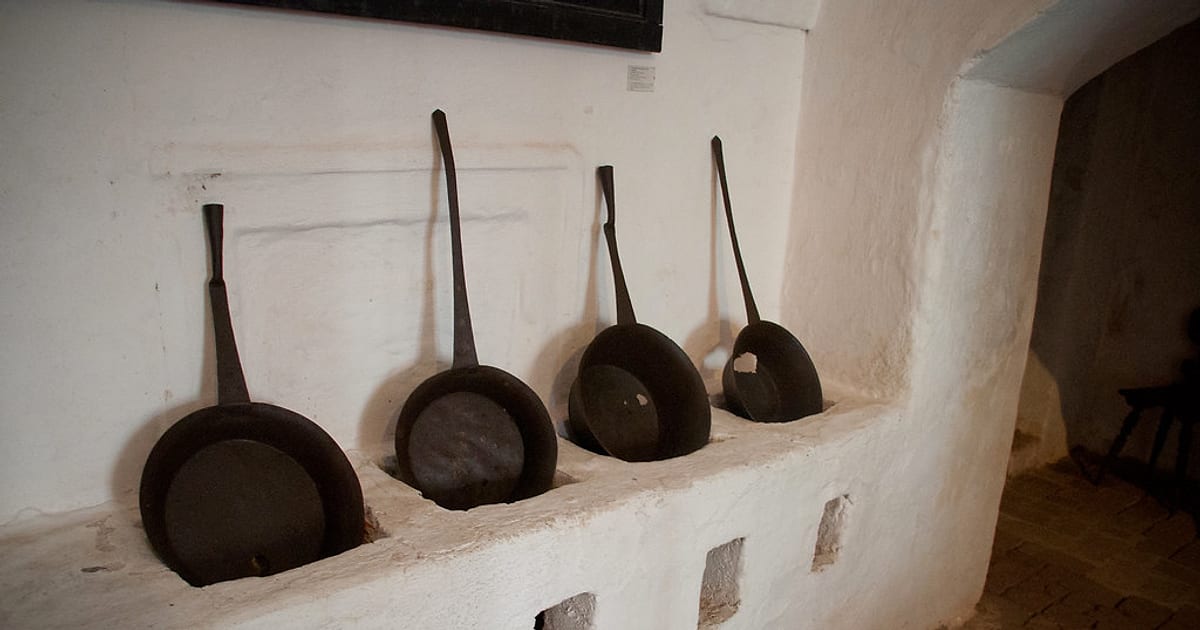
If you are buying cast iron for the first time, start with two pieces: a tawa for rotis or dosas and a kadai for sabzi, dal and frying. Before you pay, check for an even casting, a smooth cooking surface, proper pre-seasoning, a weight you can manage and a seller who will help if something arrives damaged. This guide walks through each of those, then tells you what to expect in your first week.
Why cast iron is worth it in an Indian kitchen
Indian cooking leans on steady heat. A dosa needs a tawa that stays hot as batter spreads across it, a paratha needs even browning, and a tadka needs oil that holds its temperature when spices go in. Thick cast iron stores heat and gives it back evenly, which is exactly what these dishes want.
Cast iron also has no coating to scratch or peel. The cooking surface is seasoning: oil heated onto the iron until it hardens. It improves with use and can be repaired at home if it ever wears thin. If you want the basics first, our page on why cast iron covers how it behaves in plain terms.
The trade-offs are real but manageable. Cast iron is heavier than aluminium, takes longer to heat up, and asks you to dry and oil it after washing. Most people find these become habits within a couple of weeks.
What to buy first: one tawa and one kadai
It is tempting to buy a full set. Resist that. One pan used every day will teach you more about cast iron than four pans used occasionally, and you will have a much better idea of what to add next.
Start with a tawa
The tawa is the most used vessel in most Indian homes, so it is the natural first piece.
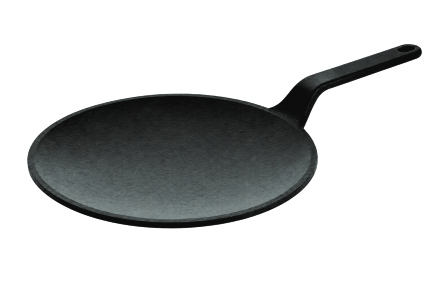
- For rotis and phulkas, the Cast Iron Roti Tawa 22 cm is compact and, at 1.5 kg, the lightest place to start.
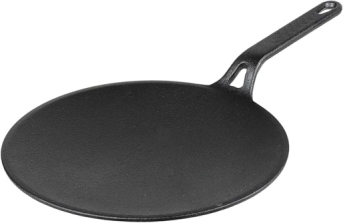
- For parathas or a bigger family, the Cast Iron Roti Tawa 26 cm gives more room.
- If dosas are your daily breakfast, a 30 cm dosa tawa makes more sense. Our cast iron tawa guide compares roti and dosa tawas, sizes and handle styles in detail.
Add a kadai
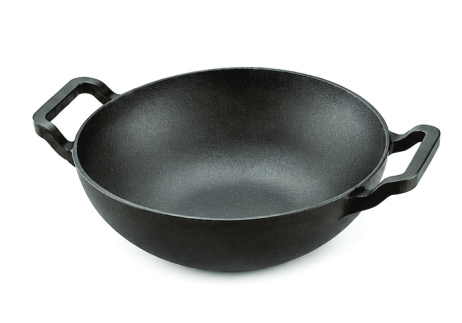
A kadai covers almost everything a tawa does not: sabzi, dal tadka, curries, puris, pakoras and sweets. For a first kadai in a small household, the Cast Iron Kadai 23 cm is deep enough for small-batch curries and light enough to handle easily at 2.0 kg. Families of three to five usually prefer the 27 cm. Read how to choose the best cast iron kadai for a fuller comparison of sizes.
What can wait
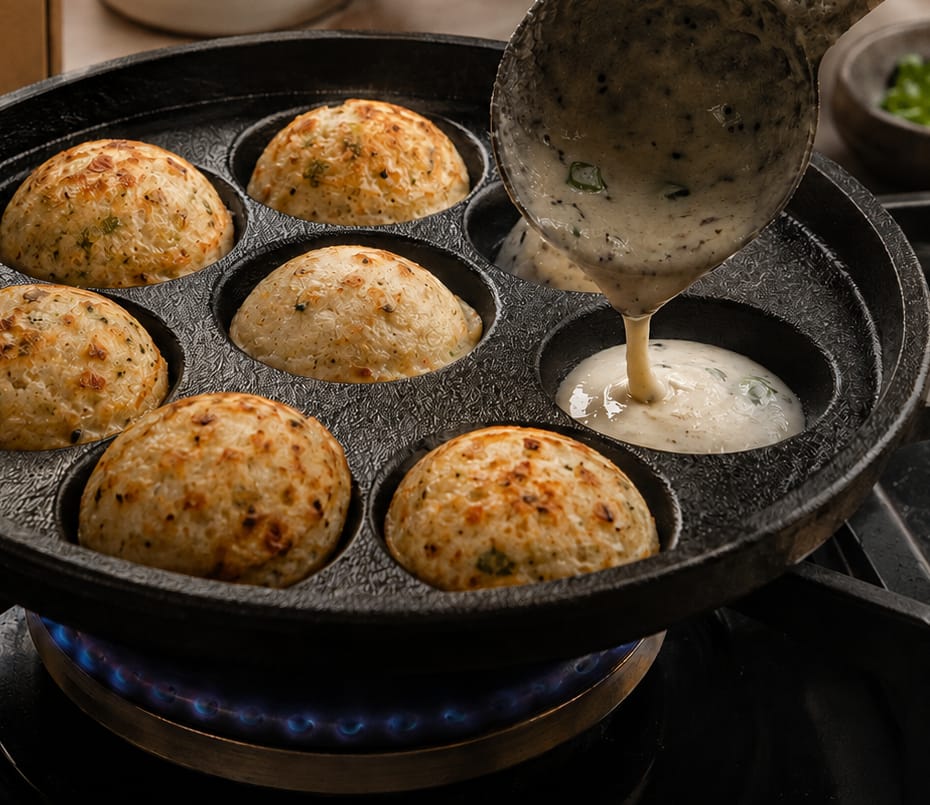
Fry pans, appam pans, griddles and Dutch ovens are wonderful, but they are second-round purchases. Once you are comfortable with your tawa and kadai, you will know whether you want an appam pan for paniyaram, a fry pan for eggs and quick sautés, or a Dutch oven for slow cooking.
What to check before you buy
Cast iron looks simple, but quality varies. Here is a checklist to run through, whether you are buying online or in a shop.
| Check | What good looks like | Why it matters |
|---|---|---|
| Casting | Even thickness, no cracks, holes or lumps | Uneven iron heats unevenly and may be weaker |
| Cooking surface | Smooth to the touch, no sharp grit | Food releases better and seasoning builds evenly |
| Pre-seasoning | Even dark colour, not sticky or patchy | Lets you start cooking after a wash and dry |
| Weight | Comfortable for the main cook to lift | A pan that is too heavy stops getting used |
| Handles | Solid, part of the casting, easy to grip | You will lift it hot and sometimes full |
| Base | Flat and steady, especially for induction | Good contact means even heat and no wobbling |
| Seller | Clear returns policy, real contact details | Heavy items can be damaged in transit |
Even casting and a smooth surface
Run your hand over the cooking surface. It should feel smooth and consistent, without sharp grains of sand or rough patches. Look at the rim and the underside for cracks or air holes. Small natural variations in colour are normal; physical defects are not.
Proper pre-seasoning
A pre-seasoned pan should be an even dark black or deep grey, with a dry, slightly satin feel. It should not feel sticky or tacky, and it should not have flaking patches. Pre-seasoning saves you the work of building the first layers yourself.
A weight you can actually handle
This is the check people skip and regret. Think about who cooks most, and how often the pan moves between stove, sink and shelf. A compact tawa and a small kadai are a sensible way to start; you can always add a heavier piece later. Silicon grips such as the Silicon Tawa Handle or a Silicon Sleeve Set make hot handles easier to hold.
Handles and a flat base for induction
Handles that are part of the casting will not loosen over the years. If you cook on induction, check that the base is flat and sits steadily on the glass, and follow your hob maker’s guidance on base size and weight. On gas, a pan that matches your burner size heats more evenly.
An honest seller with a clear returns policy
Heavy cast iron can be damaged in transit, so buy from a seller who states plainly what happens if a piece arrives broken, defective or wrong, and who answers questions before you buy. RIVEDA accepts returns within 7 days of delivery for damaged, defective or wrong items, and you can send a photo on WhatsApp at +91 90999 29629 if you are unsure about anything. The FAQ page answers the common questions on delivery and payment.
Your first week with a new cast iron pan
The first week sets the tone. Do these things and the pan will start behaving well quickly.
- Wash and dry. Rinse the new pan in warm water with a brush to remove packing residue. Dry it with a cloth, then leave it on a low flame until every bit of moisture is gone.
- Oil very thinly. Spread a few drops of your usual cooking oil over the surface and wipe most of it back off. The pan should look barely oiled, not wet.
- Cook something forgiving. Parathas, a dry aloo sabzi, puris or a dal tadka all add to the seasoning. Use a little more oil than you plan to use long-term.
- Preheat gently. Warm the pan on medium for a few minutes before cooking, then lower the flame slightly. Cast iron holds heat, so you rarely need full flame.
- Clean the same day. Wash while it is still slightly warm, dry on the flame and wipe on a thin film of oil.
- Repeat four or five times. By then, release improves noticeably and the surface starts to look richer.
Our seasoning guide explains how the surface builds up, and the care page has the full routine.
Mistakes to avoid early on
- Cooking on high flame from start to finish
- Not preheating long enough, then blaming the pan for sticking
- Leaving the pan wet in the sink or air-drying it on a rack
- Simmering very sour dishes such as tamarind gravy for a long time in a brand-new pan
- Leaving thick oil on the surface, which turns sticky
- Giving up after two attempts
Living with cast iron through the monsoon
Humidity is cast iron’s biggest enemy in India. During the monsoon, dry every piece on a flame after washing, wipe on a thin film of oil, and store it where air can reach it rather than shut in a damp cupboard. If you stack pans, put a cloth or paper sheet between them.
If a spot of rust appears, do not worry. Scrub it off, wash, dry thoroughly, oil lightly and heat it through. Cast iron is repairable in a way coated pans are not.
Starting your cast iron kitchen
Buy the tawa you will use every morning and a kadai sized for your household, check them against the list above, and give them a week of regular cooking. Every RIVEDA piece is cast and finished at our own foundry in Rajkot, supplied pre-seasoned and ready to cook on after a wash and dry. It ships from Rajkot across India.
A good first pair is the Cast Iron Roti Tawa 22 cm with the Cast Iron Kadai 23 cm. Browse tawas and kadais, or read our complete guide to cast iron cookware in India before you decide.
Shop this article
Frequently asked questions
What is the first cast iron piece I should buy?
Buy the piece for the dish you cook most often. For most Indian homes that is a tawa for rotis or dosas, followed by a kadai for sabzi, dal and frying.
Is pre-seasoned cast iron ready to use straight away?
Yes. Wash it with warm water, dry it completely on a low flame and wipe on a very thin film of oil, and it is ready to cook on. The seasoning keeps improving as you use it.
How heavy is cast iron cookware?
It varies by piece. A compact roti tawa can be around 1.5 kg, an everyday kadai 2 to 3 kg, and large kadais or Dutch ovens 3.5 kg or more. Choose a weight the main cook can lift comfortably.
Can I use cast iron on an induction cooktop?
Yes, cast iron is magnetic and works on induction. Look for a flat, steady base and follow your hob maker's guidance on base size and weight. Lift the pan rather than sliding it across the glass.
Why is my new cast iron pan sticking?
Usually the pan was not preheated long enough or there was too little oil. Preheat on medium for a few minutes, use a little more oil for the first few weeks, and let food set before moving it.
Does cast iron rust easily?
Cast iron rusts if it is left wet, soaked or stored somewhere damp. Drying it on a low flame after washing and wiping on a thin film of oil prevents it, and light rust can be scrubbed off and the surface rebuilt.
Pictures: cast-iron-buying-guide-first-time.jpg (cover) — deejayqueue, CC BY-SA 2.0.
Follow the RIVEDA blog
One short email a week with new articles — cast iron cooking, care and recipes for Indian kitchens. No spam; unsubscribe in one click.