
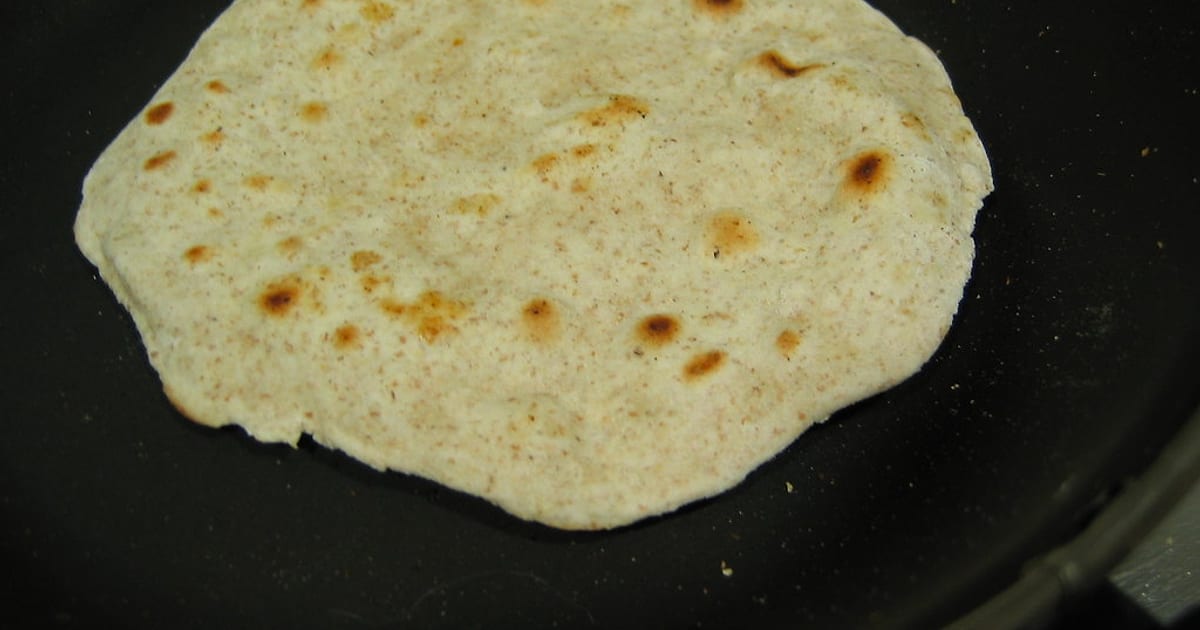
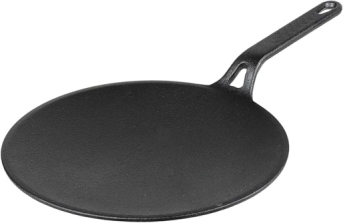
You roll a perfect round, lay it on the tawa, wait, and the roti stays flat. Next door, the same dough puffs up like a balloon. The difference is often not your hand but your heat. The best tawa for roti is a flat one that holds steady heat, is the right size for your roti and burner, and has a handle you can control. This guide shows you how to judge each one, and gives you a simple puff test you can run in your own kitchen.
Why a roti puffs in the first place
Before choosing a tawa, it helps to know what is happening inside the roti.
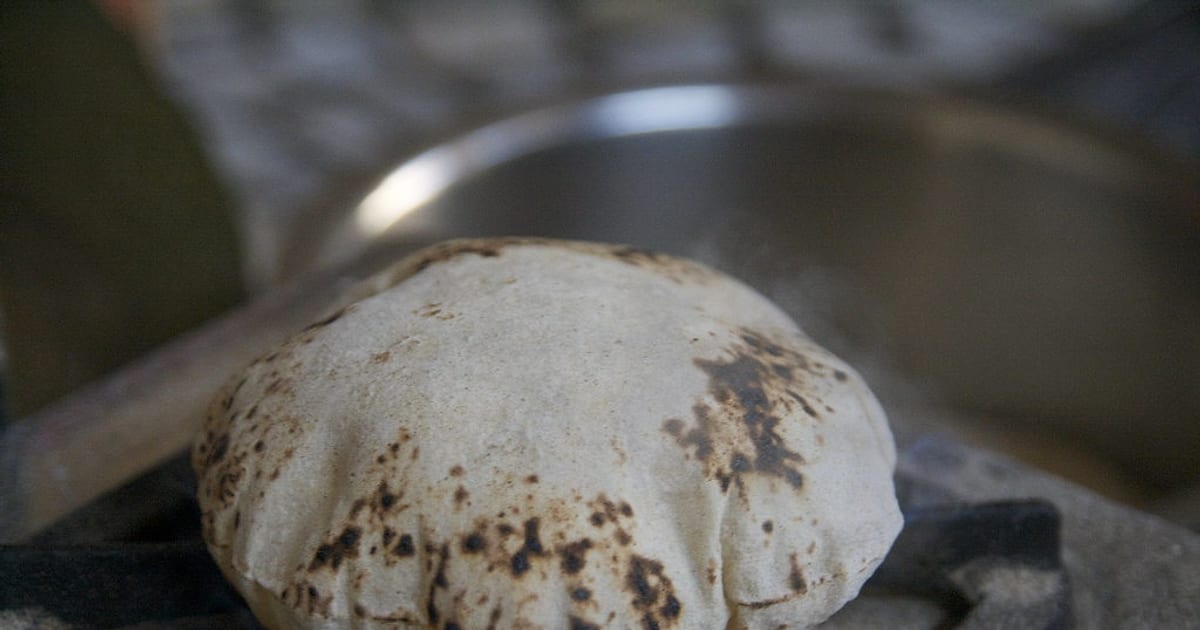
Atta dough is mostly flour and water. When the roti touches a hot surface, the water inside turns to steam. Steam takes up far more room than water, so it pushes outward. If the outside of the roti has set quickly and is not torn, the steam gets trapped between the two layers and lifts them apart. That is your puff.
Research on chapati describes it the same way: steam forms between the layers of dough and pushes them apart. A 1982 paper in the Journal of Food Science found that puffed height went up with the protein and gluten content of the wheat. A later review of chapati links dough that takes up more water to greater puffing, because more water means more steam. A baking study in the International Journal of Food Science and Technology also reported that baking at a low temperature slowed steam formation and reduced puffing.
Put simply, you need three things:
- Dough that holds water. Soft, well-kneaded, rested dough.
- A surface with no weak spots. An even, thin, untorn roti.
- Fast, strong heat under it. A quick burst of steam, not a slow leak.
The tawa only controls the third one. But it controls it a lot.
The heat problem every tawa has
A cold roti is a small lump of water. Every time you lay one on the tawa, it pulls heat out of the surface. If the tawa has little metal in it, the surface cools quickly, and you must wait for it to recover. If the tawa has more metal, it has more heat stored and loses less with each roti.
This is the main reason cast iron has a name for good rotis. Cast iron is dense, so it stores a lot of heat. The Cooking Issues article on the science of cast iron explains that cast iron stores heat well but is not as good at spreading it sideways as metals like aluminium. In plain words:
- Cast iron holds heat for longer, but a small flame can leave a hotter patch right over the burner.
- Aluminium spreads heat quickly but holds less of it, so the surface can cool when cold dough lands on it.
Neither is “perfect”. That is why how you heat the tawa matters as much as what it is made of. We will come to that in a moment.
Heat is also why a very thin tawa can give you trouble. It heats fast, but a cold roti can take that heat away just as fast, so the surface may dip right when you need a quick burst of steam.
Which tawa type suits rotis?
You will see many kinds in Indian kitchens. Here is a fair, simple comparison. Nobody has tested all of them side by side for puffing, so this is a guide based on how each material behaves, not a scoreboard.
| Tawa type | What it does well | What to watch |
|---|---|---|
| Cast iron | Holds heat steadily; no coating; lasts for years | Heavier; needs drying and a thin film of oil after washing |
| Plain iron (sheet) | Lighter; heats quickly | Holds less heat than a thick cast iron tawa; also needs rust care |
| Aluminium | Light, spreads heat quickly | Holds less heat than cast iron |
| Non-stick | Easy to clean; little sticking | Coating wears with use; heat limits apply |
If you are choosing between cast iron and a lighter iron tawa, our article on cast iron vs iron tawa goes deeper. If you are thinking of a coated pan, see cast iron vs non-stick.
One more point. Roti is cooked dry. You do not put oil on the tawa for it. That means the surface should release the roti by itself once it is hot, and a seasoned cast iron surface does this well. If you wonder what “seasoned” means, our guide to pre-seasoned cast iron explains it in a few minutes.
Pick the size and weight to match your family
Size is the most overlooked part. A tawa that is too small makes you fight the edges. One that is too big wastes gas and takes longer to heat.
A simple rule: choose a tawa a few centimetres wider than your roti. You want space to flip the roti with your fingers or tongs without brushing the hot rim.
For most Indian homes, two sizes cover almost everything:
- 22 cm is a compact tawa for everyday rotis, chapatis and phulkas. It suits one or two people, or a family that makes small rotis.
- 26 cm gives room for bigger rotis and for stuffed parathas without folding the edges.
RIVEDA makes both as flat, long-handled roti tawas. The Cast Iron Roti Tawa 22 CM weighs 1.5 kg and is the lightest tawa in our range. The Cast Iron Roti Tawa 26 CM weighs 2.0 kg and gives you the extra four centimetres.
Tip: Roll one roti, hold it over the tawa you are thinking of, and see how much of the tawa is left around it. If you cannot see a clear gap all round, go one size up.
Weight: heavy enough to hold heat, light enough to lift
Weight is a trade. A heavier tawa holds heat better. A lighter one is easier to lift, tilt and turn when you are making twenty rotis in a row.
Think about who will use it. If an elder in the house makes the rotis daily, a lighter tawa is kinder on the wrist. If you cook a big batch at once and want the heat to stay even, a heavier one helps.
That is why we make two roti tawas rather than one. At 1.5 kg, the 22 cm is easy to handle. At 2.0 kg, the 26 cm holds a little more heat for larger rotis. Both are flat and made of cast iron.
The handle matters more than you think
Roti-making is quick. Your hand is near the tawa all the time, and you often need to move the tawa itself: to slide it to a smaller flame, to tilt off a spill of flour, or to lift it away so the roti can go straight on the flame.
A good handle should:
- Be long enough to keep your hand away from the heat.
- Sit comfortably in the palm, without sharp edges.
- Feel balanced, so the tawa does not tip when you let go.
Both RIVEDA roti tawas have a single long handle. Cast iron handles get hot, so keep a dry cloth, or use a handle sleeve, nearby. Our accessories include silicon handle sleeves made for hot cast iron handles. Never use a wet cloth, as steam can scald you.
A simple puff test you can do at home
Do not take anyone’s word for how a tawa behaves on your stove. Test it. This takes about ten minutes and costs nothing but a little dough.
What you need: your usual dough, rested for at least 20 minutes, rolled into a few rotis of equal thickness.
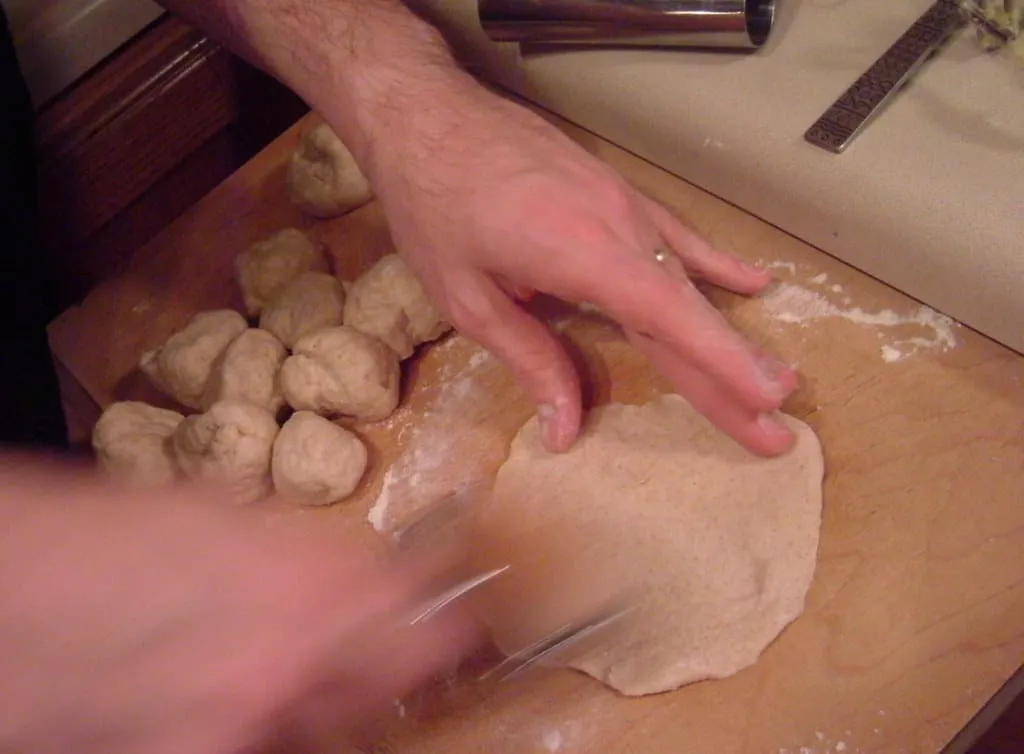 Rolling the dough thin and even is half the puff. Photo: Aine D, CC BY-SA 2.0.
Step 1: Check the heat first
Heat the empty tawa on a medium flame for a few minutes. Then flick a few drops of water on it. If they skitter around and vanish at once, the tawa is ready. If they sit and slowly dry, it needs more time. Many cooks use exactly this test.
Do not rush to a high flame. Cast iron takes a little time to heat through, and a very high flame on a small burner can make a hot spot in the middle while the edges stay cool. Give it a few minutes on medium and let the heat spread.
Step 2: Cook the first side
Lay the roti on the tawa. Wait until small bubbles appear on top. This usually takes under half a minute.
Step 3: Flip and look
Turn the roti. Cook until you see brown spots on the second side.
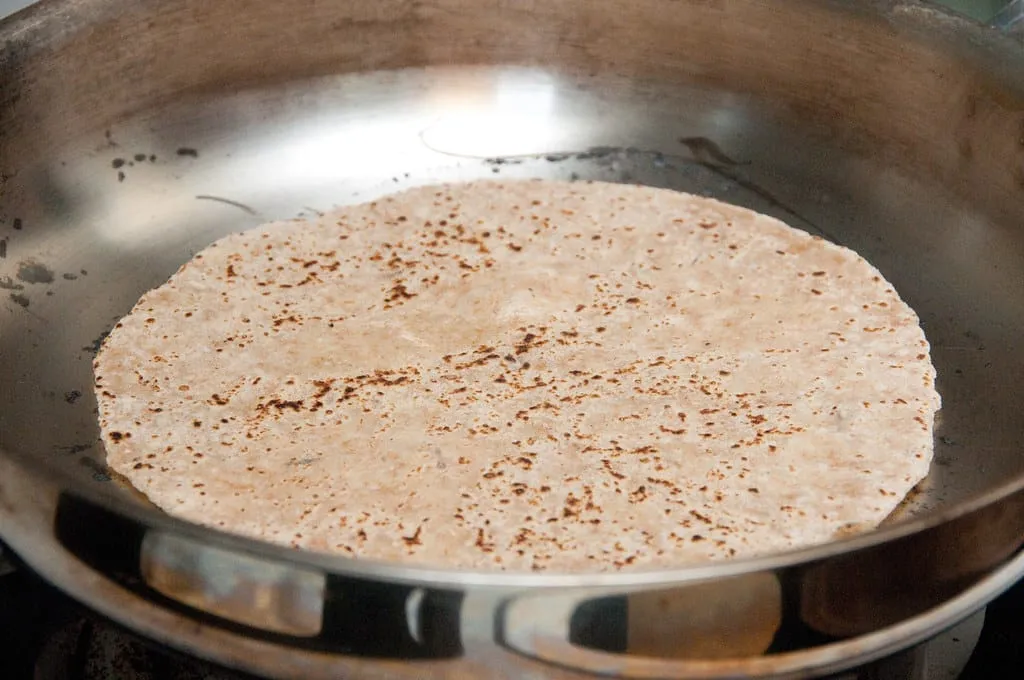 Brown spots show the side has cooked. This chapati is in a steel pan, not a tawa. Photo: QUOI Media, CC BY-SA 2.0.
Step 4: Puff it
On a gas stove, many cooks lift the roti with tongs and place it on the open flame, with the side that has fewer brown spots facing down. It puffs in a few seconds. Do not leave it there too long, or it will burn.
On induction, there is no open flame. Cook both sides on the tawa, and then gently press around the edges with a folded dry cloth, which can help the steam move into the roti and lift it. Our article on cast iron on induction covers the basics. Always follow your hob maker’s guidance on base size and weight.
Step 5: Score yourself
For each roti, note:
- Did it puff fully, partly or not at all?
- Are there dry, hard patches?
- Did the tawa recover heat between rotis, or did you wait?
Do this on your own tawa, and you will know more than any buying guide can tell you. If you are trying different tawas, use the same dough, the same rolling and the same flame each time, so that only the tawa changes.
Why your roti may still not puff
Sometimes the tawa is fine and something else is wrong. These are the usual reasons, from most to least common:
- The tawa is not hot enough. Use the water drop test above.
- The dough is too dry or too stiff. Soft dough holds more water, and more water means more steam.
- Uneven rolling. If the edges are thinner than the middle, steam escapes at the edge.
- A tear or a thin spot. A small hole lets the steam out, and the roti will not puff.
- Too much dry flour on the roti. Burnt flour on the tawa makes smoke and makes the surface rough. Shake off the extra.
- The dough did not rest. Rest the dough for 20 to 30 minutes, covered, so the flour absorbs the water properly.
It is also worth saying that the flour matters. As the research shows, wheat with more gluten tends to puff better. If your rotis never puff, even on a good tawa, try a different atta.
Look after the tawa, and it looks after your rotis
Cast iron rewards simple habits. After the last roti:
- Let the tawa cool a little, then wipe off any flour with a dry cloth or a soft brush.
- If you wash it, use hot water, a brush, and only a little mild soap now and then.
- Dry it fully, then warm it on the flame for a minute until no moisture is left.
- Rub on a very thin film of oil and wipe off the excess.
- Store it somewhere with some airflow, especially in the monsoon.
Because roti is cooked dry, your tawa gets a lot of heat but no oil from cooking. A thin film of oil after each wash helps keep rust away. Our care guide covers the full routine, and the article on how to season a cast iron tawa shows how to rebuild the surface if it ever looks dull.
RIVEDA tawas are supplied pre-seasoned, so you can start cooking straight away. The seasoning keeps building as you use the tawa.
Which RIVEDA roti tawa is right for you?
If you are still undecided, here is a short guide.
Choose the 22 cm if:
- You cook for one to three people.
- You like to make small, thin rotis or phulkas.
- You want the lightest tawa, so it is easy to lift and turn.
Choose the 26 cm if:
- You cook for a bigger family.
- You make larger rotis or stuffed parathas often.
- You want a little more metal under the roti for steadier heat.
Both are cast and finished at our own ZED-certified foundry in Rajkot, Gujarat, and both work on gas and induction. You can order on rivedacookware.com with UPI, cards or net banking, or message us on WhatsApp at +91 90999 29629. If the tawa arrives damaged or is not the item you ordered, you can return it within 7 days of delivery.
If you also make dosas, a different tawa may suit you better. Our guide to the best dosa tawa in India explains why, and the longer cast iron tawa guide compares all the tawas in one place. For help in the kitchen, the cooking guide and the FAQ are good next stops.
The short answer
The best tawa for roti is flat, holds steady heat, is a few centimetres wider than your roti and has a handle that feels safe in your hand. Cast iron is a strong choice because it stores heat, and a 22 cm or 26 cm size covers most Indian kitchens. But the best test is your own: heat the tawa until water skitters, cook three rotis, and see how they puff.
Try the puff test this week. Then pick the size that felt right in your hand.
Shop this article
Frequently asked questions
Which tawa is best for roti?
A flat tawa that holds steady heat and has a handle you can grip comfortably is best. Cast iron is a popular choice because its weight keeps the surface hot while one cold roti after another goes on. Match the size to your roti and your burner.
What size tawa is best for roti?
Pick a tawa a little wider than your roti, so you can turn it without touching the edge. A 22 cm tawa suits everyday rotis and phulkas for a small family. A 26 cm tawa gives room for larger rotis and parathas.
Can I make phulkas on a cast iron tawa on induction?
Yes, you can cook rotis on the tawa. Without an open flame you cannot finish the puff over fire, so cook both sides well and press the edges gently with a cloth. Follow your hob maker's guidance on base size and weight.
Why does my roti not puff on the tawa?
The usual reasons are a tawa that is not hot enough, dough that is too dry or rolled unevenly, a torn roti, or no rest for the dough. Fix the heat first: a few drops of water should skitter and vanish at once.
Do I need to oil a cast iron tawa for rotis?
No. Rotis are cooked dry on a hot tawa. After cooking, wipe the tawa clean, dry it fully and rub on a very thin film of oil to protect it, especially in the monsoon.
Is a heavy tawa better for roti?
A heavier tawa holds heat better, which helps in the middle of a batch. But it should not be so heavy that you cannot lift or turn it. A light, long-handled tawa is easier to handle when you cook rotis one after another.
Sources
- Puffing and Textural Characteristics of Chapati in Relation to Varietal Differences in Gluten Composition (Ram & Nigam, Journal of Food Science, 1982) — ResearchGate (listing of the Journal of Food Science paper)
- A review of wheat chapatti: Quality attributes and shelf stability parameters — ScienceDirect
- Optimisation of baking parameters of chapati with respect to vitamin B1 and B2 retention and quality (International Journal of Food Science & Technology) — Oxford Academic
- Heavy Metal: the Science of Cast Iron Cooking — Cooking Issues
- Guide to the perfect phulka rotis or puffed Indian bread — Gulf News
- How to make soft chapati / roti / phulka (puffing roti) — Sharmis Passions
More on this topic: all tawas articles →
Pictures: best-tawa-for-roti.jpg (cover) — xikita, CC BY 2.0; rolling-roti-dough.jpg — Aine D, CC BY-SA 2.0; chapati-first-side-brown-spots.jpg — QUOI Media, CC BY-SA 2.0.
Follow the RIVEDA blog
One short email a week with new articles — cast iron cooking, care and recipes for Indian kitchens. No spam; unsubscribe in one click.