A good cast iron tawa comes down to three choices: the size that fits what you cook, the surface that suits your batter or dough, and the handle that suits how you work at the stove. Roti tawas are smaller and lighter; dosa tawas are wider, heavier and often smoother. This guide walks you through each choice, then shows how to use and care for the tawa you pick.
Why cast iron makes such a good tawa
A tawa’s job is to hold an even, steady heat while you cook one roti or dosa after another. Thin tawas cool down the moment cold batter or dough lands on them, then overheat while you roll the next one. Cast iron has enough mass to stay steady.
That stored heat is why a dosa on cast iron crisps at the edges and lifts cleanly, and why rotis get even brown spots instead of pale patches. It also means you can usually cook on a lower flame once the tawa is properly preheated.
Cast iron has no synthetic coating to scratch or wear off. The surface is seasoning, built up by cooking with oil, and it gets better the more you use the tawa. If you are new to cast iron, our complete guide to cast iron cookware in India covers the basics.
Roti tawa vs dosa tawa
The two most common tawas look similar but do slightly different jobs.
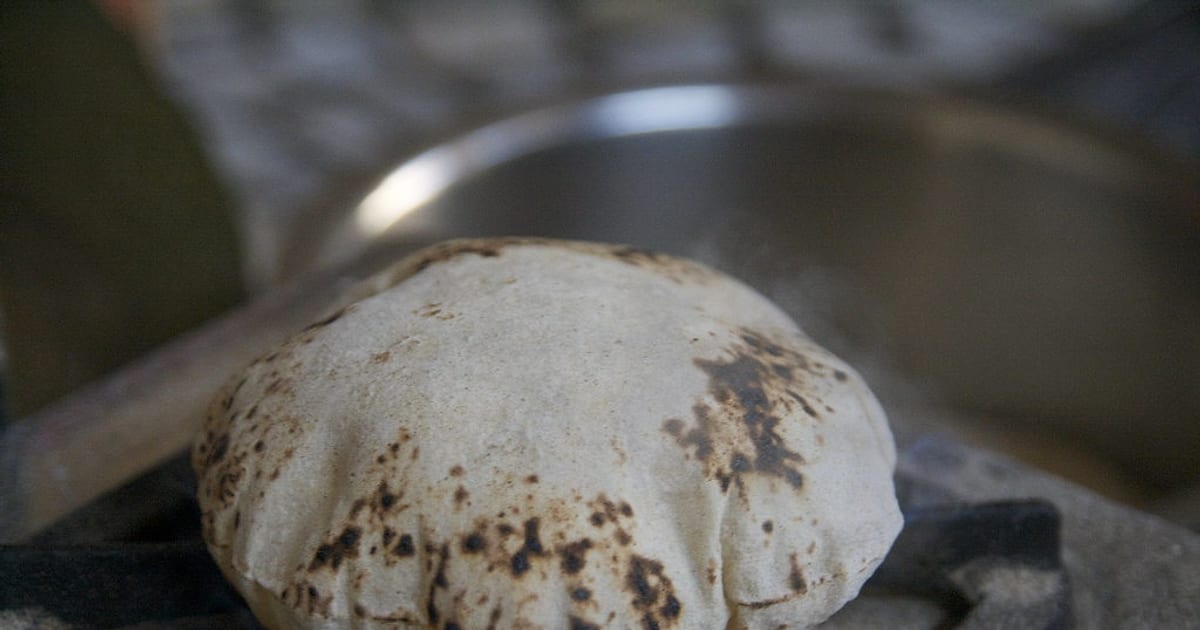
A roti tawa is used dry. Rotis and phulkas cook on direct heat with no oil, then often go over the flame to puff. A smaller, lighter tawa is easier to handle and heats quickly.
A dosa tawa is used lightly oiled. Batter has to spread thin and wide, so you want a larger surface with even heat right to the edges. A heavier tawa helps when you make a stack of dosas, because it does not lose heat between them.
If you make both often, two tawas make life easier. The dosa tawa keeps its oiled, slick surface, and the roti tawa stays dry and ready. If you only want one, a wider tawa can do both, with a quick wipe between uses.
Choosing the size: 22, 26, 28 or 30 cm
Size affects what fits on the tawa, how much it weighs and which burner it suits. Here is how the common sizes compare.
| Size | Best for | Weight (RIVEDA) | Notes |
|---|---|---|---|
| 22 cm | Everyday rotis, phulkas | 1.5 kg | Light, quick to heat, easy to lift |
| 26 cm | Rotis plus parathas | 2.0 kg | Room for a full-size paratha |
| 28 cm | Dosa, uttapam, parathas | 2.2 kg | A middle size with a smooth surface |
| 30 cm | Full-size dosas | 2.2 to 2.8 kg | Spreads a wide, thin dosa |
For a household that mostly eats rotis, the Cast Iron Roti Tawa 22 CM is a compact, light tawa for everyday rotis and phulkas. If you also make parathas, the Cast Iron Roti Tawa 26 CM gives you the extra room.
For dosa, 28 to 30 cm is the useful range. Match the tawa to your largest burner: a big tawa on a small flame will be hot in the middle and cool at the edges.
On induction, check that the tawa’s base is not much larger than the cooking zone, and follow your hob maker’s guidance on base size and maximum weight. A tawa that overhangs the zone a lot will heat well in the centre but stay cooler towards the rim.
Smooth vs regular surface
Cast iron tawas come with either a regular cast surface or a smoother finished surface.
A smooth surface makes it easier to spread batter thin and even in one circular motion. The Cast Iron Double Handle Smooth Dosa Tawa 30 CM and the Cast Iron Single Handle Smooth Dosa Tawa 28 CM are made with this in mind.
A regular surface has a little more texture from the casting. It cooks just as well, holds seasoning well, and becomes smoother over months of use as layers of seasoning build up. For rotis and parathas, texture makes no real difference.
If thin, paper-like dosas are your priority, choose smooth. If you want a heavier, all-round tawa, a regular surface is a good choice.
Long handle, single handle or double handle
The handle changes how the tawa feels in daily use more than most people expect.
Long handle
A long handle gives control when you tilt or move the tawa while spreading batter, and keeps your hand away from the heat. The Cast Iron Long Handle Dosa Tawa 30 CM is made for crisp dosas, spread thin and lifted clean. A silicon grip such as the Silicon Tawa Handle makes a hot handle easier to hold.
Single handle
A single handle on a mid-size tawa balances control with a slightly lighter feel, and suits smaller kitchens where a long handle can get in the way.
Double handle
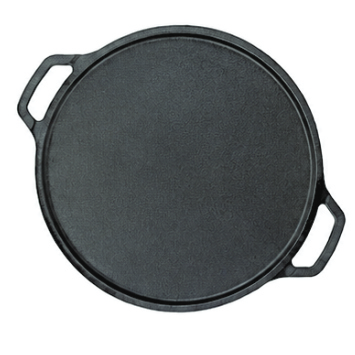
Two side handles let you lift a heavy tawa with both hands, which is easier on the wrists and safer when carrying it from stove to sink. The tawa also takes less space on the stove. The Cast Iron Double Handle Dosa Tawa 30 CM is a heavier 30 cm tawa with two side handles, a good choice if you make many dosas at a time and want the tawa to hold its heat.
The 2-in-1 griddle option
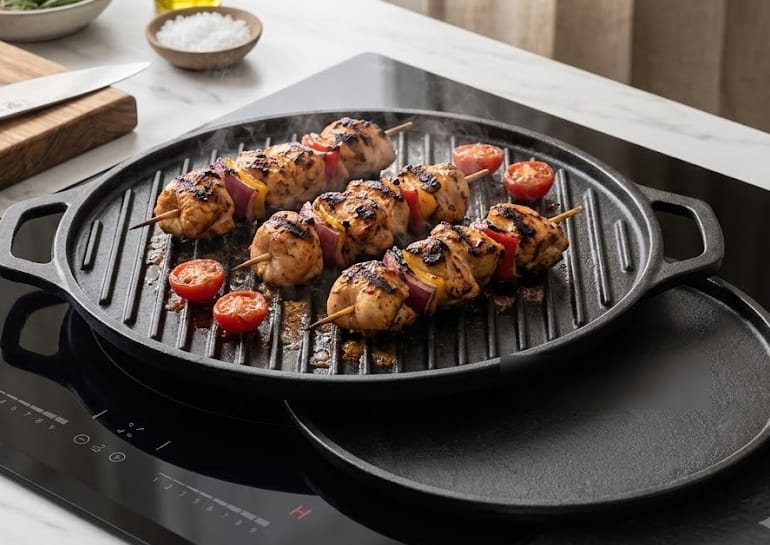
If you want one piece to do more, the Cast Iron 2 in 1 Griddle / Tawa 30 CM has grill ridges on one face and a flat tawa on the other. Use the ridged side for grilled sandwiches, paneer tikka, corn and vegetables, and flip it over for parathas or dosa.
It is heavier than a dedicated roti tawa, so it suits people who are comfortable lifting a solid piece. Wash and dry the ridges carefully; a brush reaches between them better than a cloth.
How to cook roti, dosa and paratha on a cast iron tawa
Cast iron rewards patience at the start. Give it time to heat, and it will stay steady for the whole meal.
Roti and phulka
- Preheat the dry tawa on medium for a few minutes.
- Place the rolled roti and cook until small bubbles appear, then flip.
- When brown spots form underneath, flip again or move it over the flame to puff.
- Keep the tawa dry; there is no need for oil.
Dosa
- Preheat on medium until a sprinkle of water sizzles and disappears within a couple of seconds.
- Wipe on a little oil with a cloth, a halved onion or a Silicon Brush.
- Lower the flame slightly, pour the batter in the centre and spread outward in one motion.
- Drizzle a few drops of oil around the edge and wait until the edges lift before folding.
- Between dosas, sprinkle a little water to bring the surface temperature down if it gets too hot.
Paratha
- Preheat on medium.
- Cook the first side dry until lightly spotted, then flip.
- Add ghee or oil, press gently with a spatula and flip again until both sides are golden.
For more, see the cooking guide.
Caring for your cast iron tawa
A tawa needs the same simple care as any cast iron piece.
- Wash with warm water and a brush while it is still slightly warm. A little mild soap is fine.
- Dry completely, straight away, then put it on a low flame for a minute.
- Wipe on a very thin film of oil, then wipe most of it back.
- Store it dry, especially during the monsoon, and avoid soaking or the dishwasher.
If dosas start sticking, the seasoning may need attention. Our step-by-step guide to seasoning a cast iron tawa and the care page explain how to bring it back.
Choosing your RIVEDA tawa
Pick the tawa for the dish you make most. For rotis, start with the Cast Iron Roti Tawa 22 CM; for a stack of dosas, the Cast Iron Double Handle Dosa Tawa 30 CM or the smooth version. Every RIVEDA tawa is cast in Rajkot and arrives pre-seasoned, so you can start cooking soon after unpacking. See the full range in tawas.
Shop this article
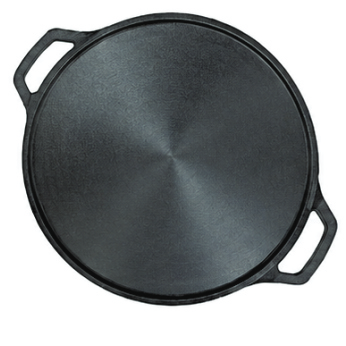
Cast Iron Double Handle Smooth Dosa Tawa
30 CM · 2.2 KG₹1,099Frequently asked questions
Which size cast iron tawa is best for roti?
A 22 cm tawa suits everyday rotis and phulkas and is light enough to lift easily. Choose 26 cm if you also make parathas or larger rotis.
Can I make both roti and dosa on the same cast iron tawa?
You can, especially on a wider tawa, but roti needs a dry surface and dosa needs a lightly oiled one. Many families keep a separate dosa tawa so the oiled surface stays ready for batter.
Why does dosa stick to my cast iron tawa?
Usually the tawa was not hot enough or the seasoning is still young. Preheat on medium for several minutes, wipe on a little oil, test with a sprinkle of water and slightly lower the flame before pouring.
Does a cast iron tawa work on induction?
Yes, cast iron is magnetic and works on induction. Follow your hob maker's guidance on base size and maximum weight, and lift the tawa rather than sliding it.
How do I clean a cast iron tawa after making dosa?
Let it cool slightly, wash with warm water and a brush, dry it completely on a low flame, then wipe on a very thin film of oil. Avoid soaking it or leaving it to air-dry.
Is a smooth cast iron tawa better than a regular one?
A smooth surface makes it easier to spread batter thin and evenly, which many people like for dosa. A regular cast surface also cooks well and becomes smoother as seasoning builds up.
More on this topic: all tawas articles →
Pictures: cast-iron-tawa-guide.jpg (cover) — apercoco, CC BY-SA 2.0.
Follow the RIVEDA blog
One short email a week with new articles — cast iron cooking, care and recipes for Indian kitchens. No spam; unsubscribe in one click.