
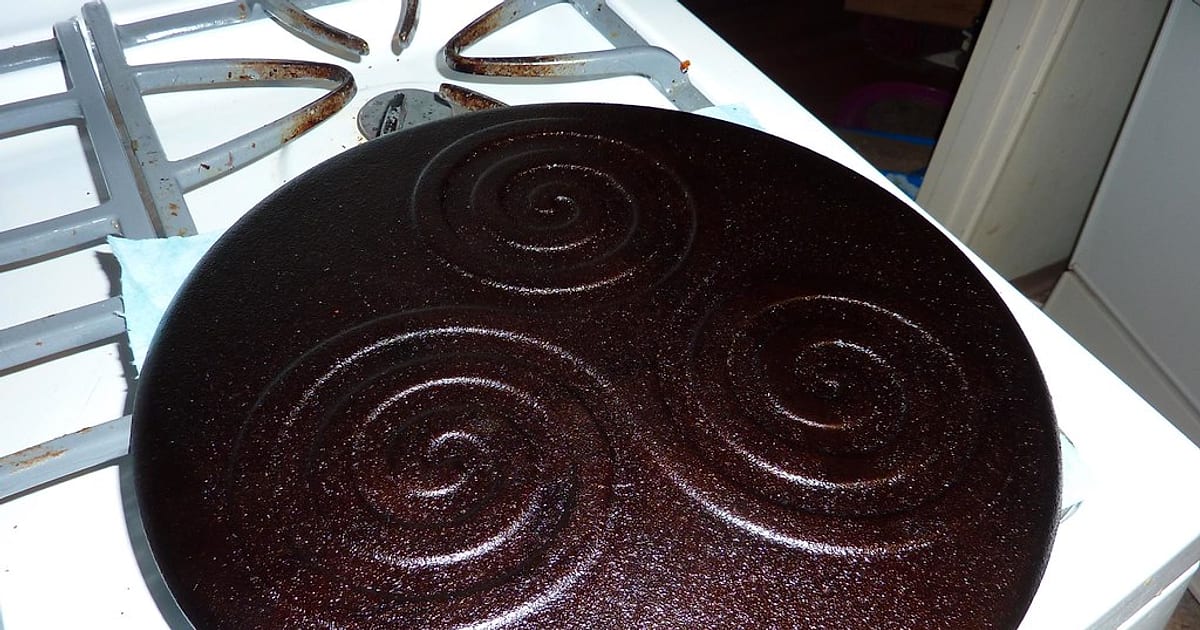
You bought a pan that says “pre-seasoned”. It arrives black and slightly shiny, and you wonder: is it ready to cook, or do I still have to do something? Here is the short answer. Pre-seasoned means the pan already has a thin layer of oil baked onto the iron, so you can cook in it from day one. It does not mean the pan is finished. That black layer gets better every time you cook.
What “pre-seasoned” actually means
Think of the black layer on an old family iron tawa. Nobody bought that. It built up slowly from years of rotis and dosas.
Seasoning is that layer. It is cooking oil that has been heated on the iron until it turns into a thin, hard, slightly glossy film. The film protects the metal from rust and helps food slide off.
Pre-seasoned simply means the maker did the first round of this before the pan reached you. Many makers explain it the same way: the pan is oiled and heated at the factory so that it is ready to cook straight out of the box. You do not need to season it first, and its seasoning improves with use.
So a pre-seasoned pan has a head start. The word does not promise a perfect surface.
What the black layer really is
When oil is heated hot enough, its molecules join up into longer chains. Scientists call this polymerisation, which only means small pieces linking into one big, tough net. That net sticks to the iron. The result is a thin plastic-like film made from cooking oil, not a paint or a coating added from outside.
NOVA, the science programme of PBS, describes seasoning as a layer of polymerised fat that protects the pan. It also notes that scientists still discuss exactly what happens at the molecular level (NOVA). The Kitchn’s explanation says the same: thin layers work better than thick ones, and thick coats tend to stay sticky (The Kitchn).
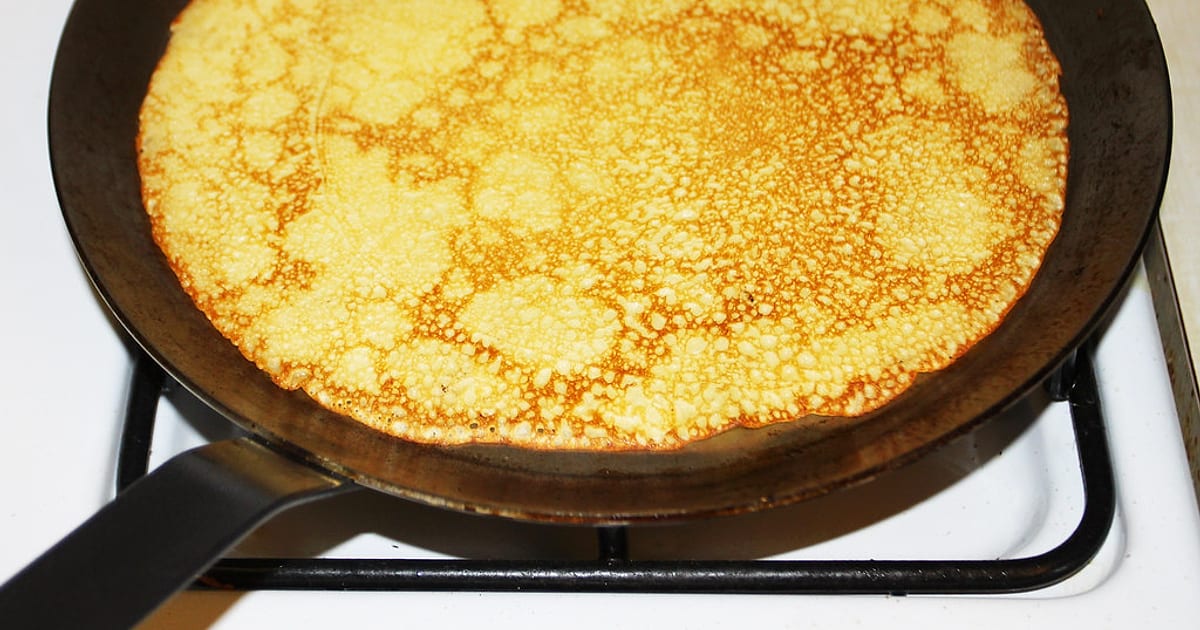
Here is a picture of that process at home. This crepe pan has been oiled and baked in an oven. The reddish-brown shine is the first layer.
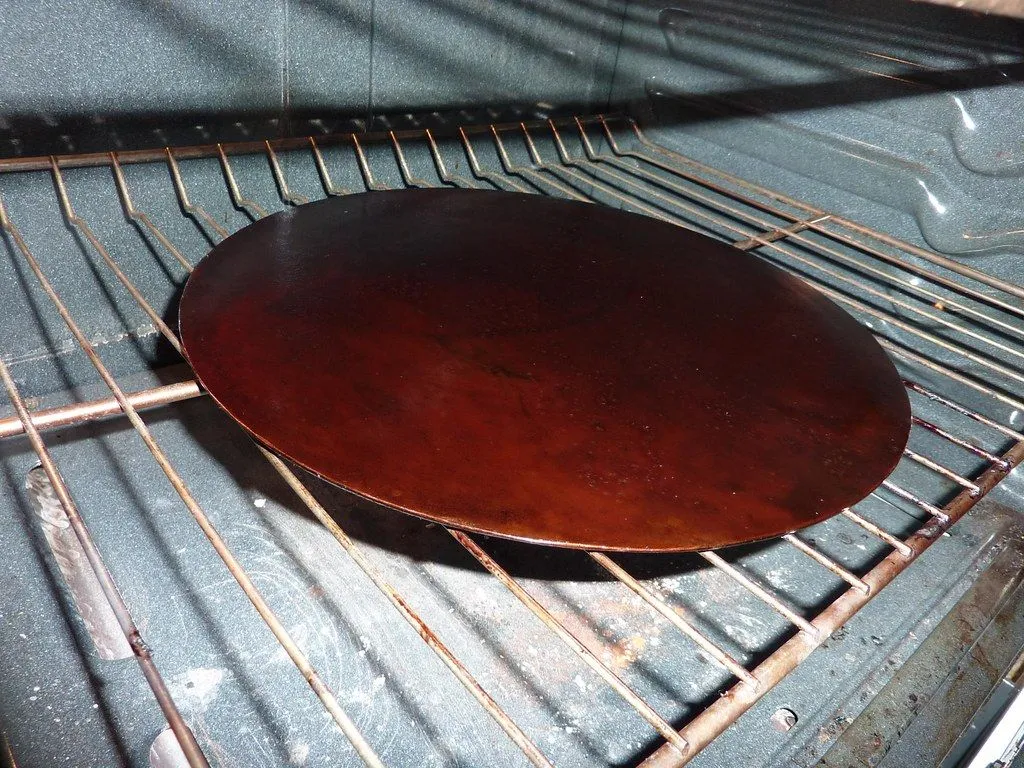 A cast iron pan after its first baked coat of oil. Photo: RJL20, CC BY-SA 2.0.
How a pan gets pre-seasoned
Every pan goes through the same basic idea. The iron is cleaned, a thin film of oil goes on, and heat turns that film into seasoning. Some makers repeat this a few times. Many makers do this oven-seasoning more than once at the factory.
At our foundry in Rajkot, the same logic applies in principle. RIVEDA cookware is sand-cast and finished at our own foundry, and each piece goes through grinding, sand cleaning, quality checks and seasoning before dispatch. Every piece is supplied pre-seasoned. We do not publish an oil recipe or a temperature for our seasoning step. That is our production detail, and what matters to you is what happens in your kitchen. If you would like to understand the full journey from sand mould to finished pan, read how cast iron cookware is made.
Our foundry is ZED certified. ZED stands for Zero Defect, Zero Effect. It is a voluntary Government of India scheme for small and medium manufacturers, run with the Quality Council of India. “Zero defect” means making goods with as few faults as possible. “Zero effect” means keeping harm to the environment as low as possible. An outside assessor checks the manufacturer, and the manufacturer receives a level if it meets the standard (Quality Council of India, ZED MSME). The certificate speaks about how we run the foundry. It does not change how you should treat a new pan.
What pre-seasoned does not mean
Here are the common misunderstandings, side by side.
| Many people think | What is actually true |
|---|---|
| The pan is non-stick from day one | It is a good start, but it gets slicker over weeks of cooking |
| It can never rust | The layer protects the iron, but a pan left wet can still rust |
| I should bake extra coats first | Not required. Some cooks like to, but you can simply start cooking |
| The layer is a factory coating | It is oil, heated until it hardens, the same kind you build at home |
| It lasts forever without care | The layer needs a little oil and a dry pan to keep growing |
Look at the layer closely and you will see it is not perfectly even. Early on, patches and a dull look are normal. Here is a skillet halfway through seasoning: some areas are glossy, some are matte, some show the grey iron.
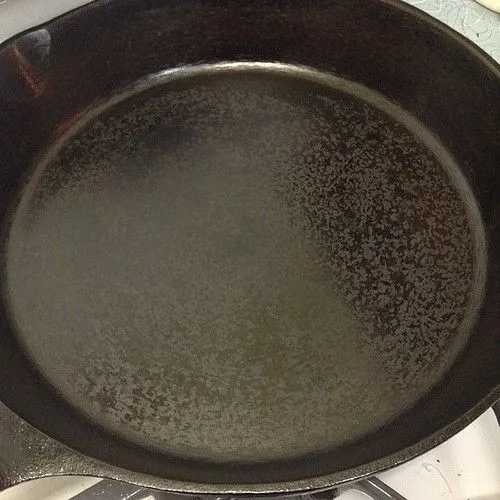 A patchy seasoning layer is normal on a young pan. Photo: blakewinton, CC BY 2.0.
Why the first two weeks still matter
The factory layer is thin on purpose. Thin layers bond well. Your job is to add more thin layers by cooking.
Think of it like a new cricket bat or a new pair of shoes. It is usable from day one, but it settles in with use.
During the first two weeks, three things help most.
1. Use some oil every time
A little oil in the pan, or on the food, feeds the layer. Lean cooking with very little fat in a young pan is the quickest way to get sticking. Many makers advise adding a little extra fat or oil for lean foods in the early days.
2. Heat the pan before the food goes in
Food sticks to a cold pan. Heat the pan on a medium flame for a minute or two, add the oil, then add the food. On a tawa, wait until a drop of water dances and vanishes. For an everyday method, our guide to how to season a cast iron tawa walks through it step by step.
3. Cook fatty, dry things first
Good first dishes for the first fortnight are the ones that come with their own oil:
- Parathas and theplas with a little ghee or oil
- Tadka and jeera rice
- Bhindi, aloo or cabbage sabzi stir-fried in a kadai
- Pakoras and shallow-fried cutlets
- Appams, uttapam and dosas, with oil brushed around the edge
Saveur and Food Network both suggest frying or cooking fatty food to help seasoning build on a pan (Saveur, Food Network).
What to hold back on at the start
Some foods are harder on a young layer. This is advice, not a rule, and nothing here will ruin the pan.
- Very sour dishes. Tomato gravy, tamarind sambar or kokum curry cooked for a long time can thin the layer and leave a metallic taste. Food Network advises waiting until the pan is well seasoned before cooking acidic foods (Food Network).
- Long simmering and storing. Do not leave sambar or dal sitting in a new pan. Move leftovers to a steel or glass box.
- Very lean food on high heat. Plain boiled-then-fried foods with no oil often stick to a young pan.
- Soaking. Do not leave the pan in a sink of water. Rust starts fast in a Rajkot monsoon, or any monsoon.
A simple daily routine for a young pan
Five small steps are enough. Do them after every cooking session in the first two weeks, and the habit will stay for good.
- Wash while the pan is still warm. Use hot water and a soft brush. A little mild soap now and then is fine.
- Avoid hard scrubbing. A steel scrubber strips the layer. Keep it only for stuck-on bits.
- Dry fully. Wipe with a cloth, then put the pan on a low flame for a minute until every drop is gone.
- Wipe on a thin film of oil. Then wipe most of it off again. The pan should look barely oiled, not wet.
- Store dry, with air around it. Do not seal a pan in a damp cupboard.
Our care page has the same routine in short form. If you ever find orange spots, do not panic. Removing rust from cast iron is simple and the seasoning can be rebuilt.
Do I need to season it myself as well?
You can, but you do not have to. Opinion is mixed. Some makers say you can cook straight away. Some guides suggest adding a few extra coats when the pan is new. Both are reasonable. If you want to try it, the usual home method is to rub a very thin coat of a neutral cooking oil all over, wipe off the extra until it looks almost dry, and heat the pan until the oil stops smoking. In a home oven, about 200 to 230 °C for around an hour is common home practice. This is general advice, not an official RIVEDA temperature. Many makers list common cooking oils such as vegetable or canola oil as practical choices.
Notice how thin the oil goes on. Thick coats stay sticky. Below is a pan after its third thin coat. It is dark, even and glossy, and that is where you are heading.
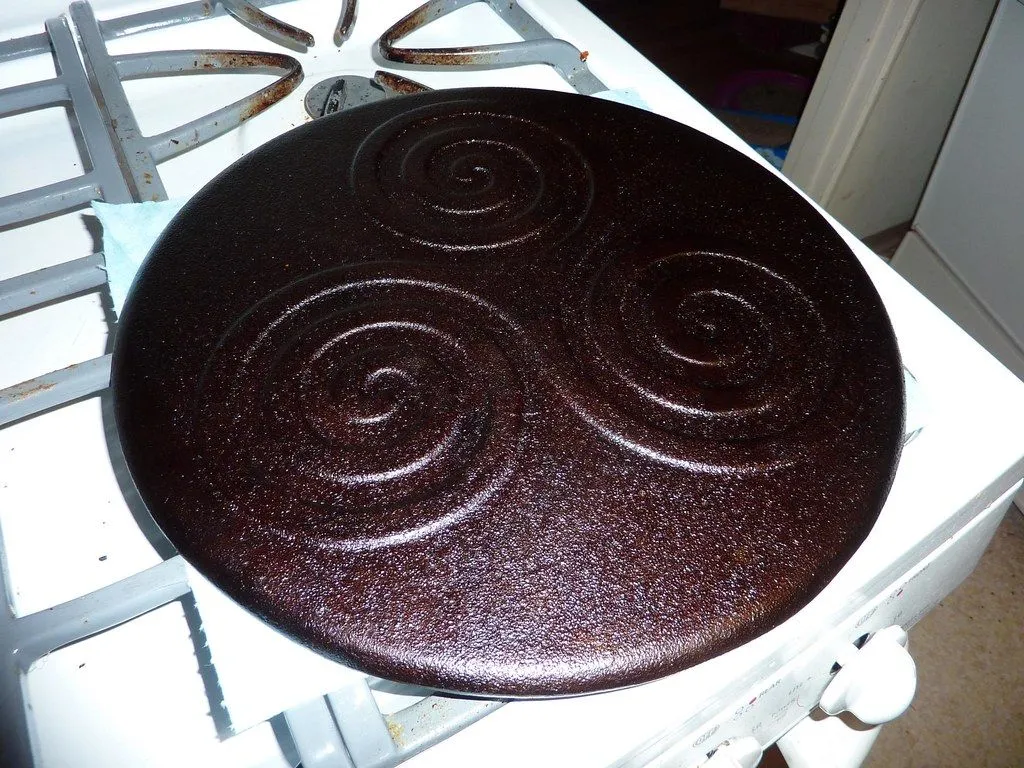 The same kind of pan after three thin coats. Photo: RJL20, CC BY-SA 2.0.
For most families, the simpler path is better. Cook, use oil, and let your daily meals do the seasoning.
What this means for your RIVEDA pieces
Two pieces show how different cooking habits suit a young layer.
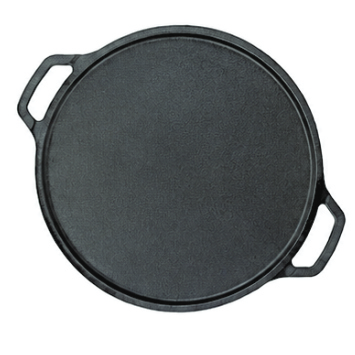
The Cast Iron Double Handle Dosa Tawa 30 CM weighs 2.8 kg. It likes a proper preheat and a thin film of oil for each dosa. Start with uttapam and thicker dosas, then move to thin ones as the surface settles. The Cast Iron Tawa guide has more on tawas.
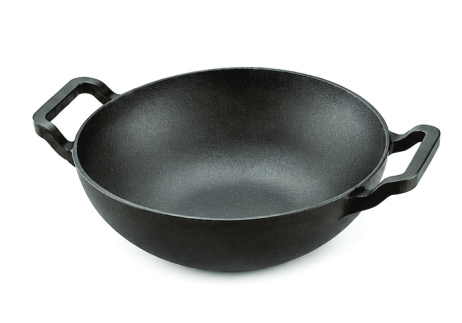
The Cast Iron Kadai 23 CM weighs 2.0 kg and is deep. Its natural first jobs are tadka, dry sabzi and a few rounds of shallow frying, all of which add oil to the surface. If you want to compare kadai sizes, see the best cast iron kadai article.
Both pieces arrive pre-seasoned and work on gas and on induction. For induction, follow your hob maker’s guidance on base size and weight. You can see the full range in the shop, and the seasoning guide and FAQ answer more everyday questions.
Your first-fortnight checklist
- Wash with hot water, dry fully and oil lightly before first use.
- Cook with a little oil every time.
- Preheat before the food goes in.
- Choose fatty, dry dishes first.
- Keep long, sour, saucy dishes for later.
- Never soak and never store food in the pan.
- Wipe a thin film of oil after drying, every time.
After two weeks of this, most people notice the surface turning darker and smoother. Food releases more easily, and the pan starts to feel like it belongs to your kitchen. That change is the seasoning you built, sitting on top of the one we started.
The short answer
Pre-seasoned means ready to use, not finished. The factory gives your pan a first thin layer of baked-on oil. Your cooking adds the rest. Use oil, preheat, go easy on very sour food at first and keep the pan dry, and the black layer will keep improving for years. If anything goes wrong, a thin film of oil and a little heat usually puts it right.
Shop this article
Frequently asked questions
Do I need to season a pre-seasoned cast iron pan before using it?
No. A pre-seasoned pan can be washed, dried and used straight away. You do not have to bake on extra coats first. What you should do is cook with some oil and let the layer build up with use.
Why is my pre-seasoned pan not non-stick yet?
The factory layer is a starting layer. Non-stick behaviour improves as thin layers of oil build up through regular cooking. Preheat the pan, use a little oil and be patient for the first few weeks.
Can I wash a pre-seasoned cast iron pan with soap?
A little mild soap is fine, but a hot-water rinse and a soft brush is usually enough. Always dry the pan fully on a low flame and wipe on a very thin film of oil afterwards.
What if the black layer scratches or comes off in a patch?
Nothing is ruined. Wash and dry the pan, wipe on a thin film of oil, and heat it. Cooking fatty food builds the layer back. Patches are normal on a young pan.
Is pre-seasoned the same as non-stick?
No. Non-stick is a synthetic coating applied to a pan. Seasoning is cooked-on oil that you can rebuild yourself. It becomes slicker with use, but it needs a little oil and a properly heated pan.
Can I cook tomato or tamarind dishes in a new pre-seasoned pan?
Better to wait. Very sour food can thin a young seasoning layer and give a metallic taste. Use drier, oilier dishes for the first weeks and keep sour curries for later.
Sources
- What happens when you season a cast iron pan — NOVA, PBS
- Finally! The Science Behind Seasoning Cast Iron & The Best Oil To Use — The Kitchn
- How to Clean and Care for Cast Iron Pans — Saveur
- How to Season a Cast Iron Skillet — Food Network
- ZED Scheme (Zero Defect Zero Effect) — Quality Council of India
- ZED Certification Scheme for MSMEs: Complete Guide — ZED MSME
More on this topic: all seasoning articles →
Pictures: pre-seasoned-cast-iron-meaning.jpg (cover) — RJL20, CC BY-SA 2.0; first-coat-in-oven.jpg — RJL20, CC BY-SA 2.0; third-coat-pan.jpg — RJL20, CC BY-SA 2.0; patchy-seasoning-skillet.jpg — blakewinton, CC BY 2.0.
Follow the RIVEDA blog
One short email a week with new articles — cast iron cooking, care and recipes for Indian kitchens. No spam; unsubscribe in one click.