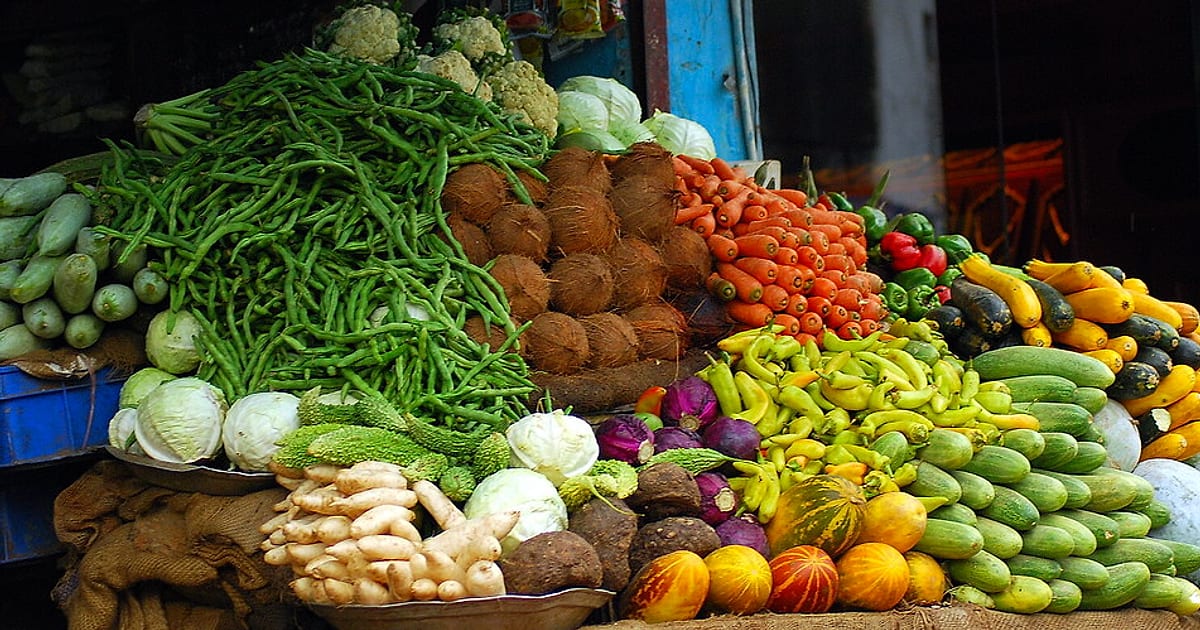
Picture a Sunday morning. In the cupboard are an old non-stick pan with a scratch across the middle, an aluminium kadai bought from a street vendor, and a steel tawa from your mother’s house. A WhatsApp forward from last night said “toxic cookware is making your family ill.” Which pans should stay?
Here is the short answer to the question people search for. No cookware is free of every possible worry, and a label that says “toxin-free” cannot prove that it is. But you do not need to be afraid either. Most worries come down to three things: coatings (a layer sprayed on the pan), aluminium, and lead. Each is easy to understand once someone explains it without the drama.
What “non-toxic” can and cannot mean
“Non-toxic” sounds scientific. In shops and online it is a marketing word. We did not find any single everyday meaning that all sellers share, so one brand may use it to mean “no PTFE coating”, another to mean “tested for lead”, and another to mean nothing in particular.
A useful way to read the word is to ask: non-toxic compared with what, and tested by whom? If a label says “tested”, ask for the report. Nothing in a kitchen is harmless in every situation. A better goal than “zero chemicals” is cookware whose known risks are small, clear and easy to avoid, and that you can actually check.
Coatings: what is on top of the metal?
Many pans are not just metal. They have a thin coating on the cooking surface to stop food sticking. There are two common kinds.
PTFE coating (the classic non-stick). PTFE stands for polytetrafluoroethylene. It is a plastic-like material that is very slippery. It belongs to a big family of man-made chemicals called PFAS, short for “per- and polyfluoroalkyl substances”. You may have heard them called “forever chemicals” because they break down extremely slowly.
Ceramic coating. Despite the name, this is not a clay pot. It is usually a thin, hard glassy layer made mainly from silica, which is the main ingredient of sand. It is applied without PFAS. Reports from the chemistry community note that these coatings tend to wear out sooner than PTFE.
A third group has no coating at all: stainless steel, plain aluminium, and cast iron. Their non-stick quality, if any, comes from oil and technique.
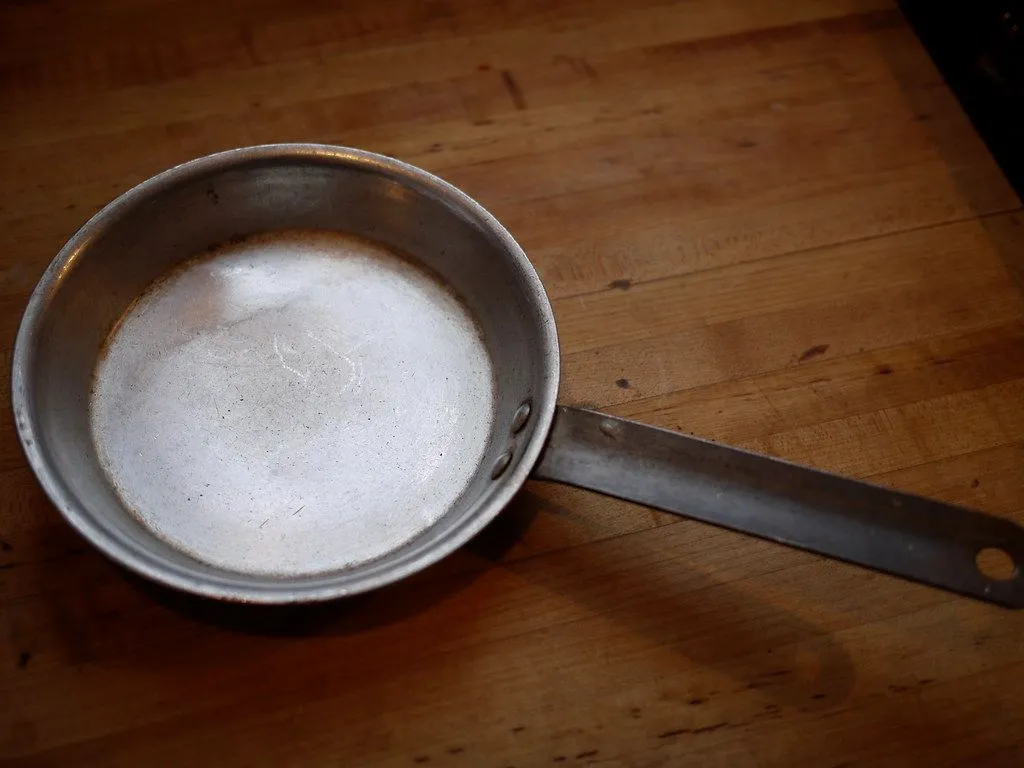 An old, much-used frying pan with a worn cooking surface. A pan in this state is a good moment to ask if it is time to replace it. Photo: grongar, CC BY 2.0.
PFAS in plain words
PFAS is a very large family, and the members are not all alike. Some of them, such as PFOA and PFOS, have been studied for years and linked in large reviews to health effects such as changes in the liver, the thyroid and the immune system. Much of that evidence comes from animal studies, and the human studies are still being sorted out. A systematic review of studies on children found links with several outcomes, but also noted that real people are exposed to mixtures of PFAS, which is hard to study.
Two points keep this in proportion.
- Most of the worry is about PFAS in water, food and the environment overall. The reviews we read describe food and drinking water as the main way people take in PFAS. Cookware is one possible source among several, not the only one.
- A pan with an intact PTFE coating, used at ordinary cooking heat, is generally described as low-risk in the safety summaries we read. The cautions come mostly from two situations: very high heat, and a damaged coating.
When a non-stick pan gets too hot or gets scratched
Overheating
Heated hard enough, PTFE begins to break down and give off fumes. In people this can cause polymer fume fever, sometimes called “Teflon flu”. Medical references describe it as a flu-like illness that usually comes on some hours after breathing the fumes and usually passes by itself. Doctors sometimes mistake it for a normal viral fever. Poison Control also warns that the fumes can be deadly to pet birds, so a home with a bird should avoid PTFE pans.
How does this happen in a real kitchen? Mostly like this: an empty pan is left on a high flame while you answer the door. Indian cooking often starts with a very hot pan for tadka, dosa or roti, so this is worth knowing about. Sources do not agree on the exact temperature at which trouble starts, so we will not give you a number. The safe habit is simple:
- Never preheat an empty non-stick pan on high.
- Use low to medium heat.
- Do not leave a pan on the flame unattended.
Scratches
A second worry is a scratched coating. In 2022, researchers reported that scratched PTFE pans released many tiny plastic particles into the food in their experiment. This is a laboratory result, and it counted particles. It did not measure harm to people. Still, it is the reason many makers say: when the coating is badly scratched or peeling, replace the pan. Steel spoons and scouring pads are the usual cause, so wooden or silicone tools are better.
For more on how non-stick compares with cast iron in everyday use, read our guide to cast iron vs non-stick.
“PFOA-free” and “green” labels
Here is where labels trip people up. PFOA was one PFAS chemical used in making older PTFE coatings, and most major makers have stopped using it. So “PFOA-free” is true for many pans and says little. A US research group, the Ecology Center, tested many non-stick pans and reported that a “PFOA-free” claim did not mean a pan was PFAS-free. The same group found that most of the non-stick frying pans it tested were coated with PTFE.
So read labels like this:
| What the label says | What it tells you | What it does not tell you |
|---|---|---|
| “PFOA-free” | One chemical was not used | Whether the coating is PTFE or other PFAS |
| “PFAS-free” or “no PTFE” | The coating is not a fluoropolymer, if the claim is true | Whether the base metal is safe |
| “Ceramic non-stick” | A silica-type coating, not PTFE | How long it lasts |
| “Non-toxic” or “toxin-free” | Nothing specific | Anything you can check |
| “Food-grade” | The maker thinks the material is suitable | What the metal was made from |
If a seller cannot say in one clear sentence what the cooking surface is made of, treat that as a signal.
Aluminium: calm facts first
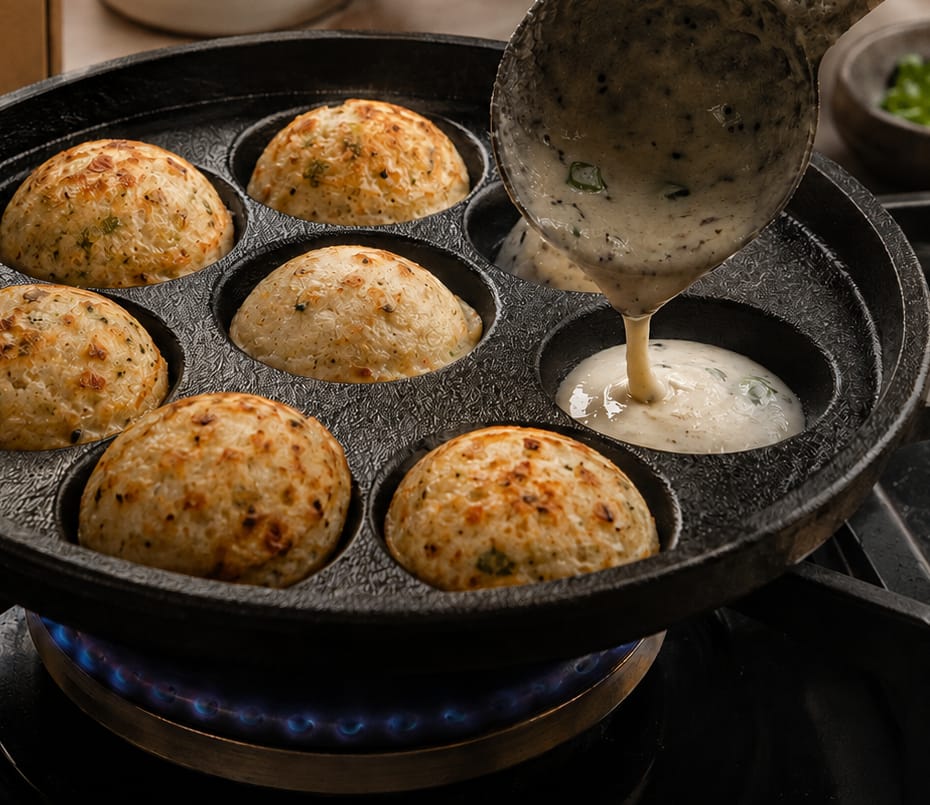
Aluminium is light, cheap and heats fast. That is why it is in so many Indian kitchens, from the pressure cooker to the idli stand.
Is it unsafe? Let us go step by step.
Does aluminium cookware cause Alzheimer’s? This was a popular scare. The European food safety body EFSA looked at the evidence and did not consider aluminium taken in through food to present a risk of Alzheimer’s disease. A review in a medical journal notes that more aluminium has been found in the brains of people with Alzheimer’s, but that it is unclear whether it is a cause or an effect.
Is there a limit on how much aluminium we can take? Yes. EFSA set a tolerable weekly intake of 1 mg of aluminium for each kg of body weight. Aluminium also reaches us from other sources, so cookware is one part of the picture.
Does cooking tomato or tamarind in aluminium add more? Sour foods can pull more metal out of cookware. That is a reason to be moderate rather than a reason to panic. A researcher’s review points out that coating and anodising (a treatment that makes the surface hard and less reactive) lower how much metal comes out of aluminium pans made in the formal, standard way.
So well-made aluminium from a maker you can identify is not what experts are most worried about. The worry is something else, and it is next.
Lead: the one that really deserves attention
Lead is a metal that is harmful to health, and children are especially sensitive to it. You cannot see it, smell it or taste it in food. How would lead get into a pot?
When pots are cast from unknown scrap metal, such as old engine parts, cans or other waste, the scrap may carry lead and other metals. In a review of recycled aluminium pots, researchers describe how these pots are made in small workshops from scrap, and they raise concern about lead and arsenic.
Researchers in the United States tested aluminium and brass cookware bought in shops there, much of it from other countries. Many aluminium pieces held more than 100 parts per million of lead. Many also released enough lead in simulated cooking to go past recommended limits for food. One hindalium appam pan, a kind of pan also sold in India, released enough lead to exceed the limit for children by 1,400 times. Brass pots from India tested in the same study also gave very high lead results, with one over 1,200 times the childhood limit. Stainless steel items in the same study released much less lead.
This does not mean every aluminium or brass vessel is dangerous. It was a small set of pieces tested in a laboratory. It does show that the real risk is cheap, unmarked cookware of unknown origin, not a branded pan from a maker who stands behind it.
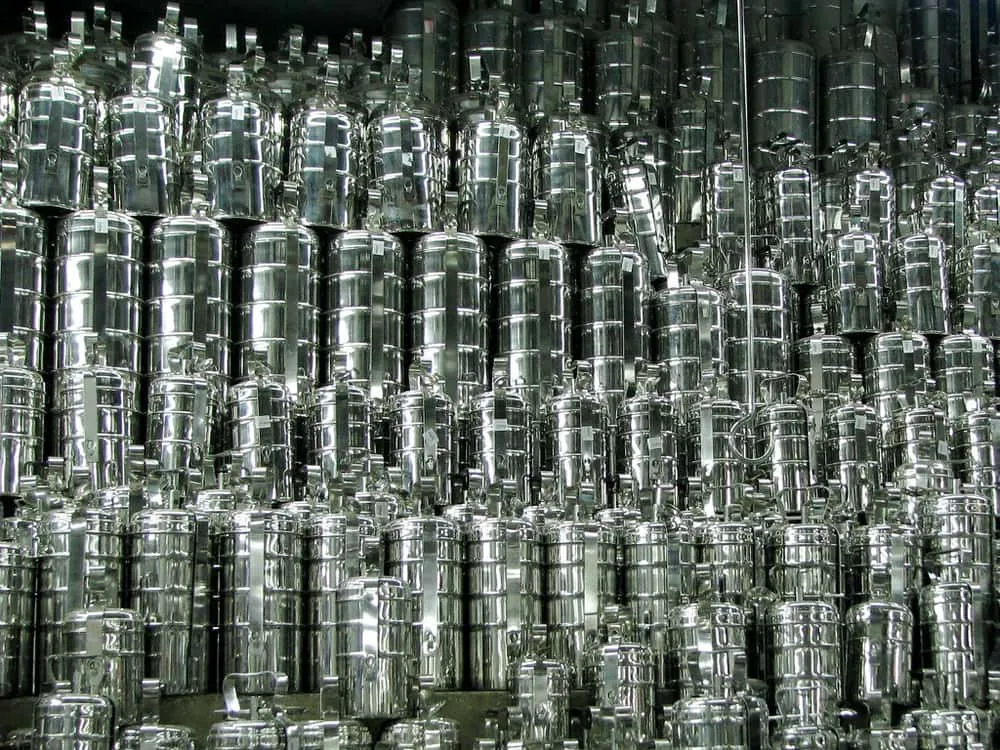 Stainless steel tiffin carriers stacked in a shop in Chennai. Stainless steel items in the lead study released much less lead. Photo: mckaysavage, CC BY 2.0.
What to do about lead
- Be careful with very cheap pots with no maker’s name and old vessels whose metal you do not know.
- If young children or a pregnant woman eat food cooked daily in such a pot, consider replacing it.
- Do not rely on looks. You cannot see lead, and home test kits are not always dependable.
- If you are worried about a child’s exposure, a doctor can order a blood test.
Cast iron, steel and the rest: where RIVEDA fits
Stainless steel is a sturdy, no-coating choice. It does not stick-proof food, but it is easy to clean and the lead study found it released much less lead than aluminium and brass.
Cast iron has no synthetic non-stick coating. It is iron, melted and poured into a sand mould, then finished. RIVEDA cast iron is made at our own ZED-certified foundry in Rajkot, Gujarat, sand-cast, then ground, sand-cleaned, quality-checked and seasoned before dispatch. ZED (Zero Defect, Zero Effect) is a Government of India scheme, run with the Quality Council of India, that rates small manufacturers on quality and environmental performance. Our pieces are supplied pre-seasoned: a thin baked-on layer of cooking oil.
Cast iron has its own points to know, and we would rather you hear them from us. Its seasoning can wear if you cook very sour food for long in a new pan. It rusts if left wet. It is heavy. And it can add a little iron to food, which is fine for most people but worth asking a doctor about if you have a condition that affects iron levels. We explain all of this in is cast iron cooking healthy.
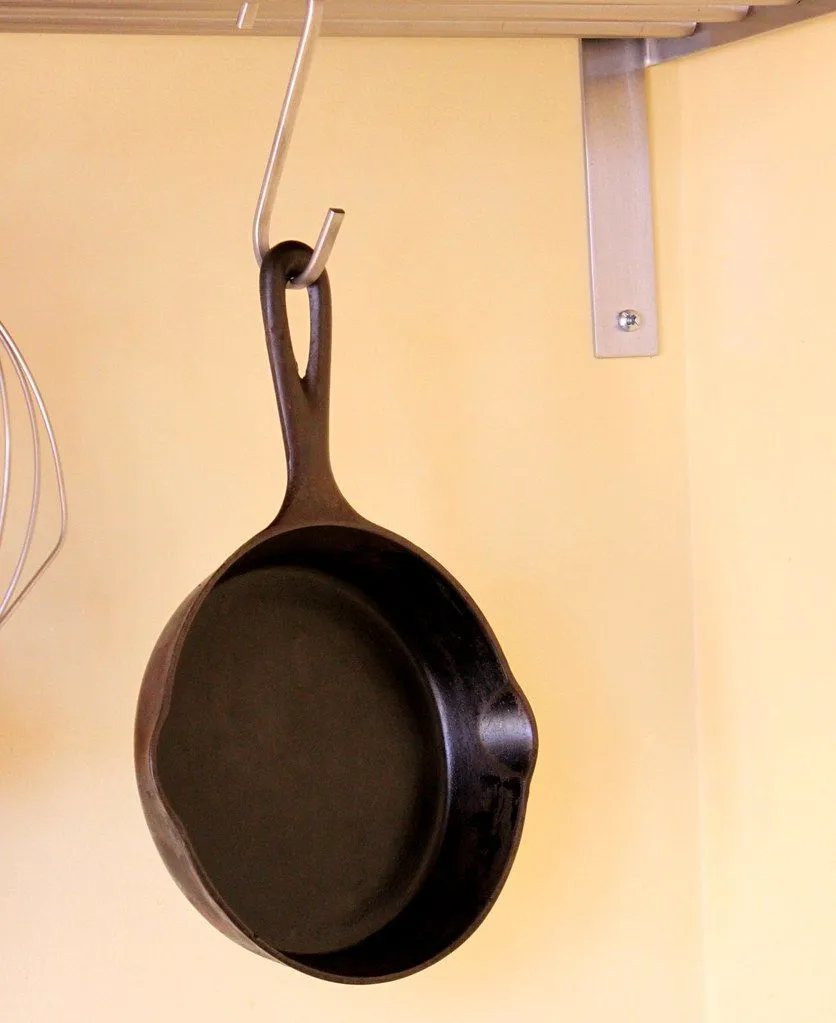 A seasoned cast iron pan hanging in a kitchen so that it stays dry. Not a RIVEDA product. Photo: Rachel Tayse, CC BY 2.0.
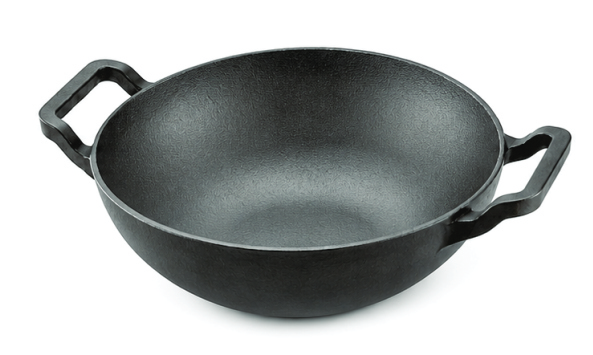
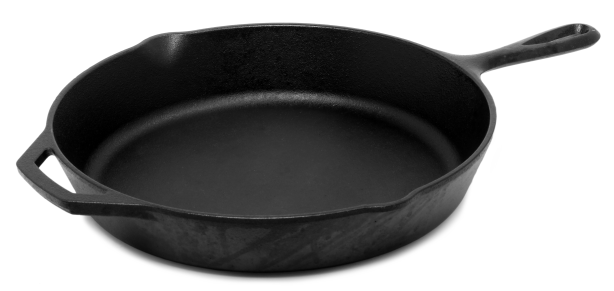
Two of our pieces suit the everyday jobs people ask about. The Cast Iron Kadai 27 CM handles sabzi, curry and frying. The Cast Iron Fry Pan Hanging Handle 25 CM is for sautéing and shallow frying, and it hangs on a hook so that it stays dry. Both work on gas and induction; follow your hob maker’s guidance on base size and weight.
If you want to see how different materials compare for a whole kitchen, our guide to the best cookware for the Indian kitchen goes through them one by one. To see how our pieces are made, read how cast iron cookware is made.
A five-question checklist before you buy any pan
- What exactly is the cooking surface? Bare metal, seasoning, PTFE, ceramic, or something else?
- Who made it, and where? A named maker with an address is a good sign. A pot with no name is a question mark.
- Can the seller say what the metal is made from? “Scrap” or “mixed metal” is not a good answer.
- What does the maker say about heat limits? Non-stick and ceramic pans have limits. Cast iron and steel are far more forgiving.
- Can you return it? On rivedacookware.com you can return a damaged, defective or wrong item within 7 days of delivery.
You can also ask about a piece on WhatsApp +91 90999 29629 before ordering. Our FAQ answers common questions.
Good habits for any cookware
Even the best pan needs sensible use. These habits help with every kind of cookware.
- Preheat gently and never leave an empty pan on high.
- Use the right tools. Wood, silicone or steel as the pan allows; wood or silicone for coated pans.
- Replace damaged coated pans when the coating is badly scratched or flaking.
- Do not store food in the pan. Move leftovers to a steel or glass container.
- Keep it clean and dry. For cast iron, wash while warm, dry fully on a low flame, and rub on a thin film of oil. Our care guide and seasoning guide show how.
New to iron? Start with how to season a cast iron tawa.
The short answer
“Non-toxic” is a claim, not a guarantee. What helps is knowing the three real topics. Coatings: PTFE pans are generally considered low-risk when intact and used at normal heat, but overheating and heavy scratching are the problems. Aluminium: well-made pans are not the main worry, and the Alzheimer’s fear is not supported by the food-safety evidence we found. Lead: cheap pots made from unknown scrap are the real risk, so buy from makers who can tell you what their cookware is made of.
If you want a no-coating option for everyday cooking, start with one piece you will use daily, such as a kadai or a fry pan, and look after it well. You can see the full range in the shop, or compare options in the cast iron buying guide.
Shop this article
Frequently asked questions
What is the safest cookware for Indian kitchens?
There is no single safest pan for every job. Plain cast iron, good stainless steel and well-made, properly finished aluminium are all widely used. What matters most is that the pan is made by a maker who can tell you what it is made of, that you use it as intended, and that you replace it when it is damaged.
Is a 'PFOA-free' pan the same as a PFAS-free pan?
No. PFOA is only one chemical in a very large PFAS family. Testing by a US research group found that a 'PFOA-free' label did not mean a pan was free of other PFAS. If PFAS matter to you, look for a clear statement that the pan has no PTFE or other fluoropolymer coating.
Is aluminium cookware dangerous?
Not by itself. The European food safety body EFSA did not consider aluminium from food to present a risk of Alzheimer's disease, and cookware is a small part of what most people take in. The bigger worry is cheap pots cast from unknown scrap metal, which have been found to contain and release lead.
Can I use a scratched non-stick pan?
Most makers advise replacing a non-stick pan once the coating is badly scratched or flaking. Laboratory work has found that scratched coatings can shed tiny plastic particles, although it has not shown what that means for health. Replacing it is the simple, cautious choice.
Does cast iron have any coating or chemical finish?
A RIVEDA cast iron piece has no synthetic non-stick coating. It is supplied pre-seasoned, which means a thin layer of cooking oil has been baked onto the iron. That layer builds up further as you cook.
How can I check if my old pots contain lead?
You cannot tell by looking. Lead testing needs special equipment, and home test kits are not always reliable. Pots from unknown makers, very cheap pots of unmarked metal and old brass vessels are the ones to be careful with, especially if children eat from food cooked in them.
Sources
- Evaluating metal cookware as a source of lead exposure (Fellows, Samy and Whittaker, Journal of Exposure Science & Environmental Epidemiology, 2024) — PubMed Central (NIH)
- Recycled aluminium cooking pots: a growing public health concern in poorly resourced countries (Mathee, BMC Public Health, 2020) — PubMed Central (NIH)
- The Health Effects of Aluminum Exposure (Deutsches Arzteblatt International, 2017) — PubMed Central (NIH)
- Polymer Fume Fever (StatPearls) — NCBI Bookshelf (NIH)
- Polymer fume fever and other fluorocarbon pyrolysis-related syndromes (Shusterman, 1993) — PubMed (NIH)
- Health Impacts of Per- and Polyfluoroalkyl Substances (PFASs): A Comprehensive Review — PubMed Central (NIH)
- Exposure to Perfluorinated Alkyl Substances and Health Outcomes in Children: A Systematic Review of the Epidemiologic Literature — PubMed Central (NIH)
- Raman imaging for the identification of Teflon microplastics and nanoplastics released from non-stick cookware (Luo et al., Science of the Total Environment, 2022) — Science of the Total Environment
- Undisclosed PFAS coatings common on cookware, research shows — Ecology Center
- How does nonstick cookware work, and should you switch to 'green' pans? — Chemical & Engineering News (American Chemical Society)
- Fumes from burning plastic, welding, and 'Teflon flu' — Poison Control (US)
- Zero Defect Zero Effect (ZED) Certification Scheme — Government of Goa, MSME department
- Aluminium in food: EFSA advises on safety of aluminium in food — European Food Safety Authority
More on this topic: all health & nutrition articles →
Pictures: non-toxic-cookware-india.jpg (cover) — jackol, CC BY 2.0; worn-metal-frying-pan.jpg — grongar, CC BY 2.0; stainless-steel-tiffins.jpg — mckaysavage, CC BY 2.0; cast-iron-pan-hanging.jpg — Rachel Tayse, CC BY 2.0.
Follow the RIVEDA blog
One short email a week with new articles — cast iron cooking, care and recipes for Indian kitchens. No spam; unsubscribe in one click.