
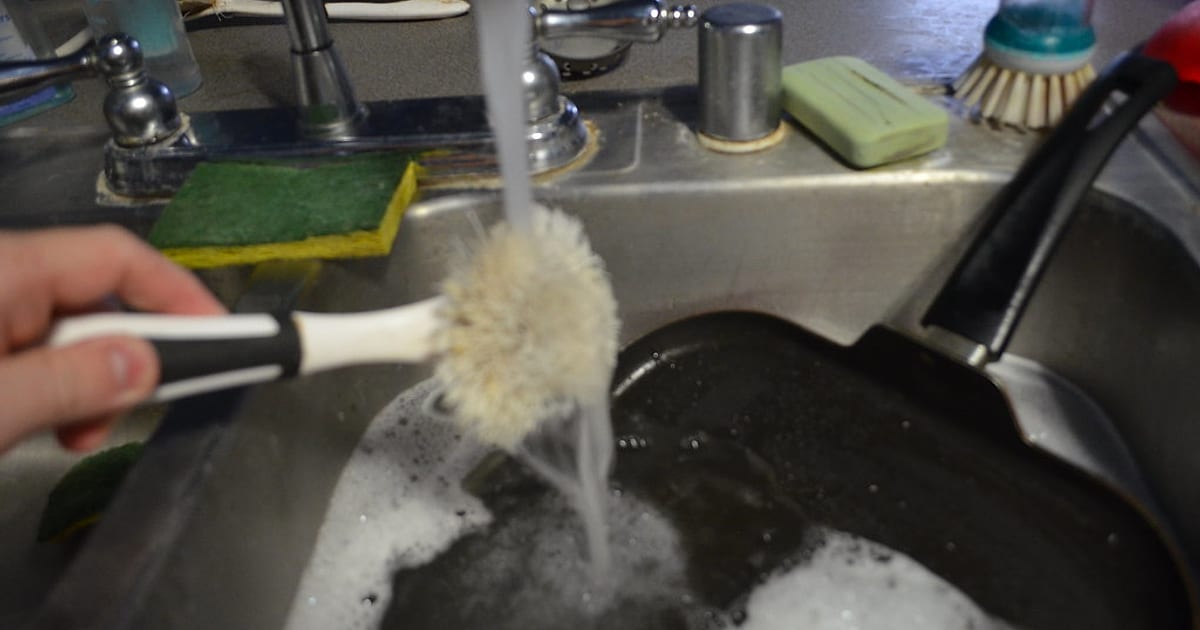
The easiest way to clean a cast iron tawa is also the quickest. Wipe it while it is still warm, wash it with hot water and a brush (a drop of mild soap is fine), dry it on a low flame, and rub on a few drops of oil. That is the whole routine, and it takes about two minutes. Done every day, it keeps the tawa smooth, dark and rust-free for years.
The two-minute routine at a glance
Here is the full routine in one place. The rest of this article explains the why, so you can do it without worrying.
- Cool slightly. After the last roti or dosa, switch off the flame and let the tawa cool until it is warm, not hot.
- Wipe off crumbs and extra oil with a cloth or kitchen paper.
- Wash with warm water and a brush or soft scrubber. Use a drop of mild dish soap only if the tawa is greasy or smells of masala.
- Dry with a clean cloth, then keep it on a low flame for about a minute until the last moisture is gone.
- Oil. Put a few drops of cooking oil on the warm tawa, spread them thin and wipe off the extra.
- Store dry where air can move around it.
Each step has a reason. If you remember only one thing, remember this: water is the enemy of cast iron, so never let it stay wet.
Why cast iron needs a different kind of cleaning
A steel or aluminium pan is just a metal surface. You wash it and you are done. A cast iron tawa has something extra: seasoning. Seasoning is a thin, hard, dark layer made from cooking oil that has been heated until it sticks to the iron. It is why a well-used tawa lets a dosa slide off, and why it does not rust easily. We explain how it forms in our guide on how to season a cast iron tawa.
So there are two jobs when you clean the tawa. First, remove the food. Second, protect the seasoning and the bare iron underneath. Most cleaning mistakes come from doing the first job in a way that hurts the second.
RIVEDA tawas are supplied pre-seasoned, so you can start cooking straight away. The seasoning then gets better with every roti you make, as long as you do not scrub it away.
Step 1: Cool it a little, but not completely
Do not leave the tawa for hours with food stuck on it. Food that dries and hardens is much harder to remove. Indian cooks have long advised washing an iron tawa while it is still warm, as Hebbar’s Kitchen also notes in its tawa guide.
But do not rush in while it is blazing hot. A good rule is to wait until you can bring your palm close to it without flinching, then wash. Pouring cold water straight onto a very hot tawa makes it hiss and spit, and the sudden change in temperature is hard on the metal.
Try this: switch off the flame after your last roti, make the tea or serve the last plate, and then clean. By then the tawa is usually at the right warmth.
Step 2: Wipe first, then wash
For a roti tawa, there is often hardly anything on it. A few flour crumbs and a smear of ghee come off with a dry cloth or kitchen paper. Wiping first has two benefits. It keeps flour and oil out of your sink, and it lets you see how dirty the tawa really is.
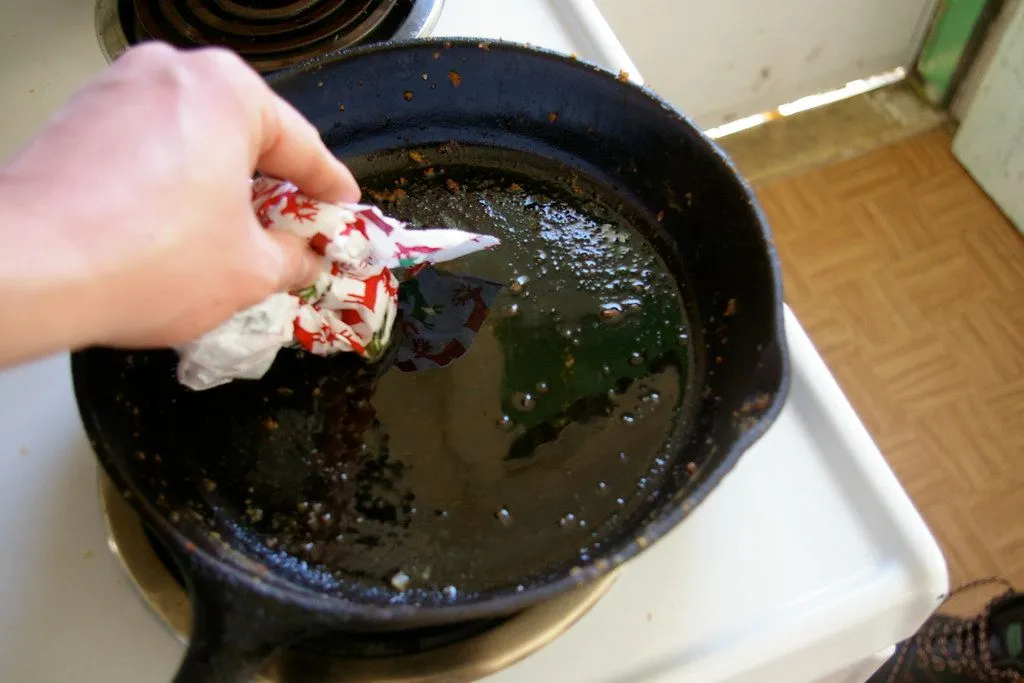 Wiping out loose food and extra oil with paper while the pan is still warm. Photo: Kim Siever, Public Domain.
After a dosa, uttapam or paratha, you may find a little oil and some batter edges. Wipe those off first too. Then take the tawa to the sink.
Step 3: Wash with water, a brush and (maybe) a drop of soap
Run warm water over the tawa and scrub gently with a brush or a soft scrubber. Most days, that is all you need.
Is soap allowed?
This is the question every Indian family argues about, so here is the plain answer. A little mild soap is fine on a seasoned tawa. The old rule “never use soap on iron” comes from a time when soap was made with lye, a harsh alkali that could eat into seasoning. A food scientist at Virginia Tech, Sean O’Keefe, says that rule does not apply to modern soap on a properly seasoned pan. Extension services in the United States say experts still disagree a little, so it is sensible to use soap only when you need it.
Our suggestion:
- Roti tawa, dry cooking: hot water and a brush are usually enough.
- Dosa, paratha or anything with a lot of oil, or a smell of masala: a drop of mild dish soap, a quick scrub and a good rinse.
- Never soak the tawa in soapy water. A short wash is fine. A long soak is not.
The thing that really harms seasoning is not a drop of soap. It is long soaking, harsh scrubbing and leaving the tawa wet.
Which scrubber should I use?
| Scrubber | Everyday use? | Note |
|---|---|---|
| Soft brush or coconut-fibre brush | Yes | Best choice for daily washing |
| Soft sponge or nylon scrubber | Yes | Fine for light residue |
| Coarse salt and a cloth | Yes, for stuck bits | Salt scrubs without scratching the seasoning |
| Steel wool or steel scrubber | Rarely | Strips seasoning; keep for rust or burnt-on food |
| Dishwasher | Never | Long hot wash and detergent remove seasoning |
Extension guidance from the University of Kentucky advises avoiding steel wool and scouring pads, since they strip seasoning, and suggests coarse salt as a gentle scrubbing aid for stuck-on food.
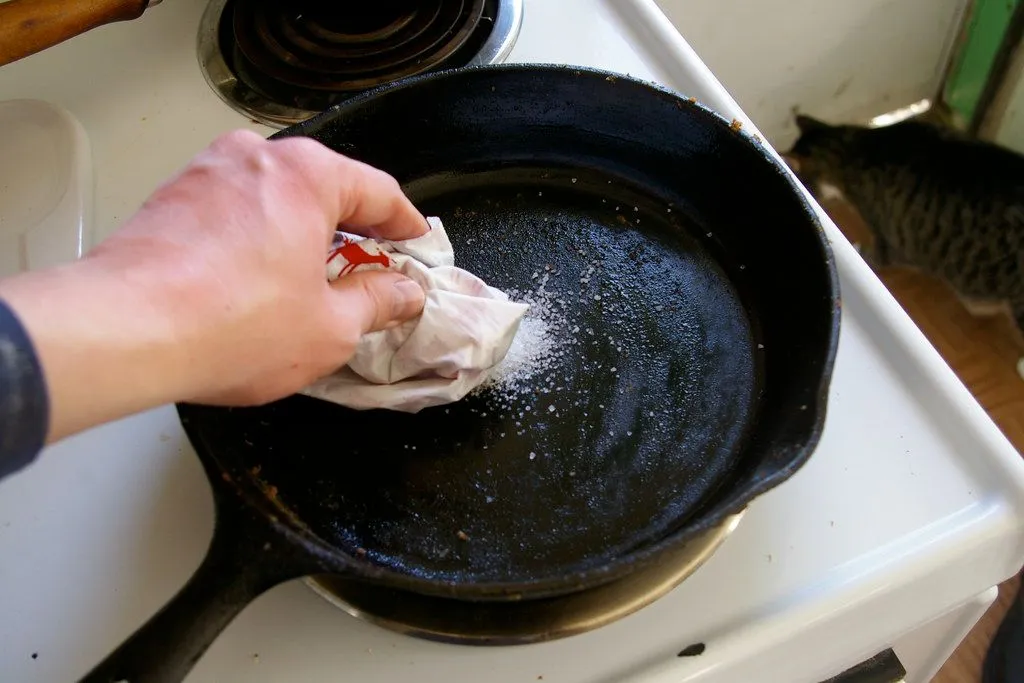 Coarse salt and a cloth lift stuck bits without a harsh scrubber. Photo: Kim Siever, Public Domain.
Step 4: Dry it completely, and then dry it again on the flame
This is the step that saves your tawa. Cast iron rusts when water is left on it, and it can happen in a few hours, faster in humid weather. NC State Extension puts it simply: water is the main enemy, so dry the pan completely after washing and never leave it in a wet sink.
Do not leave the tawa on the rack to air-dry. Instead:
- Wipe it with a dry, clean cloth. Do the back, the rim and the handle too.
- Put it on a low flame for about a minute. America’s Test Kitchen also recommends heating the pan to evaporate the last moisture.
- Watch for any wet patch near the handle. Water hides there. When the tawa looks dry everywhere, switch off the flame.
On an induction cooktop, use the lowest setting. Follow your hob maker’s guidance on base size and weight for any cast iron cookware.
This one minute is the best rust protection you can give your tawa. It matters even more in the monsoon, when kitchens stay damp for days.
Step 5: Oil it, just a few drops
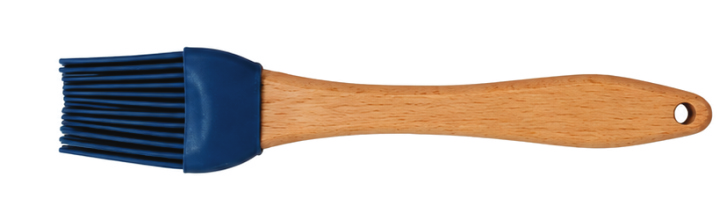
While the tawa is still warm, put a few drops of cooking oil in the middle. Spread it over the whole cooking surface with a cloth, a piece of kitchen paper or a silicone brush. A Silicon Brush is handy here because it spreads a thin, even film and keeps your fingers away from a warm tawa.
Then wipe off the extra. The tawa should look lightly shiny, not wet or sticky. A thick coat of oil does not protect better. It turns tacky and can go sticky or smell old. The thin film is there to keep air and moisture off the iron until you cook again.
Use any ordinary cooking oil you already have at home. If you want advice about which oils suit seasoning, our seasoning guide covers it.
Step 6: Store it dry and with air
Keep the tawa where air can reach it: on a hook, on an open shelf or standing on its edge. Avoid sealed cupboards, especially under the sink. If you stack other pans on the tawa, place a clean cloth or paper between them so no moisture is trapped.
During the monsoon, check the tawa every few days even if you have not used it. If it feels dry and looks dull, give it a quick wipe of oil. A tawa that sits unused for weeks is the one that gets rusty.
Which tawa needs what: roti, dosa and paratha
You do not need a different method for different tawas, but the effort changes slightly.
- Roti tawa. Very little goes onto it, so it needs the least cleaning. Wipe, rinse, dry, oil. The Cast Iron Roti Tawa 26 CM is a good everyday example: wide enough for parathas, and an easy daily wipe-down. Our guide to the best tawa for roti explains how to choose.
- Dosa tawa. It takes more oil and batter, so it may need a drop of soap now and then. If your dosas stick, cleaning is often not the cause. Our article on dosa sticking to the tawa goes through the real reasons.
- Paratha and chilla. Ghee residue is the main thing. Wipe, wash and dry as usual.
If you want a wider introduction to the whole pan, see our cast iron tawa guide.
Common mistakes (and quick fixes)
1. Soaking overnight. The pan sits in water for hours, and rust spots appear by morning. Fix: wash right away. If food is stuck, simmer a little water in the tawa for a few minutes and then scrub.
2. Air-drying on the rack. Fix: cloth dry, then one minute on the flame.
3. Scrubbing hard with steel every day. It wears the seasoning thin. Fix: use a brush, a soft scrubber or salt. Keep steel for emergencies.
4. Oiling too much. The tawa feels sticky next time. Fix: wipe until the surface looks barely shiny.
5. Washing in a dishwasher. Fix: always wash by hand.
6. Storing it wet or in a sealed cupboard. Fix: dry fully, oil lightly and give it some air.
7. Using it for sour, long-cooked dishes while the seasoning is new. Tomato or tamarind cooked for a long time can strip a young seasoning layer. Virginia Tech’s food scientist notes that a properly seasoned pan can handle acidic food, but that very long simmers are a poor choice. Save those for the kadai once it has built up seasoning.
What if it is already sticky, rusty or dull?
Do not panic. A tawa is very forgiving.
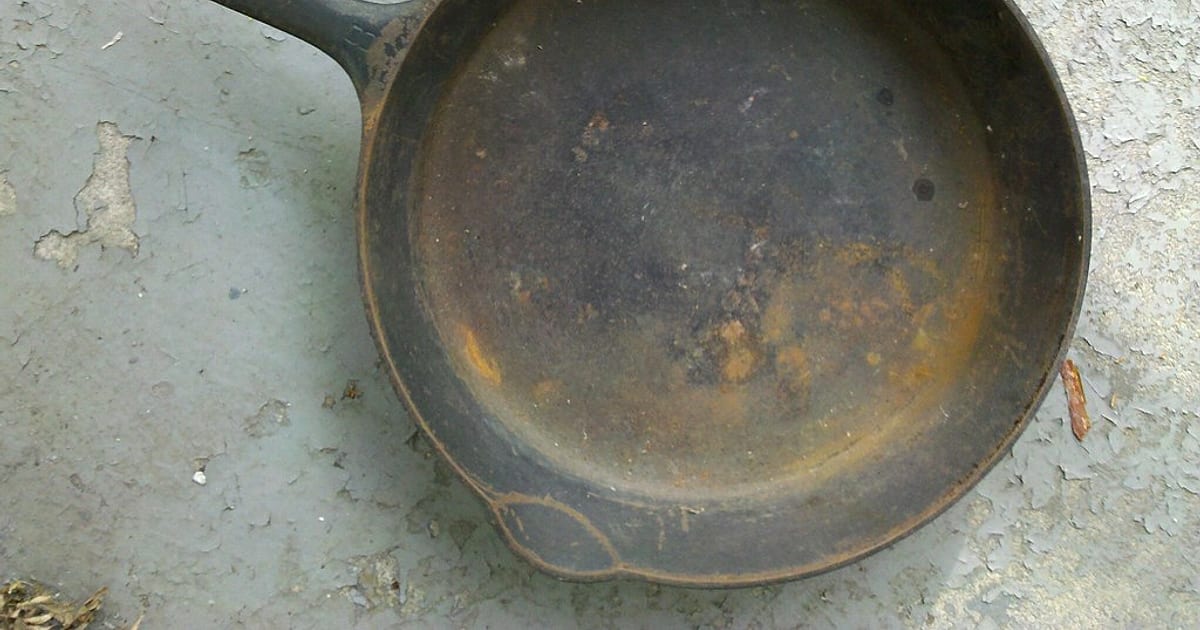
- A few orange spots. Scrub them with coarse salt and a damp cloth, wash, dry on the flame and oil. Mississippi State University Extension suggests a salt scrub first for light rust.
- More stubborn rust. A short soak in a mix of vinegar and water, never longer than about 15 minutes at a time, then wash, dry, oil and heat. Our full guide on removing rust from cast iron shows each step.
- A tawa that feels sticky or tacky. This usually means too much oil. Wash it with hot water and a little soap, dry it and heat it on the flame for a few minutes. Then wipe on a thin film of oil.
- A dull, grey tawa. The seasoning is thin. Cook a few oily meals, such as parathas or onion tadka, and re-season using our seasoning guide.
A simple weekly check
Once a week, take 30 seconds to look at your tawa in good light.
- Is it dark and smooth? Good.
- Any orange or brown rusty dots? Scrub with salt and re-oil.
- Any sticky patches? Wash, dry on the flame and oil more thinly next time.
- Does the back of the tawa and the handle also feel dry? Water hides there.
This habit helps in every season. Most tawas that develop problems are tawas that were put away damp.
The short version for your kitchen wall
If you want to stick a note on the fridge, here it is:
Warm. Wipe. Wash. Dry on flame. Oil. Store dry.
Six small steps and two minutes. Do them every day and your tawa gets better, smoother and darker as the years pass. A well-kept iron tawa can be used for decades, which is exactly why so many families pass them down.
If you are choosing your first tawa, our cast iron buying guide is a good next read. You can also browse the full range of tawas and the accessories, or read the care page and the FAQ for more everyday answers. RIVEDA cookware is cast and finished at our own ZED-certified foundry in Rajkot and supplied pre-seasoned, so you can start cooking on day one and let the cleaning routine above do the rest.
Shop this article
Frequently asked questions
Can I use soap on a cast iron tawa?
Yes, a little mild dish soap is fine on a seasoned tawa when it is greasy or smells of masala. A food scientist at Virginia Tech says the old no-soap rule belongs to the days of harsh lye soap. Keep the wash short, rinse well, and dry and oil the tawa straight after. For a plain roti tawa, hot water and a brush are usually enough.
Should I wash the tawa while it is hot or after it cools?
Let it cool until you can touch it, so it is warm and not hot. Warm water on a warm tawa cleans easily. Never pour cold water on a very hot tawa, because sudden temperature change can stress the metal.
Is it okay to leave the tawa to dry on its own?
No. Cast iron rusts when water sits on it, and monsoon air makes it quicker. Wipe it with a cloth, then put it on a low flame for a minute so every drop dries, then oil it lightly.
Can I use a steel scrubber or steel wool on my tawa?
Keep them for emergencies such as rust or burnt-on food. Used every day, they scrape off the seasoning you are trying to build. A nylon scrubber, brush or coarse salt is kinder.
Do I need to oil the tawa after every wash?
Yes, a very thin film. Put a few drops of oil on the warm tawa, spread it with a cloth or silicone brush and wipe off the extra until the tawa looks barely shiny. This protects the iron until the next meal.
Can I wash a cast iron tawa in the dishwasher?
No. The long hot wash and strong detergent remove seasoning, and the tawa stays wet for a long time, which invites rust. Always wash by hand.
Sources
- Virginia Tech food scientist dispels the myths behind cast iron pan use — Virginia Tech News
- Cleaning and caring for a cast iron skillet — University of Kentucky Cooperative Extension
- Got a Cast Iron Skillet? — NC State Extension, Brunswick County
- How to care for cast iron — Mississippi State University Extension
- How to Clean and Care for Cast Iron Pans — Saveur
- How to clean a cast iron pan — America's Test Kitchen / Cook's Illustrated
- How to clean and maintain cast iron / skillet pan — Hebbar's Kitchen
More on this topic: all care & rust articles →
Pictures: how-to-clean-cast-iron-tawa.jpg (cover) — Justice Ender, Public domain; wipe-pan-paper.jpg — Kim Siever, Public Domain Mark 1.0; salt-scrub.jpg — Kim Siever, Public Domain Mark 1.0.
Follow the RIVEDA blog
One short email a week with new articles — cast iron cooking, care and recipes for Indian kitchens. No spam; unsubscribe in one click.