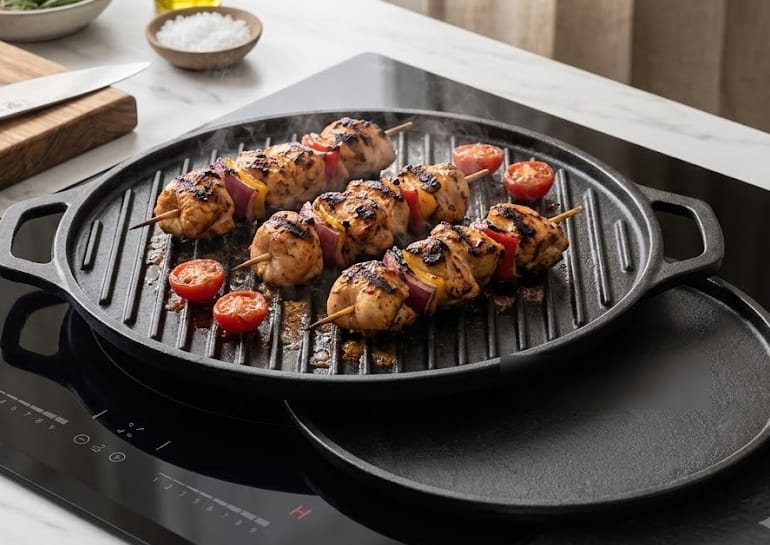
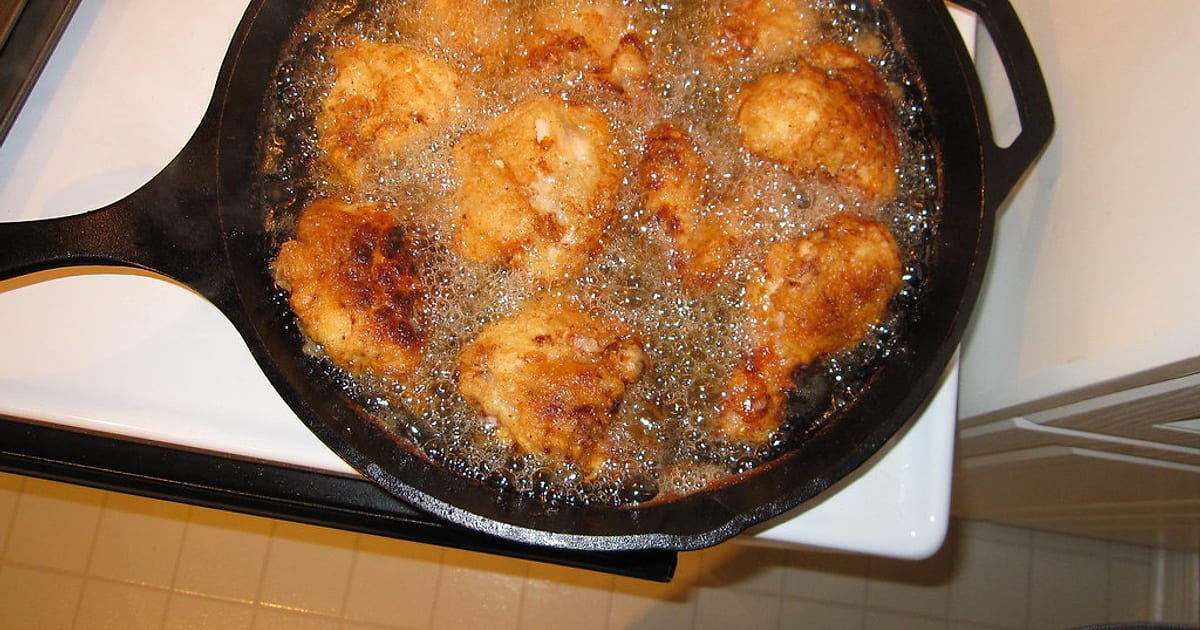
You make eggs, a bit of sabzi and the odd shallow-fried snack, and you already own a tawa and a kadai. Do you really need a fry pan as well? For many kitchens, yes. A cast iron fry pan is the one pan that can brown, sear, shallow fry and then go into the oven. A tawa is too flat for that and a kadai is too deep.
If you only want a size, a 25 cm pan suits most families and a 21 cm pan suits one or two people. The rest of this article explains why, and how to use the pan well.
The gap between a tawa and a kadai
Most Indian kitchens do their cooking with two shapes. The tawa is flat and open, built for rotis, dosas and parathas. The kadai is deep and curved, built for curries, sabzi and deep frying. Between the two there is a job that neither does well.
Think of a fried egg. On a tawa it spreads all over the place. In a kadai it hides in the curve. Or think of a few pieces of paneer or fish that you want browned on both sides. A tawa has no edge to hold the oil, and a kadai needs a lot of oil to cover a small amount of food.
A fry pan (also called a skillet) sits in between. It has a wide, flat base so food sits in one layer, and low sloping sides so you can reach in, flip and toss easily. It holds a little oil without needing a lot. That is why it is the pan for browning.
If you want to see how the three shapes compare for everyday Indian cooking, our article on the best cookware for an Indian kitchen lays it out piece by piece.
What a fry pan does that a tawa and kadai cannot
1. Eggs, the way you like them
Omelettes, bhurji, fried eggs and egg toast all want a small, flat, even surface with a little edge. A fry pan gives you that. The sloping sides help you slide a spatula under the egg and let steam escape so the edges stay crisp.
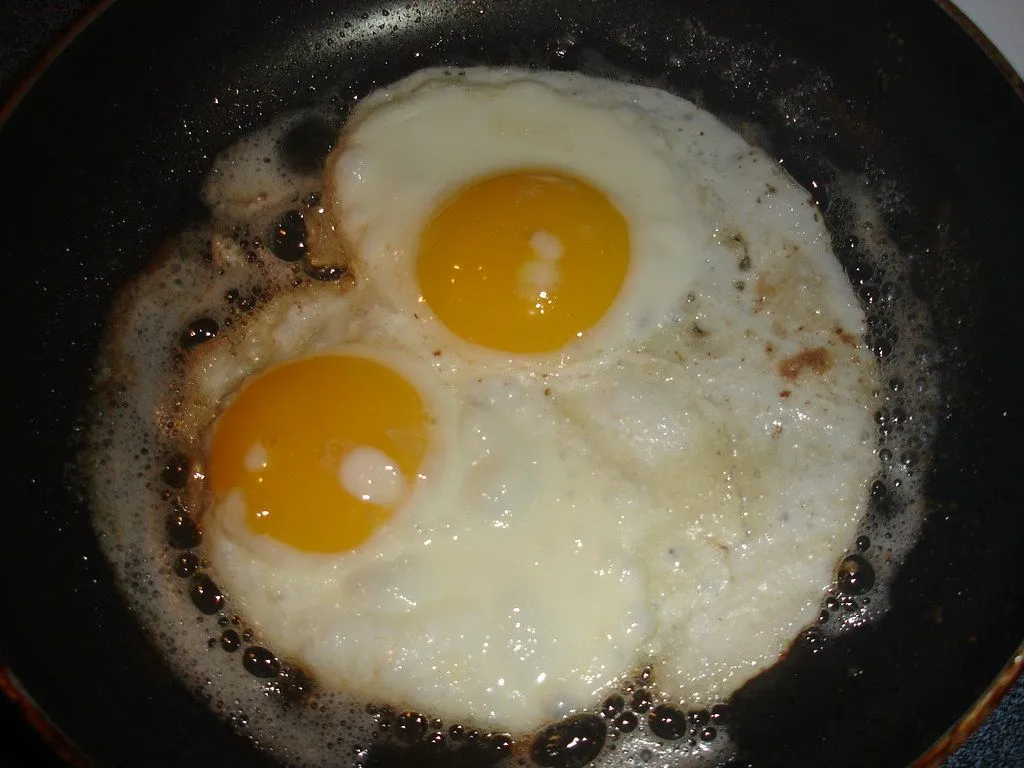 Two eggs frying in a pan. A small, flat pan with low sides is the right shape for this job. Photo: Merelymel13, CC BY-SA 2.0.
A safety note, because eggs are often cooked for children and older family members. The USDA’s food safety service says to cook eggs until the white and the yolk are firm. The American Egg Board points out that sunny-side-up, over-easy and soft-boiled eggs may not get hot enough to be treated as fully safe. If anyone at your table is very young, elderly, pregnant or unwell, cook the yolk firm.
2. Searing and proper browning
Have you noticed that boiled vegetables taste plain, but the same vegetables roasted in a pan taste sweeter and deeper? That change has a name: the Maillard reaction. It is the chemistry that turns the surface of food brown and gives it flavour. According to Wikipedia’s summary of the science, it speeds up from about 140 to 165 °C. The food’s surface also has to be fairly dry first, because water at the surface stays at about 100 °C until it has evaporated. This is why steamed and boiled food never browns.
A heavy cast iron pan is good at this. It takes a few minutes to heat, but once hot it stays hot even when cold food lands on it. A thin pan can drop in temperature the moment you add the food, and then the food steams in its own water instead of browning.
You can use this for:
- Paneer or tofu cubes browned on every side before they go into a gravy
- Fish or chicken pieces with a crisp crust
- Mushrooms, onions and capsicum that you want browned, not soggy
- Aloo or bhindi that you want with crisp edges
One myth is worth dropping while we are here. People say searing “seals in the juices”. Food reference sources note that searing does not seal anything in; water leaves the meat or vegetable just the same. Searing is about flavour and a good crust, and that is reason enough.
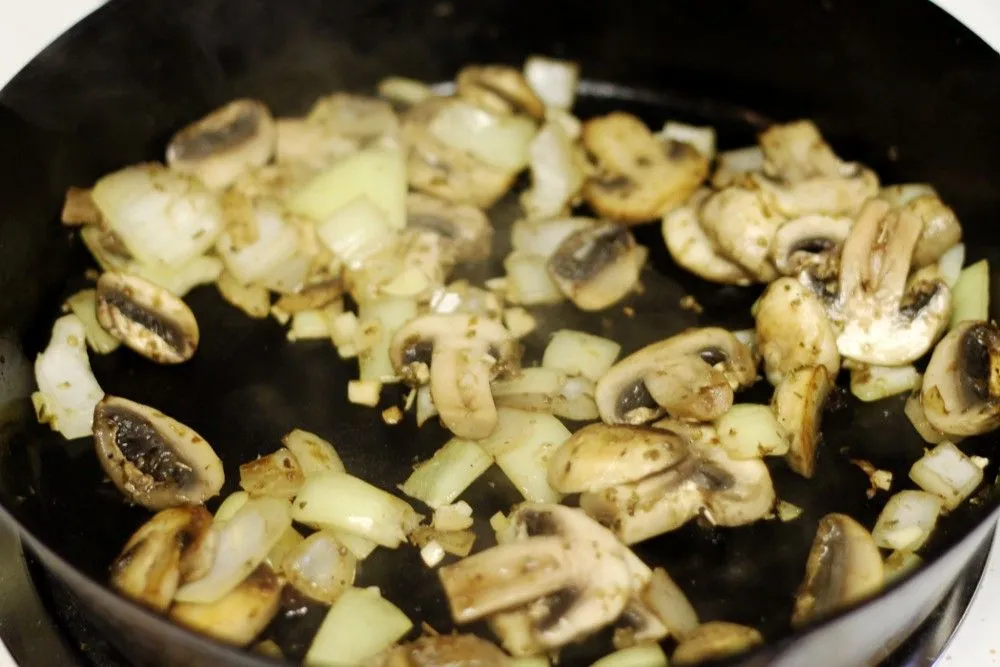 Onions and mushrooms sautéing in a wide pan. In a wide pan they sit in one layer and brown instead of steaming. Photo: Stacy Spensley, CC BY 2.0.
3. Shallow frying with less oil
Cutlets, tikkis, fish fry, crumb-coated vegetables, pakoras of a flatter kind, and chicken pieces: all of these can be shallow fried. That means the oil comes only part-way up the food, usually a centimetre or so, and you turn the pieces over once. You use much less oil than deep frying and get a crisp crust.
Cast iron holds its heat well, so the oil does not cool sharply when the food goes in. That helps the coating cook crisp instead of soaking up oil. Keep your eye on the oil, though. Hot oil needs care, so never leave the pan alone and keep the handle turned in so it cannot be knocked.
For true deep frying, such as puris, bhajiyas and Diwali snacks, a kadai is still the right tool. We cover that in our guide to cast iron kadai for deep frying.
4. Tadka and small jobs
A 21 cm pan heats quickly and holds a tadka (tempering) of ghee, cumin, mustard seeds, garlic and curry leaves without the oil running thin across a wide surface. You can also use it for roasting a handful of nuts or masalas, or toasting bread.
5. Finishing in the oven
This is the one job a tawa and a kadai rarely do. A fry pan with an all-iron body can start on the stove and finish in a home oven. Think of a frittata, a baked egg dish, a pan-seared piece of fish finished with heat from above, or baked cutlets. Many home cooks also bake cornbread, a small cake or a pizza base in one.
Check your pan’s own instructions first, and remember that the whole pan, handle included, gets very hot. Use a thick mitt or cloth. This is general home practice, not something unique to one brand. Our cooking guide has more on using iron pans with different heat sources.
Why cast iron suits a fry pan
Cast iron is not the fastest metal at spreading heat. A materials table from the site Cooking For Engineers gives the thermal conductivity of cast iron at roughly 80 W/m·K, against about 237 for aluminium and about 401 for copper. In plain words: aluminium and copper pass heat sideways more quickly.
So why use cast iron? Because it is dense and thick, it stores a lot of heat. Wikipedia’s article on cast-iron cookware notes that it holds heat longer than copper, aluminium or stainless steel pans. For a fry pan, that stored heat is the point. It is what keeps the surface hot when you add food.
The trade-off is that cast iron heats up slowly and can be a little uneven at first, with the area above the flame getting hottest. The fix is simple: preheat for a few minutes on a medium-low flame, so the heat spreads out across the whole base before you cook.
If you are deciding between materials in general, cast iron vs non-stick is a good next read, and our cast iron guide explains the metal itself.
Which size: 21 cm or 25 cm?
Pan sizes are measured across the top. The flat cooking base is smaller than that number. Plan around what you cook most.
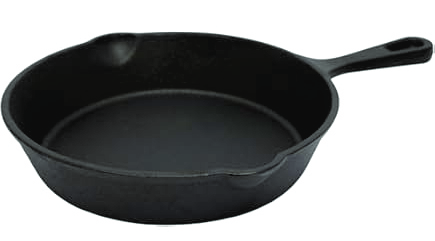
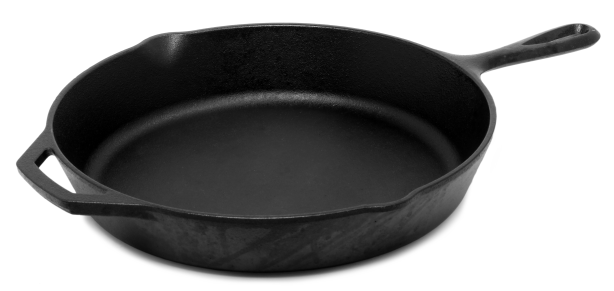
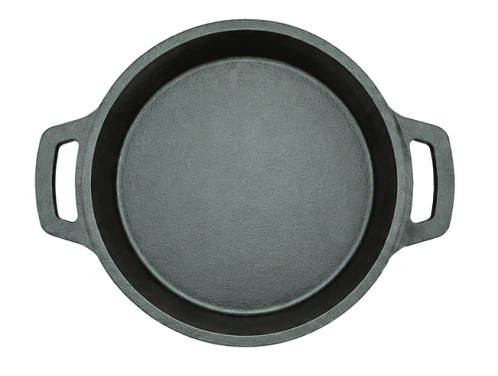
| Fry Pan 21 cm | Fry Pan Hanging Handle 25 cm | Double Handle Fry Pan 25 cm | |
|---|---|---|---|
| Code | RV-FP-001 | RV-FP-002 | RV-DF-001 |
| Weight | 1.6 kg | 2.5 kg | 1.6 kg |
| Handle | One long handle | Long handle with hanging hole | Two short side handles |
| Best for | 1 or 2 people, eggs, tadka | A family, cooking in one layer | Lighter lifting, stove to table |
The 21 cm: quick and small
The Cast Iron Fry Pan 21 CM weighs 1.6 kg. It heats fast and is easy to pick up with one hand. It is a good first pan for one or two people, for two eggs, a small bhurji, a tadka or a single-serving sauté. If you cook for a family of four, you will use it as a second, smaller pan.
The 25 cm: the family pan
The Cast Iron Fry Pan Hanging Handle 25 CM weighs 2.5 kg. Its wider base lets you cook in a single layer, which matters when you want things to brown. Crowd food into a small pan and it steams. In a 25 cm pan you can fry four cutlets at once, or sauté vegetables for four. The hanging hole lets you store it on a hook, with air around it, which helps keep it dry in the monsoon.
The lighter 25 cm with two handles
The Cast Iron Double Handle Fry Pan 25 CM is also 25 cm wide but weighs 1.6 kg, the same as the smaller pan. Two handles let you lift it with both hands, which feels steadier. It also goes from stove to table, so you can serve a pav bhaji or a baked dish straight from the pan. If a long, heavy handle worries you, or you share the kitchen with someone who finds heavy pans hard, this is the one to consider.
A simple rule
Cooking for one or two, or mostly eggs and tadka: 21 cm. Cooking for a family: 25 cm. Want the lightest wide pan, or to serve at the table: 25 cm double handle.
How a fry pan fits next to your tawa and kadai
Here is a quick guide to which pan to pick for common dishes:
| Dish | Tawa | Fry pan | Kadai |
|---|---|---|---|
| Roti, paratha, dosa | Best | Possible for a small paratha | Not suited |
| Fried egg, omelette, bhurji | Messy | Best | Awkward |
| Browning paneer, fish, cutlets | Poor | Best | Needs lots of oil |
| Dry sabzi, stir fry | Poor | Good | Good |
| Curry or gravy | Not suited | Short gravies only | Best |
| Deep frying puris, pakoras | Not suited | Not suited | Best |
| Finish in the oven | Rarely | Yes, with care | Depends on size |
If you are still choosing your first pieces, our guide to the cast iron tawa and our article on the best cast iron kadai explain the other two shapes. Together with a fry pan, they cover most of what an Indian kitchen cooks.
Using your fry pan: five habits that matter
- Preheat first. Put the dry pan on a medium-low flame for a few minutes. Cast iron needs time to warm through.
- Add the fat, then the food. A little oil, ghee or butter between food and iron is what lets things release. Do not add food to a cold, dry pan.
- Lower the flame after the food goes in. Iron keeps its heat. Medium is usually plenty, and smoking oil means the pan is too hot.
- Be patient. Food that sticks is often not ready to turn yet. Meat, paneer and eggs usually let go by themselves once a crust forms.
- Do not crowd the pan. Leave small gaps. Cook in two rounds if you must.
Eggs without sticking
Eggs are the test most people worry about. Heat the pan for a few minutes, add a small amount of oil or butter, let it spread, and bring the flame down. Crack the egg in and leave it alone until the bottom sets. A pan that is cold, dry or smoking hot is the usual cause of sticking. A pan that has been used and oiled regularly gets better over time.
Care in a few lines
RIVEDA fry pans are supplied pre-seasoned, so you can start cooking straight away. To keep the surface in good shape:
- Wash while the pan is still warm, using hot water and a brush. A little mild soap now and then is fine.
- Dry it fully, then put it on a low flame for a minute so no moisture remains.
- Wipe on a very thin film of oil, then wipe most of it off again.
- Store it dry, and away from damp. Hanging works well.
Avoid soaking, dishwashers and storing food in the pan. If a spot of rust appears, it is easy to fix, and our article on how to remove rust from cast iron shows how. The care page has the full routine, and our seasoning guide explains how the black layer builds up.
Gas, induction and the weight of the pan
RIVEDA cast iron cookware works on gas and on induction. Always follow your hob maker’s guidance on base size and weight. On an induction hob, lift the pan instead of sliding it, so the glass is not scratched. On gas, a flat base sits steady over the burner.
So, is it worth it?
If you cook eggs, brown vegetables, shallow fry snacks or want something that can finish in the oven, a cast iron fry pan earns its place. It does the jobs a tawa and a kadai are not shaped for. It lasts for years, and it needs only simple care.
If you only make rotis and curries, you may not miss it. If you want one extra pan that does the rest, make it a 25 cm.
RIVEDA fry pans are cast and finished at our own ZED-certified foundry in Rajkot, Gujarat, and arrive pre-seasoned. You can see all three on the fry pans page, or ask us on WhatsApp at +91 90999 29629 if you are unsure which suits your kitchen. Orders are paid online by UPI, cards or net banking and ship across India from Rajkot. If a piece arrives damaged, defective or wrong, you can return it within 7 days of delivery.
Shop this article
Frequently asked questions
Can I use a cast iron fry pan instead of a tawa?
For a small paratha or a single egg dish, yes. But a fry pan has sides, so flipping a dosa or rolling a roti is awkward. A flat tawa is still the better tool for flatbreads.
Which size cast iron fry pan is best for a family of four?
A 25 cm pan is the usual choice. It cooks a full pan of vegetables or four eggs in one go. A 21 cm pan suits one or two people and quick jobs like tadka.
Can I cook tomato gravy or curry in a fry pan?
A short sabzi with a little gravy is fine once the pan has built up some seasoning. For long simmering curries, a deeper kadai is a better fit, and food should not be stored in the pan.
Will eggs stick to a cast iron fry pan?
They can if the pan is cold, dry or too hot. Heat the pan first, add a little oil or butter, then turn the flame down before the egg goes in. Do not poke at it until the bottom has set.
Does a cast iron fry pan work on induction?
RIVEDA fry pans work on gas and induction. Always follow your hob maker's guidance on base size and weight, and lift the pan rather than sliding it across the glass.
How do I clean a cast iron fry pan after frying?
Wash it while it is still warm with hot water and a brush, dry it fully on a low flame, then wipe on a very thin film of oil. Avoid soaking it.
Sources
- Maillard reaction — Wikipedia
- The Maillard Reaction — Modernist Cuisine
- Doneness (searing does not seal in juices) — Wikipedia
- Common Materials of Cookware — Cooking For Engineers
- Cast-iron cookware — Wikipedia
- Shell Eggs from Farm to Table — USDA Food Safety and Inspection Service
- Important Food Safety Information — American Egg Board
Pictures: cast-iron-fry-pan.jpg (cover) — wlayton, CC BY-SA 2.0; eggs-frying.jpg — Merelymel13, CC BY-SA 2.0; saute-onion-mushroom.jpg — Stacy Spensley, CC BY 2.0.
Follow the RIVEDA blog
One short email a week with new articles — cast iron cooking, care and recipes for Indian kitchens. No spam; unsubscribe in one click.