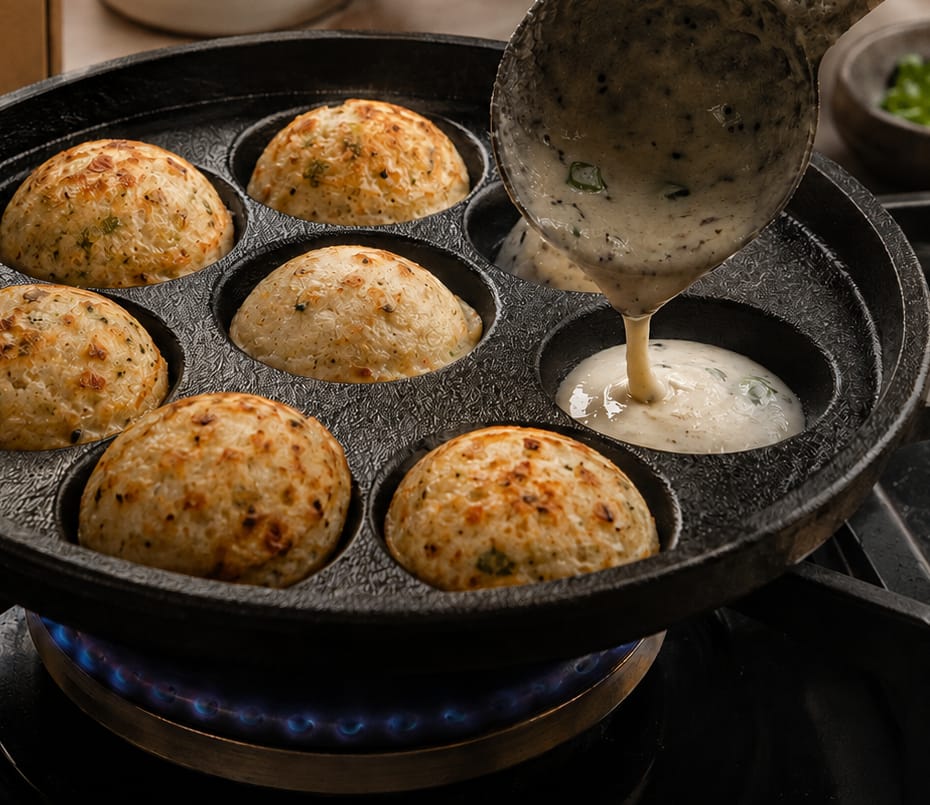
Yes, non-stick cookware is generally considered safe when it is in good condition and used on low to medium heat. The worry begins when a pan is overheated, left empty on a burner, or kept in use after the coating starts to peel. This is also what the 2024 ICMR-NIN dietary guidelines point to: they warn about heat, not about every non-stick pan in every kitchen.
Still, many of us first heard about this on a family WhatsApp group, with a big red headline and no source. So let us look at what was actually written, what scientists and food-safety bodies say, and what is just noise.
Where the scare started
In May 2024, the Indian Council of Medical Research (ICMR) and its National Institute of Nutrition (NIN) in Hyderabad released the updated Dietary Guidelines for Indians. Most of the news was about food: less sugar, less salt, more pulses and vegetables. But a short passage about cookware got picked up by newspapers and then by forwards.
The 2024 ICMR-NIN Dietary Guidelines for Indians, as reported by The Week, say that non-stick pans coated with Teflon are a risk if they are heated above 170 °C. It gives an everyday example: this can happen if an empty pan is left on the burner for some time. The same section also says that small amounts of material that may leach from cooking vessels during cooking or storage are not a cause for concern.
News reports at the time described it as advice to be careful, not a ban. The Week wrote that ICMR does not come out with a straightforward ban, but asks people to err on the side of caution. The report also noted that the advice started an argument among cookware and appliance makers, which is normal when a guideline touches a product people buy.
So the first fact to remember: the guideline is about heat and misuse. It does not say “throw away every non-stick pan today”.
What “Teflon” and “PFAS” mean
Two words cause most of the fear, so let us explain them once.
Teflon is a brand name. The material behind it is called PTFE (polytetrafluoroethylene). It is a very slippery plastic-like coating. Cooks use it because eggs and dosa batter slide off it with almost no oil.
PFAS stands for a large family of man-made chemicals, sometimes called “forever chemicals” because they break down very slowly. PTFE is part of this wider family. That is why headlines about PFAS often show a frying pan.
Here is the part forwards leave out. PFAS is a huge group, and the chemicals inside it are not all the same. The ones that worry health agencies most, such as PFOA and PFOS, are the ones found in drinking water, food packaging and some foods. The European Food Safety Authority (EFSA) looked at this in 2020 and set a combined safe weekly intake for four PFAS, with a weaker immune response to vaccination as the most critical effect. In its earlier assessment, EFSA noted that studies of PTFE cookware found only low traces of leftover PFOA, and that fluoropolymer food-contact materials were not likely to be a major source of PFAS.
In plain words: PFAS in the world around us is a real topic that scientists are studying. A single pan used carefully is not the main way most people meet it.
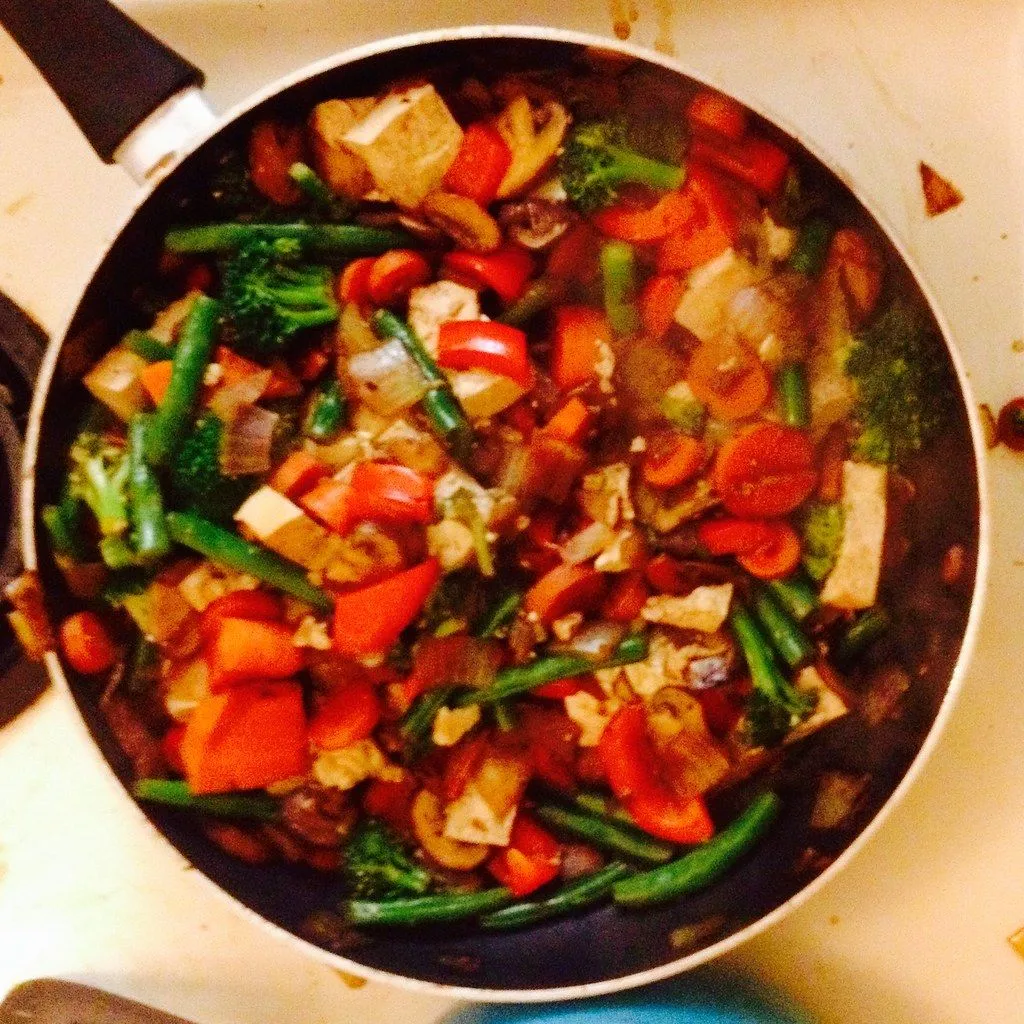 A vegetable stir-fry in a dark-coated pan, the kind of everyday cooking the guideline is about. Photo: wbaiv, CC BY-SA 2.0.
What actually goes wrong with non-stick
There are three real problems, and each one is about how the pan is used.
1. Overheating, especially an empty pan
A pan with food in it stays cooler, because the food takes up heat. An empty pan on a gas flame gets hot very fast. This is the situation ICMR mentions, and it is the one most of us have been guilty of: you light the stove, go to answer the door, and come back to a pan that smells odd.
Health Canada gives similar advice. It says non-stick cookware may give off irritating or poisonous fumes if heated to high temperatures, for example an empty pan left on a burner. It advises not to preheat an empty non-stick pan, to avoid very high heat (over 260 °C on the stove or in the oven), and to use an exhaust fan or open a window while cooking.
You may notice that 170 °C (ICMR) and 260 °C (Health Canada) are different numbers. We cannot tell you exactly why from the documents we read. Different bodies draw their cautions at different levels, and the ICMR figure is the lower, more careful one. For a home cook the sensible takeaway is the same: do not let a non-stick pan get anywhere near very hot.
2. A damaged coating
When the coating scratches, peels or flakes, two things happen. Your pan stops being non-stick, so food starts to burn and stick. And small pieces of coating can end up in the food. A scientific perspective on PTFE cookware, listed in the US EPA’s research database, discusses the toxicity concerns around these coatings and why wear matters.
We would add a simple rule of our own. If the dark layer in the middle of the pan is coming off in places, retire the pan.
3. Rough handling
Steel spoons, steel-wool scrubbers and stacking pans on top of each other all scratch the coating. This is what turns a “good for years” pan into a “replace every year” pan.
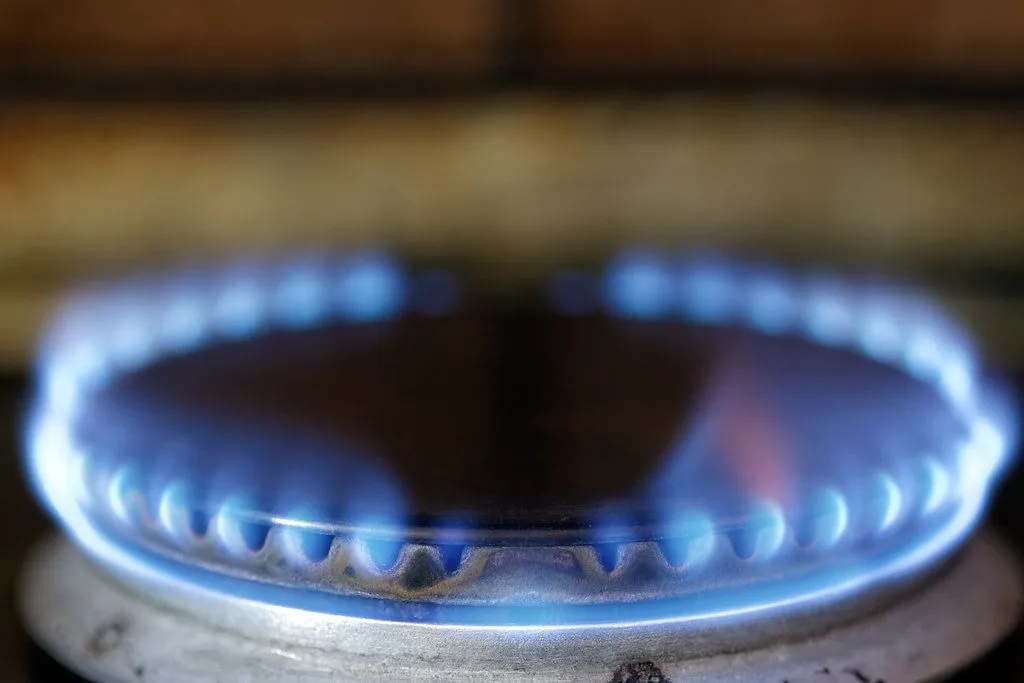 A gas burner flame. With nothing in the pan, a pan on a flame like this heats very quickly. Photo: Ervins Strauhmanis, CC BY 2.0.
WhatsApp forward or fact? A quick check
Here is how some common claims hold up against what we could verify.
| What the forward says | What we found |
|---|---|
| “ICMR has banned non-stick pans.” | Not true. News reports and the guideline describe a caution about heat, not a ban. |
| “Non-stick gives you cancer.” | We did not find this in the ICMR passage or in the agency pages we read. Anyone making this claim should show a source. |
| “Never heat a non-stick pan above 170 °C.” | ICMR does mention 170 °C for Teflon-coated pans. In practice, this means: no empty pan on the flame, no very high heat. |
| “Throw away all non-stick today.” | No such advice in the passages we read. A pan in good condition, used on low to medium heat, is generally considered acceptable. |
| “Scratched pans are fine to use.” | Better not. A peeling coating is best replaced. |
| “Cast iron is always safe, so just switch.” | Cast iron has its own cautions, see below. |
The honest summary: some of the forwards are exaggerations, and some contain a grain of truth wrapped in panic.
How to use non-stick more safely
If you own non-stick pans and plan to keep using them, these habits make a real difference.
- Never preheat it empty. Add a little oil or the food first, then turn on the heat.
- Keep the flame low to medium. Non-stick does not need a roaring flame. Dosas and omelettes cook well on medium.
- Do not leave it unattended on the burner.
- Switch on the chimney or open a window while cooking.
- Use wooden, silicone or nylon spoons. Keep steel spoons away from it.
- Wash gently with a soft sponge, and let the pan cool before it meets water.
- Do not stack pans without a cloth or paper between them.
- Replace it when the coating is peeling, flaking or deeply scratched.
- Follow the maker’s instructions, including any temperature limit printed on the box.
If you cook for babies, older people or anyone with a health condition, and you are worried, a doctor is the right person to ask. Nothing here is medical advice.
What ICMR says about other cookware
The same section of the guidelines is useful for another reason: it does not single out one material. As we read it, it also says that small amounts of material that may leach from vessels into food during cooking or storage need not be a cause of concern. But it adds a caution about long storage of acidic food, such as pickles, sambar or khatta dal, in aluminium, iron, untinned brass or copper vessels, which can make the food unsafe.
That caution matters if you cook in iron, so let us be fair about it. Cooking in cast iron is fine, but do not keep sour dishes sitting in the pan for hours. Cook, serve, and move leftovers to a steel or glass container. We explain this more in our article on whether cast iron cooking is healthy.
Where cast iron fits in
Cast iron is one choice for people who want a pan without a synthetic coating. There is no PTFE layer to overheat, scratch or flake. Its slipperiness comes from seasoning, which is cooking oil heated onto the iron until it forms a thin, hard layer. It can be rebuilt with a little oil if it wears.
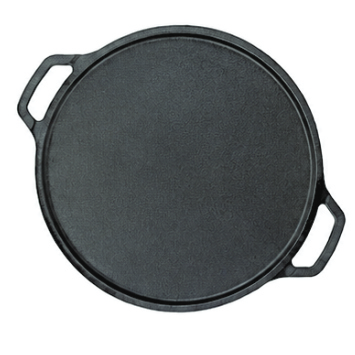
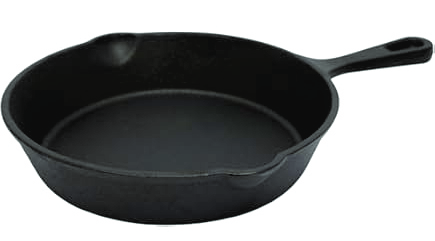
RIVEDA’s cookware is sand-cast and finished at our own ZED-certified foundry in Rajkot, Gujarat. Pieces go through grinding, sand cleaning, quality checks and seasoning before they are dispatched, and they are supplied pre-seasoned. Two pieces to look at if you want to try a coating-free tawa and fry pan are the Cast Iron Double Handle Dosa Tawa 30 cm and the Cast Iron Fry Pan 21 cm. Both work on gas and induction; always follow your hob maker’s guidance on base size and weight.
Cast iron is not magic. It is heavy, it needs drying after washing, it can rust if left wet, and it takes a few weeks to feel natural, especially for dosa. If you want the honest side-by-side, read our cast iron vs non-stick comparison. For the full picture of options, see non-toxic cookware in India, and the cast iron guide explains the material from the start.
If you switch, do it slowly
You do not have to give up non-stick overnight. Many families keep one non-stick pan for a few special jobs and use cast iron for the rest. A fair way to start:
- Begin with the tawa. Roti and paratha are forgiving on cast iron. See our seasoning guide for the first few uses.
- Keep the non-stick pan for eggs or very sticky batters until you are confident.
- Follow the care guide so the new pan lasts for years.
How to read health news about cookware
The non-stick story is a good example of how a careful sentence becomes a scary forward. A few habits will help you the next time.
- Look for the source. Is it a guideline, a study, or just a post? If a forward does not say where the claim comes from, treat it with caution.
- Look at the exact wording. “Risk above 170 °C” is not the same as “dangerous at any time”.
- Look at who is talking. A seller of one kind of cookware has a reason to say the others are unsafe. That includes us, which is why we have tried to stick to what government and research bodies actually wrote.
- Look at the dose. “A chemical was found” and “this harms you at the amount you meet” are different statements.
- Look for what is not said. Many headlines skip the simple, boring fix: do not overheat, and replace damaged pans.
A short checklist for tonight
Open your kitchen cupboard and check each non-stick pan.
- Is the coating smooth, or is it peeling or flaking? If peeling, replace it.
- Is it deeply scratched in the middle? Replace it.
- Do you ever leave it empty on the flame? Stop that habit.
- Do you use a steel spoon on it? Change to wood or silicone.
- Is your chimney or window open when you cook?
If most answers are fine, your pan is probably doing what it was made to do. If you want a coating-free alternative for daily dosa and roti, start with the tawas or fry pans. You can also ask us on WhatsApp at +91 90999 29629, and our FAQ covers delivery and returns.
Shop this article
Frequently asked questions
Is non-stick cookware safe to use every day?
Most food-safety bodies treat an undamaged non-stick pan, used on low to medium heat, as acceptable for everyday cooking. The real cautions are overheating, preheating an empty pan and using a pan whose coating has started to peel or flake.
What temperature does ICMR say is too hot for non-stick?
The 2024 ICMR-NIN guidelines say Teflon-coated pans carry a risk when heated above 170 °C, for example when an empty pan is left on a burner for some time. Check your pan's own instructions too.
Should I throw away a scratched non-stick pan?
A pan with a visibly peeling, flaking or deeply scratched coating is best replaced. A coating that is coming off no longer does the job it was made for, and there is no good way to repair it at home.
Is PFOA still used in non-stick pans?
PFOA was once used as a processing aid when some non-stick coatings were made. Reports say it has been phased out by major makers, but older pans may be from that time, and rules differ between countries. If you are unsure about an old pan, replacing it is a simple answer.
Can I use metal spoons on non-stick?
It is better not to. Metal spoons and steel scrubbers scratch the coating. Wooden or silicone spoons and a soft sponge keep it in better shape for longer.
What can I use instead of non-stick for dosa and eggs?
A well-seasoned cast iron tawa or fry pan can give a naturally slick surface with a little oil. It needs some care and a short learning period, but it has no coating that can peel.
Sources
- Dietary Guidelines for Indians 2024 (ICMR-National Institute of Nutrition), copy of the document — ICMR-NIN via ResearchGate
- ICMR's guidelines on non-stick cookware sparks off an industry fight — The Week
- The safe use of cookware and bakeware — Health Canada
- PFAS in food: EFSA assesses risks and sets tolerable intake — European Food Safety Authority
- Per- and polyfluoroalkyl substances (PFAS) — European Food Safety Authority
- PTFE-coated non-stick cookware and toxicity concerns: A perspective — US EPA HERO database
More on this topic: all health & nutrition articles →
Pictures: is-non-stick-safe.jpg (cover) — VirtualWolf, CC BY-SA 2.0; stir-fry-dark-coated-pan.jpg — wbaiv, CC BY-SA 2.0; gas-burner-flame.jpg — Ervins Strauhmanis, CC BY 2.0.
Follow the RIVEDA blog
One short email a week with new articles — cast iron cooking, care and recipes for Indian kitchens. No spam; unsubscribe in one click.